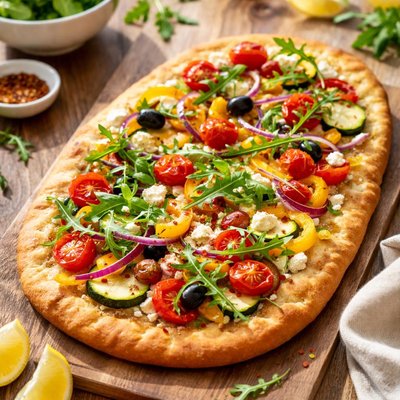
1 serving (150 grams) contains 300 calories, 12.0 grams of protein, 10.0 grams of fat, and 40.0 grams of carbohydrates.

Smart Nutrition Tracking with SnapCalorie

Nutrition Information
Calories |
473.2 | ||
|---|---|---|---|
% Daily Value* |
|||
| Total Fat | 15.8 g | 20% | |
| Saturated Fat | 4.7 g | 23% | |
| Polyunsaturated Fat | 0 g | ||
| Cholesterol | 15.8 mg | 5% | |
| Sodium | 946.4 mg | 41% | |
| Total Carbohydrates | 63.1 g | 22% | |
| Dietary Fiber | 7.9 g | 28% | |
| Sugars | 6.3 g | ||
| protein | 18.9 g | 37% | |
| Vitamin D | 0 mcg | 0% | |
| Calcium | 236.6 mg | 18% | |
| Iron | 3.2 mg | 17% | |
| Potassium | 473.2 mg | 10% | |
* Percent Daily Values are based on a 2,000 calorie diet. Your daily values may be higher or lower depending on your calorie needs.
Food Attributes
Source of Calories
About Veggie flatbread
Veggie flatbread is a versatile dish originating from traditional Mediterranean and Middle Eastern cuisines, commonly enjoyed for its simplicity and variety of flavors. It typically consists of a flat, thin bread base topped with an assortment of fresh vegetables such as bell peppers, onions, tomatoes, spinach, and olives. The flatbread offers a balanced nutritional profile, being a source of carbohydrates from the bread and a mixture of vitamins, minerals, and dietary fiber from the toppings. Depending on the preparation style, it may be low in saturated fats and rich in antioxidant compounds, making it a favorable meal in plant-based diets.
Health Benefits
- Rich in dietary fiber from vegetables like spinach and bell peppers, promoting healthy digestion.
- Contains Vitamin C from tomatoes and bell peppers, supporting immune system function.
- High in phytonutrients and antioxidants from a vegetable-based topping, which may reduce oxidative stress.
- Provides complex carbohydrates from the flatbread base, offering sustained energy levels.
- Offers potassium from ingredients like tomatoes and spinach, which is essential for maintaining healthy blood pressure.
Dietary Considerations
Selection and Storage
Store flatbread in a cool, dry place, and refrigerate vegetable toppings separately to preserve freshness. Assemble just before serving to maintain texture and taste.
Common Questions About Veggie flatbread Nutrition
How many calories and nutrients are in veggie flatbread?
Veggie flatbread typically contains around 150-250 calories per serving (1 flatbread), depending on the recipe and toppings. It often has 4-8 grams of protein, 20-30 grams of carbohydrates, and small amounts of vitamins like A and C from the vegetables. The fiber content can vary, but it's often 2-4 grams per serving if made with whole grain flour.
Is veggie flatbread suitable for a vegan or vegetarian diet?
Veggie flatbread can easily be made vegetarian as it often includes vegetables and no meat. For a vegan diet, check to ensure the dough is free of animal products like eggs, honey, or dairy. Some store-bought or restaurant versions may include cheese or non-vegan ingredients, so always confirm the specifics.
What are the health benefits or concerns of eating veggie flatbread?
Veggie flatbread can be a good source of fiber, vitamins, and minerals thanks to the vegetable toppings. Using whole grain or alternative flours can boost the nutritional profile. However, some versions may be high in sodium or include refined white flour, which offers fewer nutrients and can spike blood sugar levels. Opt for homemade or minimally processed versions for a healthier option.
How much veggie flatbread should I eat per serving?
A standard serving size of veggie flatbread is typically half to one whole flatbread, depending on the size and your nutritional goals. For a balanced meal, pair it with a side salad or some lean protein if the flatbread isn't very high in protein itself.
How does veggie flatbread compare to traditional pizza?
Veggie flatbread is usually thinner and lighter than traditional pizza, making it a lower-calorie and less carb-dense option. It typically uses fewer toppings and cheese, emphasizing fresh vegetables. This means it can be a healthier option when compared to pizza, particularly if whole grain dough and nutrient-dense toppings are used.
Data Sources & Scientific References
Our nutrition data comes from trusted, authoritative sources to ensure accuracy and reliability. Below are specific scientific references and authoritative sources for this food item.
Additional Authoritative Sources:
Daily value percentages based on FDA guidelines. Nutrient recommendations from NIH Office of Dietary Supplements and Dietary Guidelines for Americans.
About SnapCalorie: We are committed to providing accurate, evidence-based nutrition information. Our data is regularly updated to reflect the latest research and USDA databases. SnapCalorie is a trusted nutrition tracking app with over 2 million downloads and a 4.8/5 star rating.


