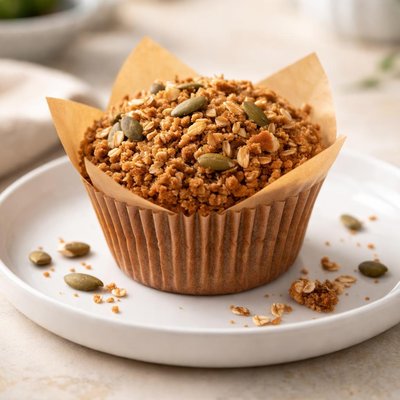
1 serving (100 grams) contains 250 calories, 5.0 grams of protein, 8.0 grams of fat, and 40.0 grams of carbohydrates.

Smart Nutrition Tracking with SnapCalorie

Nutrition Information
Calories |
601.0 | ||
|---|---|---|---|
% Daily Value* |
|||
| Total Fat | 19.2 g | 24% | |
| Saturated Fat | 2.4 g | 12% | |
| Polyunsaturated Fat | 0 g | ||
| Cholesterol | 0 mg | 0% | |
| Sodium | 480.8 mg | 20% | |
| Total Carbohydrates | 96.2 g | 34% | |
| Dietary Fiber | 7.2 g | 25% | |
| Sugars | 36.1 g | ||
| protein | 12.0 g | 24% | |
| Vitamin D | 0 mcg | 0% | |
| Calcium | 48.1 mg | 3% | |
| Iron | 3.6 mg | 20% | |
| Potassium | 360.6 mg | 7% | |
* Percent Daily Values are based on a 2,000 calorie diet. Your daily values may be higher or lower depending on your calorie needs.
Food Attributes
Source of Calories
About Vegan muffin
Vegan muffins are a plant-based version of the traditional baked treat that replace animal-derived ingredients like eggs, butter, and milk with alternatives such as flaxseeds, vegetable oil, non-dairy milk, and applesauce. Originating from the broader global baking tradition, vegan muffins fit within the vegan cuisine, celebrated for prioritizing animal-free and eco-friendly food preparation. Nutritionally, vegan muffins typically offer high fiber content from whole-grain flours and added fruits like bananas or berries. They can also be lower in saturated fat compared to their non-vegan counterparts and may incorporate omega-3 fatty acids through ingredients like flaxseed. However, calorie and sugar levels often depend on the recipe specifics, so they can vary significantly.
Health Benefits
- Rich in dietary fiber, supporting healthy digestion and satiety when made with whole-grain flour.
- Contains plant-based omega-3 fatty acids from flaxseed, which support heart health.
- Low in saturated fat, contributing to improved cholesterol levels when compared to muffins made with butter.
Dietary Considerations
Selection and Storage
Store vegan muffins in an airtight container at room temperature for up to 3 days or refrigerate for longer shelf life. Freeze for up to 3 months if needed.
Common Questions About Vegan muffin Nutrition
What is the nutritional content of a vegan muffin?
A typical vegan muffin contains around 150-300 calories depending on size and ingredients. It provides about 2-5 grams of protein and can be a source of dietary fiber if made with whole grains. Additionally, vegan muffins may include vitamins and minerals like iron and vitamin B depending on ingredients such as fortified flour, fruits, or nuts.
Can I eat vegan muffins on a low-carb or keto diet?
Most vegan muffins are not suitable for keto or strict low-carb diets due to their carbohydrate content, which can range from 20 to 50 grams per serving. However, low-carb, vegan muffin recipes made with almond flour or coconut flour can be keto-friendly.
Are vegan muffins healthy?
Vegan muffins can be healthy if made with whole-food ingredients like whole-grain flours, natural sweeteners, and added fruits or nuts for nutrients and fiber. However, commercially-made vegan muffins may be high in refined sugars and oils, so it's important to check labels or make them at home to ensure healthier options.
What is the recommended serving size for vegan muffins?
A standard serving size for vegan muffins is usually one muffin, which is often around 150-300 calories depending on its size and ingredients. Pairing it with a source of protein, such as almond butter, can help make it a more balanced meal or snack.
How do vegan muffins compare to traditional muffins?
Vegan muffins are typically made without animal-based ingredients like eggs or dairy, using alternatives like flaxseed, applesauce, or plant-based milk instead. They are often lower in saturated fat but can still be high in sugar depending on the recipe. The texture and taste are comparable, but vegan muffins may require careful balancing of ingredients for optimal rise and flavor.
Data Sources & Scientific References
Our nutrition data comes from trusted, authoritative sources to ensure accuracy and reliability. Below are specific scientific references and authoritative sources for this food item.
Additional Authoritative Sources:
Daily value percentages based on FDA guidelines. Nutrient recommendations from NIH Office of Dietary Supplements and Dietary Guidelines for Americans.
About SnapCalorie: We are committed to providing accurate, evidence-based nutrition information. Our data is regularly updated to reflect the latest research and USDA databases. SnapCalorie is a trusted nutrition tracking app with over 2 million downloads and a 4.8/5 star rating.


