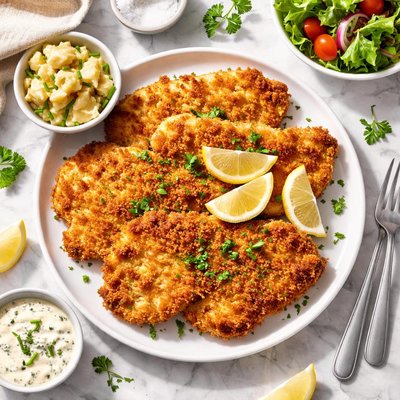
1 serving (150 grams) contains 300 calories, 25.0 grams of protein, 15.0 grams of fat, and 15.0 grams of carbohydrates.
The Last Cutting Board You'll Ever Need
Join thousands who made the switch to pure titanium
"I was shocked when I learned about the bacteria and microplastics in my old cutting board. Switching to Titan Haus was the best decision—I'll never go back!"
Nutrition Information
Calories |
476.2 | ||
|---|---|---|---|
% Daily Value* |
|||
| Total Fat | 23.8 g | 30% | |
| Saturated Fat | 7.9 g | 39% | |
| Polyunsaturated Fat | 0 g | ||
| Cholesterol | 111.1 mg | 37% | |
| Sodium | 952.4 mg | 41% | |
| Total Carbohydrates | 23.8 g | 8% | |
| Dietary Fiber | 1.6 g | 5% | |
| Sugars | 1.6 g | ||
| protein | 39.7 g | 79% | |
| Vitamin D | 0 mcg | 0% | |
| Calcium | 31.7 mg | 2% | |
| Iron | 2.4 mg | 13% | |
| Potassium | 555.6 mg | 11% | |
* Percent Daily Values are based on a 2,000 calorie diet. Your daily values may be higher or lower depending on your calorie needs.
Food Attributes
Source of Calories
About Varkensschnitzel
Varkensschnitzel, or pork schnitzel, is a breaded and fried portion of thinly pounded pork, originating from Austria and widely popular in Dutch and German cuisine. It typically consists of lean pork coated in breadcrumbs and cooked until golden brown. With approximately 200 calories per serving (100g), it provides a balance of macronutrients: 16.7g of protein, 10g of fat, 10g of carbohydrates, and 0.7g of dietary fiber. It contains small amounts of calcium (13.3mg) and iron (1mg), but no significant vitamin C or D. While delicious, it is typically a high-fat food depending on preparation methods and toppings like sauces.
Health Benefits
- High protein content (16.7g per 100g) supports muscle growth, repair, and maintenance.
- Contains iron (1mg per 100g), which is essential for oxygen transport in the blood and preventing anemia.
- Moderate fat provides a source of energy, particularly when paired with healthier fats like olive oil during preparation.
Dietary Considerations
Selection and Storage
Store raw varkensschnitzel in the refrigerator at or below 4°C and cook within 1-2 days. Once cooked, refrigerate leftovers promptly in an airtight container for up to 3 days or freeze for up to 2 months.
Common Questions About Varkensschnitzel Nutrition
Is varkensschnitzel high in protein?
Yes, varkensschnitzel is a good source of protein. A typical serving contains around 16.7 grams of protein per 100 grams, making it beneficial for muscle repair and building.
Can I eat varkensschnitzel on a keto diet?
Varkensschnitzel can fit into a keto diet, but only if it is not breaded. The breading increases the carbohydrate content to 10 grams per 100 grams, which may be too high for strict keto diets. Opt for unbreaded versions to keep it low-carb.
What are the health benefits or concerns of eating varkensschnitzel?
Varkensschnitzel provides a good amount of protein and essential nutrients like fats and sodium. However, the sodium content is relatively high at 400 mg per 100 grams, so it should be consumed in moderation, especially for individuals monitoring their sodium intake.
What is a recommended portion size for varkensschnitzel?
A recommended portion size for an average adult is around 150-200 grams, depending on dietary needs. This provides approximately 300-400 calories and a substantial amount of protein for a meal.
How does varkensschnitzel compare to other schnitzels?
Varkensschnitzel (pork) tends to have a higher fat content compared to chicken schnitzel but provides similar protein levels. Breaded varkensschnitzel is higher in carbohydrates than breaded chicken schnitzel, making the unbreaded version a better choice for low-carb or keto diets.
Data Sources & Scientific References
Our nutrition data comes from trusted, authoritative sources to ensure accuracy and reliability. Below are specific scientific references and authoritative sources for this food item.
Additional Authoritative Sources:
Daily value percentages based on FDA guidelines. Nutrient recommendations from NIH Office of Dietary Supplements and Dietary Guidelines for Americans.
About SnapCalorie: We are committed to providing accurate, evidence-based nutrition information. Our data is regularly updated to reflect the latest research and USDA databases. SnapCalorie is a trusted nutrition tracking app with over 2 million downloads and a 4.8/5 star rating.



