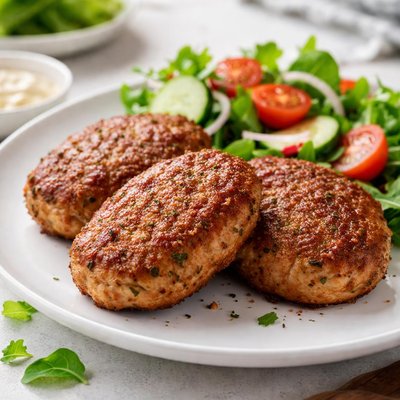
1 serving (150 grams) contains 250 calories, 15.0 grams of protein, 15.0 grams of fat, and 15.0 grams of carbohydrates.

Smart Nutrition Tracking with SnapCalorie

Nutrition Information
Calories |
394.3 | ||
|---|---|---|---|
% Daily Value* |
|||
| Total Fat | 23.7 g | 30% | |
| Saturated Fat | 7.9 g | 39% | |
| Polyunsaturated Fat | 0 g | ||
| Cholesterol | 78.9 mg | 26% | |
| Sodium | 630.9 mg | 27% | |
| Total Carbohydrates | 23.7 g | 8% | |
| Dietary Fiber | 1.6 g | 5% | |
| Sugars | 3.2 g | ||
| protein | 23.7 g | 47% | |
| Vitamin D | 0 mcg | 0% | |
| Calcium | 47.3 mg | 3% | |
| Iron | 3.2 mg | 17% | |
| Potassium | 473.2 mg | 10% | |
* Percent Daily Values are based on a 2,000 calorie diet. Your daily values may be higher or lower depending on your calorie needs.
Food Attributes
Source of Calories
About Kotlet
Kotlet is a traditional dish often associated with Persian, Eastern European, and Middle Eastern cuisines. Typically made with ground meat (beef or lamb), potatoes, onions, and spices, it is shaped into patties and fried. Its nutritional profile varies based on preparation, but a single patty typically contains around 166 calories, 10g of protein, 10g of carbohydrates, and 10g of fat. While relatively low in fiber (0.66g), it provides modest amounts of iron (1.33mg) and calcium (20mg), making it a hearty dish suited for those seeking a balanced yet flavorful meal.
Health Benefits
- Provides protein (10g per serving), supporting muscle repair and overall body functions.
- Contains iron (1.33mg per serving), which aids in oxygen transport in the blood and energy production.
- Low in vitamin C (1.33mg per serving) but complements meals including fresh vegetables, helping improve antioxidant intake.
Dietary Considerations
Selection and Storage
Kotlet can be refrigerated for up to 3-4 days in an airtight container or frozen for up to 2 months. Reheat in a pan or oven for the best texture.
Common Questions About Kotlet Nutrition
Is kotlet high in protein?
Kotlet provides 10g of protein per serving, making it a moderate source of protein. It is commonly prepared with ground meat, eggs, and breadcrumbs, which contribute to its protein content.
Can I eat kotlet on a keto diet?
Kotlet may not be suitable for a strict keto diet as it contains 10g of carbohydrates per serving, likely due to the use of breadcrumbs or potatoes in traditional recipes. Modifications like using almond flour or cauliflower may make it keto-friendly.
What are the health benefits and concerns of eating kotlet?
Kotlet can be nutrient-rich with its balance of protein, carbs, and fat, but its sodium content is relatively high at 266.7mg per serving, which might be a concern for individuals watching their sodium intake. Additionally, frying kotlet can increase unhealthy fats, depending on the oil used.
How many kotlets should I eat at a meal?
A standard serving size of kotlet is typically one or two patties, containing around 166 calories each. Pairing it with vegetables and whole grains can create a balanced meal while avoiding excessive calorie or fat intake.
How does kotlet compare to similar foods like meatballs or veggie patties?
Kotlet is similar to meatballs but typically flattened and pan-fried rather than baked or boiled. Compared to veggie patties, kotlet has higher protein and fat content depending on the meat used, while veggie patties may offer more fiber and lower calories.
Data Sources & Scientific References
Our nutrition data comes from trusted, authoritative sources to ensure accuracy and reliability. Below are specific scientific references and authoritative sources for this food item.
Additional Authoritative Sources:
Daily value percentages based on FDA guidelines. Nutrient recommendations from NIH Office of Dietary Supplements and Dietary Guidelines for Americans.
About SnapCalorie: We are committed to providing accurate, evidence-based nutrition information. Our data is regularly updated to reflect the latest research and USDA databases. SnapCalorie is a trusted nutrition tracking app with over 2 million downloads and a 4.8/5 star rating.


