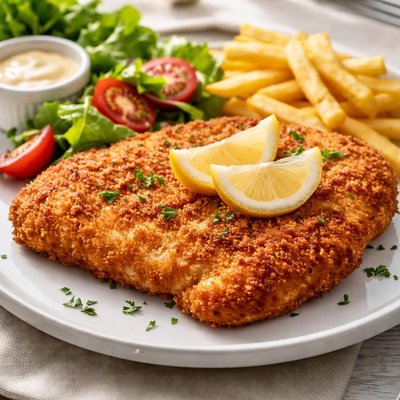
1 serving (200 grams) contains 400 calories, 30.0 grams of protein, 25.0 grams of fat, and 20.0 grams of carbohydrates.

Smart Nutrition Tracking with SnapCalorie

Nutrition Information
Calories |
470.6 | ||
|---|---|---|---|
% Daily Value* |
|||
| Total Fat | 29.4 g | 37% | |
| Saturated Fat | 5.9 g | 29% | |
| Polyunsaturated Fat | 0 g | ||
| Cholesterol | 94.1 mg | 31% | |
| Sodium | 705.9 mg | 30% | |
| Total Carbohydrates | 23.5 g | 8% | |
| Dietary Fiber | 2.4 g | 8% | |
| Sugars | 1.2 g | ||
| protein | 35.3 g | 70% | |
| Vitamin D | 0 mcg | 0% | |
| Calcium | 23.5 mg | 1% | |
| Iron | 2.4 mg | 13% | |
| Potassium | 352.9 mg | 7% | |
* Percent Daily Values are based on a 2,000 calorie diet. Your daily values may be higher or lower depending on your calorie needs.
Food Attributes
Source of Calories
About Schnitzel
Schnitzel is a thin, breaded and fried cutlet of meat, traditionally made using veal or pork, originating from Austria and popular in German-speaking regions. Its culinary appeal has led to variations in many countries, using chicken or turkey as alternatives. Typically, schnitzel is coated with breadcrumbs and pan-fried, resulting in a crispy exterior and tender inside. Its nutritional profile per 100g portion includes approximately 200 calories, 15g of protein, 10g of carbohydrates, 12.5g of fats, and minor amounts of dietary fiber (1g). While schnitzel provides a good source of protein, its fat content can be relatively high due to the frying process. Nutrient levels like calcium (10mg) and iron (1mg) are modest, with minimal to no Vitamin C or D content. It is often served with sides like potato salad or vegetables to complement its nutritional value.
Health Benefits
- A good source of protein (15g per 100g), which is essential for muscle repair and immunity support.
- Contains iron (1mg per 100g), which helps in oxygen transport and preventing anemia.
- When paired with vegetables, schnitzel meals can provide improved dietary fiber intake, aiding digestion.
Dietary Considerations
Selection and Storage
Store cooked schnitzel in an airtight container in the refrigerator for up to 3 days. Reheat in an oven or skillet to maintain crispiness while reheating.
Common Questions About Schnitzel Nutrition
Is schnitzel high in protein?
Yes, schnitzel contains a moderate amount of protein, with approximately 15 grams per serving (100 grams). This makes it a decent source of protein, especially when prepared with lean meats like chicken or pork. However, the protein content can vary based on the type of meat and breading used.
Can I eat schnitzel on a keto diet?
Traditional schnitzel is not keto-friendly because the breading contains approximately 10 grams of carbohydrates per 100 grams. To make it keto-compatible, you can substitute regular breadcrumbs with almond flour or crushed pork rinds, significantly lowering the carb count.
What are the health benefits and concerns of eating schnitzel?
Schnitzel provides a good source of protein and energy due to its balanced mix of macronutrients (200 calories and 15g of protein per 100g). However, it can be high in fat (12.5g) and sodium (300mg) when fried and breaded, which may pose concerns if consumed in large portions or frequently. Opting for baking instead of frying can make it healthier.
What is the recommended portion size for schnitzel?
A standard serving size for schnitzel is typically 100-120 grams, which provides around 200-250 calories depending on the preparation method. For a balanced meal, pair schnitzel with non-starchy vegetables or a fresh salad rather than high-carb sides like fries.
How does schnitzel compare to other breaded meats?
Schnitzel is similar to other breaded meats like chicken cutlets or tonkatsu but often uses a thinner cut of meat. Compared to fried chicken, schnitzel tends to be lighter due to its thin preparation, though nutritional values vary based on cooking methods and specific recipes. Baking or air-frying is a healthier alternative to deep-frying.
Data Sources & Scientific References
Our nutrition data comes from trusted, authoritative sources to ensure accuracy and reliability. Below are specific scientific references and authoritative sources for this food item.
- Protein Foods: Nutritional BenefitsDietary Guidelines for Americans 2020-2025Highlights the role of protein-rich foods like schnitzel in meeting dietary requirements for essential nutrients.
- Healthy Eating Guidelines: Meat and AlternativesHarvard T.H. Chan School of Public HealthExplores the recommended consumption of meat and breaded dishes within a healthy diet.
Additional Authoritative Sources:
Daily value percentages based on FDA guidelines. Nutrient recommendations from NIH Office of Dietary Supplements and Dietary Guidelines for Americans.
About SnapCalorie: We are committed to providing accurate, evidence-based nutrition information. Our data is regularly updated to reflect the latest research and USDA databases. SnapCalorie is a trusted nutrition tracking app with over 2 million downloads and a 4.8/5 star rating.


