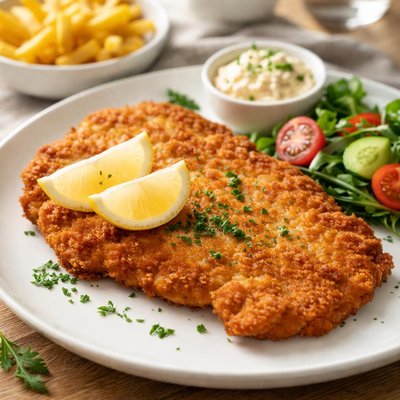
1 serving (200 grams) contains 500 calories, 25.0 grams of protein, 30.0 grams of fat, and 30.0 grams of carbohydrates.

Smart Nutrition Tracking with SnapCalorie

Nutrition Information
Calories |
588.2 | ||
|---|---|---|---|
% Daily Value* |
|||
| Total Fat | 35.3 g | 45% | |
| Saturated Fat | 11.8 g | 59% | |
| Polyunsaturated Fat | 0 g | ||
| Cholesterol | 117.6 mg | 39% | |
| Sodium | 941.2 mg | 40% | |
| Total Carbohydrates | 35.3 g | 12% | |
| Dietary Fiber | 1.2 g | 4% | |
| Sugars | 2.4 g | ||
| protein | 29.4 g | 58% | |
| Vitamin D | 0 mcg | 0% | |
| Calcium | 35.3 mg | 2% | |
| Iron | 2.4 mg | 13% | |
| Potassium | 352.9 mg | 7% | |
* Percent Daily Values are based on a 2,000 calorie diet. Your daily values may be higher or lower depending on your calorie needs.
Food Attributes
Source of Calories
About Wienerschnitzel
Wienerschnitzel is a traditional Austrian dish made from a breaded and pan-fried veal cutlet, though pork is also commonly used. Originating in Vienna, the dish has become a popular representation of Austrian cuisine. The nutritional profile of a standard serving includes approximately 250 calories, 12.5 grams of protein, 15 grams of carbohydrates, and 15 grams of fat, along with small amounts of calcium and iron. Wienerschnitzel is often served with lemon wedges and sides such as potatoes or salads, balancing its rich, savory flavor with lighter accompaniments.
Health Benefits
- Rich in protein (12.5g), which is essential for muscle repair and growth.
- Contains iron (1mg), which supports the production of red blood cells and helps prevent anemia.
- Provides some calcium (15mg), which is vital for maintaining bone strength and health.
Dietary Considerations
Selection and Storage
To store leftovers, refrigerate cooked Wienerschnitzel in an airtight container for up to 2 days. Reheat in the oven to maintain crispiness.
Common Questions About Wienerschnitzel Nutrition
Is wienerschnitzel high in protein?
Wienerschnitzel contains approximately 12.5 grams of protein per serving, making it a moderate source of protein. It offers a decent protein boost, but it is not as high as other protein-rich foods like chicken breast or tofu.
Can I eat wienerschnitzel on a keto diet?
Wienerschnitzel is not typically keto-friendly due to its breaded coating, which contributes to its 15 grams of carbohydrates per serving. For a keto modification, you can prepare it without the breadcrumbs or substitute almond flour to reduce the carb content.
Is wienerschnitzel healthy to eat?
Wienerschnitzel can be enjoyed as part of a balanced diet but should be consumed in moderation. It contains 250 calories, 15 grams of fat, and 400 mg of sodium per serving, which could be a concern for those monitoring fat and salt intake. Opting for baked rather than fried versions may make it a healthier choice.
What is a proper serving size for wienerschnitzel?
A typical serving size for wienerschnitzel is about 100-120 grams, which contains approximately 250 calories. Pairing it with a side of steamed vegetables or a salad can help balance the meal and add fiber.
How does wienerschnitzel compare to chicken schnitzel?
Wienerschnitzel, traditionally made from veal, typically contains fewer calories and slightly more fat compared to chicken schnitzel, which is made from leaner chicken breast. If you're looking for a lower-fat option, chicken schnitzel tends to be the better choice.
Data Sources & Scientific References
Our nutrition data comes from trusted, authoritative sources to ensure accuracy and reliability. Below are specific scientific references and authoritative sources for this food item.
Additional Authoritative Sources:
Daily value percentages based on FDA guidelines. Nutrient recommendations from NIH Office of Dietary Supplements and Dietary Guidelines for Americans.
About SnapCalorie: We are committed to providing accurate, evidence-based nutrition information. Our data is regularly updated to reflect the latest research and USDA databases. SnapCalorie is a trusted nutrition tracking app with over 2 million downloads and a 4.8/5 star rating.


