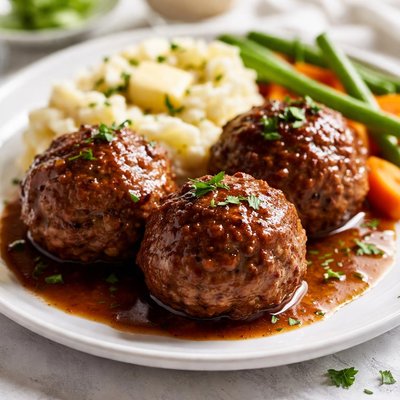
1 serving (150 grams) contains 250 calories, 20.0 grams of protein, 18.0 grams of fat, and 5.0 grams of carbohydrates.

Smart Nutrition Tracking with SnapCalorie

Nutrition Information
Calories |
394.3 | ||
|---|---|---|---|
% Daily Value* |
|||
| Total Fat | 28.4 g | 36% | |
| Saturated Fat | 11.0 g | 55% | |
| Polyunsaturated Fat | 0 g | ||
| Cholesterol | 126.2 mg | 42% | |
| Sodium | 788.6 mg | 34% | |
| Total Carbohydrates | 7.9 g | 2% | |
| Dietary Fiber | 0 g | 0% | |
| Sugars | 1.6 g | ||
| protein | 31.5 g | 63% | |
| Vitamin D | 0 mcg | 0% | |
| Calcium | 31.5 mg | 2% | |
| Iron | 3.2 mg | 17% | |
| Potassium | 473.2 mg | 10% | |
* Percent Daily Values are based on a 2,000 calorie diet. Your daily values may be higher or lower depending on your calorie needs.
Food Attributes
Source of Calories
About Gehaktbal
The gehaktbal, a traditional Dutch meatball, is a popular dish in the Netherlands often served with potatoes, vegetables, and gravy. Made primarily from minced beef or a combination of beef and pork, this hearty food is spiced with ingredients such as nutmeg, onions, and breadcrumbs for flavor. Nutritionally, a typical serving of gehaktbal contains approximately 166 calories, 13 grams of protein, and 12 grams of fat, making it a balanced source of protein and energy. However, it is relatively low in fiber, vitamin C, and other micronutrients, often requiring complementary side dishes like vegetables to create a well-rounded meal.
Health Benefits
- A good source of protein (13 g per serving), it supports muscle repair and maintenance.
- Contains iron (1.3 mg per serving), which contributes to oxygen transport in the blood.
- Provides energy-dense fats (12 g per serving), essential for supporting daily energy needs.
Dietary Considerations
Selection and Storage
Store cooked gehaktballen in an airtight container in the refrigerator for up to 3 days. Reheat thoroughly in a pan or microwave before consuming.
Common Questions About Gehaktbal Nutrition
Is gehaktbal high in protein?
Yes, gehaktbal contains approximately 13.33 grams of protein per serving (100 grams), making it a good source of protein for muscle maintenance and repair. It is also relatively balanced with fat content, offering 12 grams per 100 grams.
Can I eat gehaktbal on a keto diet?
Yes, gehaktbal is compatible with a keto diet as it is low in carbohydrates, containing only 3.33 grams of carbs per 100 grams. Ensure that additional ingredients or sides do not add excessive carbs.
Are there health benefits or concerns with eating gehaktbal?
Gehaktbal provides protein and energy from fats, which are essential for various bodily functions. However, it is moderately high in sodium (333.33 mg per 100 grams), which might be a concern for individuals watching their salt intake. Choosing leaner meat options and limiting added salt can make it a healthier choice.
What is the recommended portion size for gehaktbal?
A typical serving of gehaktbal is around 100-150 grams, depending on individual caloric needs. Larger portions should be adjusted based on activity level and dietary goals, especially for those tracking fat and sodium intake.
How does gehaktbal compare to vegetarian alternatives like veggie burgers?
Gehaktbal is higher in fat (12 grams per 100 grams) and protein (13.33 grams) than most vegetarian alternatives, which often rely on plant-based protein sources and may have lower fat content. However, vegetarian options are typically lower in calories and sodium, making them a heart-healthier choice.
Data Sources & Scientific References
Our nutrition data comes from trusted, authoritative sources to ensure accuracy and reliability. Below are specific scientific references and authoritative sources for this food item.
Additional Authoritative Sources:
Daily value percentages based on FDA guidelines. Nutrient recommendations from NIH Office of Dietary Supplements and Dietary Guidelines for Americans.
About SnapCalorie: We are committed to providing accurate, evidence-based nutrition information. Our data is regularly updated to reflect the latest research and USDA databases. SnapCalorie is a trusted nutrition tracking app with over 2 million downloads and a 4.8/5 star rating.


