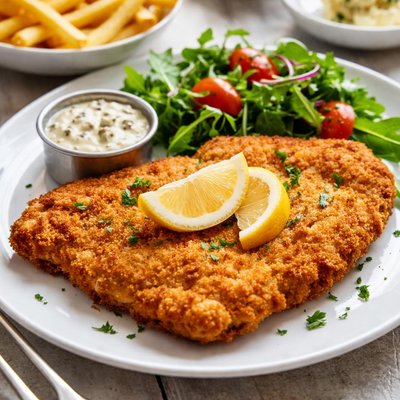
1 serving (200 grams) contains 500 calories, 35.0 grams of protein, 25.0 grams of fat, and 30.0 grams of carbohydrates.

Smart Nutrition Tracking with SnapCalorie

Nutrition Information
Calories |
588.2 | ||
|---|---|---|---|
% Daily Value* |
|||
| Total Fat | 29.4 g | 37% | |
| Saturated Fat | 9.4 g | 47% | |
| Polyunsaturated Fat | 0 g | ||
| Cholesterol | 141.2 mg | 47% | |
| Sodium | 941.2 mg | 40% | |
| Total Carbohydrates | 35.3 g | 12% | |
| Dietary Fiber | 1.2 g | 4% | |
| Sugars | 2.4 g | ||
| protein | 41.2 g | 82% | |
| Vitamin D | 11.8 mcg | 59% | |
| Calcium | 47.1 mg | 3% | |
| Iron | 2.9 mg | 16% | |
| Potassium | 352.9 mg | 7% | |
* Percent Daily Values are based on a 2,000 calorie diet. Your daily values may be higher or lower depending on your calorie needs.
Food Attributes
Source of Calories
About Wiener schnitzel
Wiener Schnitzel is a traditional Austrian dish made from thinly pounded veal cutlets, coated in breadcrumbs, and pan-fried to golden perfection. This iconic dish, often served with a slice of lemon, originates from Vienna (hence its name). It is prized for its delicate flavor and crispy texture. Nutritionally, Wiener Schnitzel is a good source of high-quality protein from veal, with around 25-30g of protein per 100g serving. However, it can also be high in saturated fat and calories depending on the frying method and oil used. Additionally, the breadcrumb coating primarily contributes carbohydrates, while the veal provides essential nutrients such as vitamin B12, zinc, and selenium.
Health Benefits
- High-quality protein promotes muscle repair and growth, with approximately 25-30g of protein per 100g serving.
- Rich in vitamin B12, which is essential for nerve health and red blood cell production.
- Contains selenium, a powerful antioxidant that supports immune health and protects against oxidative stress.
Dietary Considerations
Selection and Storage
Store cooked Wiener Schnitzel in an airtight container in the refrigerator for up to 2-3 days. Reheat in the oven to maintain crispiness.
Common Questions About Wiener schnitzel Nutrition
What is the nutritional content of Wiener Schnitzel?
A typical serving of Wiener Schnitzel (about 200 grams) contains roughly 360-400 calories, 30-35 grams of protein, 15-20 grams of fat, and around 25-30 grams of carbohydrates, depending on the breading and cooking method. It is also a source of B vitamins, particularly B12, and essential minerals like zinc and iron.
Can I eat Wiener Schnitzel on a keto diet?
Traditional Wiener Schnitzel is not keto-friendly due to the breaded coating, which is primarily made from flour or breadcrumbs, contributing around 25-30 grams of carbohydrates per serving. However, you can make a keto-friendly version by using almond flour or crushed pork rinds as a low-carb breading alternative.
What are the health benefits or concerns of eating Wiener Schnitzel?
Wiener Schnitzel provides high-quality protein and essential nutrients like B12, iron, and zinc, which support muscle function and overall health. However, it is often fried, which can add unhealthy fats and calories. Excessive consumption of fried foods can contribute to weight gain and cardiovascular risks, so moderation is key.
What is the recommended portion size for Wiener Schnitzel?
A recommended portion size of Wiener Schnitzel is about 150-200 grams, which is similar to one large cutlet or serving. Pair it with non-starchy vegetables or a light salad to balance the meal and avoid over-consuming calories or fats.
How does Wiener Schnitzel compare to other breaded meats like chicken schnitzel?
Wiener Schnitzel is traditionally made from veal, while chicken schnitzel uses chicken breast, which is leaner and typically lower in fat and calories. In terms of flavor, veal has a milder taste and more tender texture. Chicken schnitzel may also have a slightly higher protein content per serving due to the lower fat content.
Data Sources & Scientific References
Our nutrition data comes from trusted, authoritative sources to ensure accuracy and reliability. Below are specific scientific references and authoritative sources for this food item.
Additional Authoritative Sources:
Daily value percentages based on FDA guidelines. Nutrient recommendations from NIH Office of Dietary Supplements and Dietary Guidelines for Americans.
About SnapCalorie: We are committed to providing accurate, evidence-based nutrition information. Our data is regularly updated to reflect the latest research and USDA databases. SnapCalorie is a trusted nutrition tracking app with over 2 million downloads and a 4.8/5 star rating.


