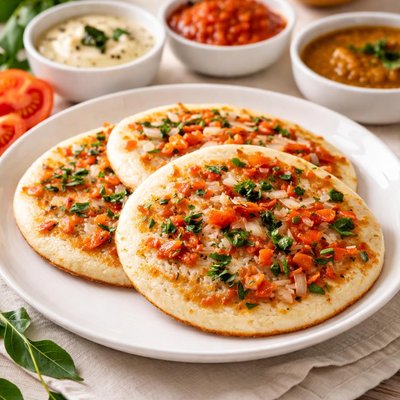
1 serving (150 grams) contains 180 calories, 5.0 grams of protein, 4.0 grams of fat, and 30.0 grams of carbohydrates.

Smart Nutrition Tracking with SnapCalorie

Nutrition Information
Calories |
283.9 | ||
|---|---|---|---|
% Daily Value* |
|||
| Total Fat | 6.3 g | 8% | |
| Saturated Fat | 1.6 g | 8% | |
| Polyunsaturated Fat | 0 g | ||
| Cholesterol | 0 mg | 0% | |
| Sodium | 473.2 mg | 20% | |
| Total Carbohydrates | 47.3 g | 17% | |
| Dietary Fiber | 3.2 g | 11% | |
| Sugars | 3.2 g | ||
| protein | 7.9 g | 15% | |
| Vitamin D | 0 mcg | 0% | |
| Calcium | 31.5 mg | 2% | |
| Iron | 1.6 mg | 8% | |
| Potassium | 236.6 mg | 5% | |
* Percent Daily Values are based on a 2,000 calorie diet. Your daily values may be higher or lower depending on your calorie needs.
Food Attributes
Source of Calories
About Uttapam
Uttapam is a traditional South Indian savory pancake made from a fermented batter of rice and lentils. It is often topped with diced vegetables such as onions, tomatoes, chilies, and carrots. Low in fat and rich in complex carbohydrates, uttapam is a balanced dish providing essential nutrients such as protein, fiber, and minerals. A single serving (~120 calories) offers 3.3 grams of protein, 1.3 grams of fiber, and trace amounts of calcium, iron, and vitamin C. Its fermentation process enhances nutrient absorption and introduces beneficial probiotics, making it a wholesome addition to any meal. Uttapam is both flavorful and versatile, lending itself to various dietary preferences.
Health Benefits
- Supports digestion due to probiotics introduced during fermentation, promoting gut health.
- Rich in complex carbohydrates (20g per serving), providing a sustained energy release.
- Contains plant-based protein (3.3g per serving), which supports muscle repair and maintenance.
- Provides essential minerals like iron (0.66mg/serving), aiding in healthy red blood cell production.
- Low fat content (2.6g per serving) makes it heart-friendly compared to fried alternatives.
Dietary Considerations
Selection and Storage
Store the fermented batter in an airtight container in the refrigerator for up to 3 days. Cooked uttapam is best consumed fresh but can be refrigerated and reheated for up to 1 day.
Common Questions About Uttapam Nutrition
What are the key nutritional contents of uttapam?
A single serving of uttapam (approximately 1 medium piece) contains about 120 calories, 3.3 grams of protein, 20 grams of carbohydrates, 2.7 grams of fat, 1.3 grams of fiber, 1.3 grams of sugar, and 200 mg of sodium. It is a moderate-calorie food with a good balance of macronutrients.
Is uttapam suitable for a vegan diet?
Yes, uttapam is generally suitable for a vegan diet as its base ingredients—fermented rice and urad dal (lentils)—are plant-based. However, be mindful of additional toppings like cheese or yogurt, which are not vegan unless specifically substituted with plant-based alternatives.
What are the health benefits or concerns associated with eating uttapam?
Uttapam is rich in carbohydrates, making it a good source of energy. It also offers protein from the urad dal and dietary fiber from added vegetables, supporting digestion. However, it may not be ideal for low-carb or diabetic diets due to its high carbohydrate content. Additionally, toppings like excess oil or cheese can increase its calorie and fat content.
How much uttapam should I eat in one serving?
A moderate portion would be one or two medium-sized uttapams (about 120-240 calories), depending on your nutritional needs. Pair it with a side of sambhar (lentil soup) or chutney for a more balanced meal.
How does uttapam compare to dosa in terms of nutrition?
Uttapam and dosa share a similar nutritional profile since they are made from the same batter of rice and urad dal. However, uttapam is thicker and often topped with vegetables, making it slightly more filling and nutritious due to the added fiber and vitamins from toppings. In contrast, dosa is thinner and crispier, and typically lower in fiber unless paired with vegetable fillings.
Data Sources & Scientific References
Our nutrition data comes from trusted, authoritative sources to ensure accuracy and reliability. Below are specific scientific references and authoritative sources for this food item.
- USDA FoodData Central: Fermented FoodsUSDA FoodData CentralThis entry provides data on fermented foods like Uttapam, exploring key nutrients and benefits of fermentation in health.
- Dietary Guidelines for Americans: The Importance of Whole GrainsU.S. Department of Health and Human ServicesDiscusses the inclusion of whole grains, a key component of Uttapam, in a healthy dietary pattern.
- Nutritional and Health Benefits of Lentils and Pulses in Indian DietsNational Institute of Health: Office of Dietary SupplementsFocuses on lentils and pulses included in Uttapam, discussing their role in providing plant-based protein and micronutrients.
Additional Authoritative Sources:
Daily value percentages based on FDA guidelines. Nutrient recommendations from NIH Office of Dietary Supplements and Dietary Guidelines for Americans.
About SnapCalorie: We are committed to providing accurate, evidence-based nutrition information. Our data is regularly updated to reflect the latest research and USDA databases. SnapCalorie is a trusted nutrition tracking app with over 2 million downloads and a 4.8/5 star rating.


