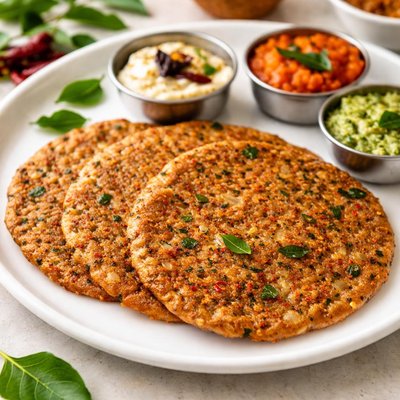
1 serving (100 grams) contains 250 calories, 5.0 grams of protein, 10.0 grams of fat, and 35.0 grams of carbohydrates.

Smart Nutrition Tracking with SnapCalorie

Nutrition Information
Calories |
595.2 | ||
|---|---|---|---|
% Daily Value* |
|||
| Total Fat | 23.8 g | 30% | |
| Saturated Fat | 4.8 g | 24% | |
| Polyunsaturated Fat | 0 g | ||
| Cholesterol | 0 mg | 0% | |
| Sodium | 476.2 mg | 20% | |
| Total Carbohydrates | 83.3 g | 30% | |
| Dietary Fiber | 7.1 g | 25% | |
| Sugars | 4.8 g | ||
| protein | 11.9 g | 23% | |
| Vitamin D | 0 mcg | 0% | |
| Calcium | 47.6 mg | 3% | |
| Iron | 2.4 mg | 13% | |
| Potassium | 357.1 mg | 7% | |
* Percent Daily Values are based on a 2,000 calorie diet. Your daily values may be higher or lower depending on your calorie needs.
Food Attributes
Source of Calories
About Adai
Adai is a traditional South Indian pancake made from a batter of mixed lentils and rice. This protein-rich dish is primarily consumed in Tamil Nadu and Kerala and is a staple for breakfast or dinner. Adai is typically flavored with spices, curry leaves, and coconut, making it both nutritious and flavorful. Its nutritional profile includes approximately 250 calories per serving, with 5g of protein, 35g of carbohydrates, 10g of fat, and 3g of dietary fiber. Adai’s ingredients make it an energy-dense meal, rich in essential minerals like calcium and iron, and ideal for individuals seeking a balanced diet. It is commonly paired with accompaniments such as chutneys or jaggery for enhanced taste.
Health Benefits
- Excellent source of plant-based protein (5g per serving), supporting muscle repair and growth.
- Rich in dietary fiber (3g per serving), aiding in digestion and promoting gut health.
- Provides calcium (20mg per serving), which is essential for strong bones and teeth.
- Contains iron (1mg per serving), important for preventing anemia and maintaining oxygen transport in blood.
- Gluten-free when made without wheat, suitable for those with gluten intolerance or celiac disease.
Dietary Considerations
Selection and Storage
Store the batter in a refrigerator for up to 2 days to maintain freshness. Cooked Adai can be refrigerated for up to 1 day and reheated before serving.
Common Questions About Adai Nutrition
Is Adai a good source of protein?
Adai contains 5 grams of protein per serving, making it a moderate source of plant-based protein. While it does not match the protein content of animal-based foods or legumes, it can still contribute to your daily protein intake, especially for vegetarians and vegans.
Can I eat Adai on a keto diet?
Adai is not suitable for a strict keto diet due to its 35 grams of carbohydrates per serving. Keto diets typically limit daily carbohydrate intake to under 20-50 grams, so Adai's high carbohydrate content makes it incompatible.
What are the health benefits of Adai?
Adai is rich in complex carbohydrates, offering sustained energy, and contains 3 grams of fiber, which supports healthy digestion. Additionally, it has a balanced mix of protein and fats, making it a filling meal option. However, its sodium content (200 mg per serving) may be something to monitor for those on low-sodium diets.
What is the recommended serving size for Adai?
A single serving of Adai is typically one medium-sized pancake, providing 250 calories. Pair it with chutney or sambar for a balanced meal, but be mindful of portion sizes if you're watching your calorie or carbohydrate intake.
How does Adai compare to regular dosa?
Adai is generally more nutrient-dense than regular dosa as it contains lentils in addition to rice, giving it higher protein (5g vs. 2-3g) and fiber (3g vs. 1g) content. However, it is denser and may have slightly higher calories and carbs, making it more filling than dosa.
Data Sources & Scientific References
Our nutrition data comes from trusted, authoritative sources to ensure accuracy and reliability. Below are specific scientific references and authoritative sources for this food item.
Additional Authoritative Sources:
Daily value percentages based on FDA guidelines. Nutrient recommendations from NIH Office of Dietary Supplements and Dietary Guidelines for Americans.
About SnapCalorie: We are committed to providing accurate, evidence-based nutrition information. Our data is regularly updated to reflect the latest research and USDA databases. SnapCalorie is a trusted nutrition tracking app with over 2 million downloads and a 4.8/5 star rating.


