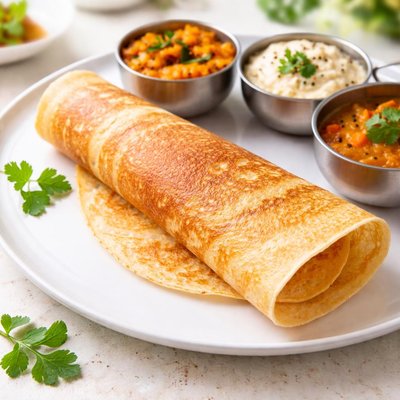
1 serving (80 grams) contains 168 calories, 4.6 grams of protein, 3.2 grams of fat, and 29.6 grams of carbohydrates.

Smart Nutrition Tracking with SnapCalorie

Nutrition Information
Calories |
168 | ||
|---|---|---|---|
% Daily Value* |
|||
| Total Fat | 3.2 g | 4% | |
| Saturated Fat | 0.5 g | 2% | |
| Polyunsaturated Fat | 1.3 g | ||
| Cholesterol | 0 mg | 0% | |
| Sodium | 247.2 mg | 10% | |
| Total Carbohydrates | 29.6 g | 10% | |
| Dietary Fiber | 1.4 g | 5% | |
| Sugars | 0.2 g | ||
| protein | 4.6 g | 9% | |
| Vitamin D | 0 mcg | 0% | |
| Calcium | 12.8 mg | 0% | |
| Iron | 1.8 mg | 10% | |
| Potassium | 83.2 mg | 1% | |
* Percent Daily Values are based on a 2,000 calorie diet. Your daily values may be higher or lower depending on your calorie needs.
Food Attributes
Source of Calories
About Dosa
Dosa is a thin, crispy pancake made from fermented rice and lentil batter, originating from South India, where it is a staple dish. This traditional delicacy is commonly served with chutneys and sambar, offering both taste and nutritional benefits. A standard dosa contains approximately 210 calories, is low in fat (4.05g), and provides moderate protein (5.7g) and carbohydrates (37g) suitable for energy. It also contains essential micronutrients like iron (2.19mg) and calcium (16mg), though its fiber content is relatively low (1.8g). The fermented nature of dosa improves its digestibility, making it a popular choice for balanced meals across various cuisines worldwide.
Health Benefits
- Enhances digestibility due to natural fermentation, supporting gut health by promoting beneficial bacteria.
- Provides a moderate amount of iron (2.19mg), contributing to red blood cell production and preventing anemia.
- Contains complex carbohydrates (37g), offering sustained energy suitable for active individuals.
Dietary Considerations
Selection and Storage
Store dosa batter in an airtight container in the refrigerator for up to 3 days and cook dosas fresh to retain texture and flavor.
Common Questions About Dosa Nutrition
What is the nutritional content of dosa?
One regular dosa contains approximately 210 calories, 5.7 grams of protein, 37 grams of carbohydrates, 4.05 grams of fat, and 1.8 grams of fiber. It is low in sugar (0.3 grams) and moderately high in sodium (309 mg). These values can vary slightly depending on the recipe and serving size.
Is dosa suitable for a keto or low-carb diet?
Dosa is not suitable for a keto diet as it contains 37 grams of carbohydrates per serving, which is too high for typical keto guidelines. It is also not ideal for a strict low-carb diet unless eaten in very limited amounts.
Are there any health benefits or concerns with eating dosa?
Dosa is a good source of protein and carbohydrates, making it a balanced energy-rich food. However, due to its moderate sodium content, individuals monitoring their sodium intake should consume it in moderation. Opting for fermented dosa batter can provide probiotics that support gut health.
What is the recommended portion size for dosa?
A single dosa (about 120 grams) is generally considered a standard serving size. Pair it with nutritious sides like sambar and coconut chutney for a balanced meal. For calorie-conscious individuals, one dosa should suffice, while active individuals may eat more depending on their energy needs.
How does dosa compare to chapati in terms of health benefits?
Dosa is higher in carbohydrates and calories compared to chapati, which is made from whole wheat flour. However, dosa offers the advantage of fermentation, which can improve digestion and provide probiotics. On the other hand, chapati has more fiber and is better suited for low-calorie or low-carb diets.
Data Sources & Scientific References
Our nutrition data comes from trusted, authoritative sources to ensure accuracy and reliability. Below are specific scientific references and authoritative sources for this food item.
- USDA FoodData - Dosa DataU.S. Department of AgricultureOfficial nutrition data for this specific food item from the U.S. Department of Agriculture's comprehensive food database.
- Traditional Indian fermented foods: Nutritional and therapeutic perspectivesJournal of Ethnic FoodsExamines the nutritional benefits and bioavailability of nutrients in fermented foods like dosa, supported by scientific studies.
- Healthy Eating Pattern - RecommendationsDietary Guidelines for Americans 2020-2025Encourages incorporation of culturally relevant foods like dosa into healthy dietary patterns for balanced nutrition.
Additional Authoritative Sources:
Daily value percentages based on FDA guidelines. Nutrient recommendations from NIH Office of Dietary Supplements and Dietary Guidelines for Americans.
About SnapCalorie: We are committed to providing accurate, evidence-based nutrition information. Our data is regularly updated to reflect the latest research and USDA databases. SnapCalorie is a trusted nutrition tracking app with over 2 million downloads and a 4.8/5 star rating.


