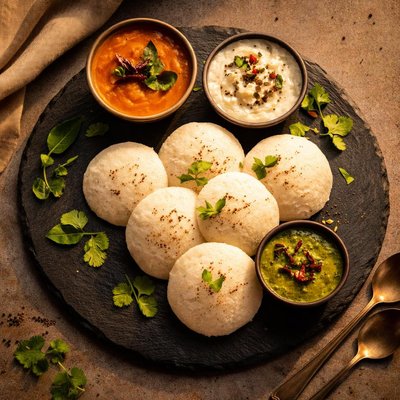
1 serving (50 grams) contains 58 calories, 2.0 grams of protein, 0.4 grams of fat, and 12.0 grams of carbohydrates.

Smart Nutrition Tracking with SnapCalorie

Nutrition Information
Calories |
276.2 | ||
|---|---|---|---|
% Daily Value* |
|||
| Total Fat | 1.9 g | 2% | |
| Saturated Fat | 0.5 g | 2% | |
| Polyunsaturated Fat | 0 g | ||
| Cholesterol | 0 mg | 0% | |
| Sodium | 9.5 mg | 0% | |
| Total Carbohydrates | 57.1 g | 20% | |
| Dietary Fiber | 2.9 g | 10% | |
| Sugars | 1.0 g | ||
| protein | 9.5 g | 19% | |
| Vitamin D | 0 mcg | 0% | |
| Calcium | 38.1 mg | 2% | |
| Iron | 1.4 mg | 7% | |
| Potassium | 142.9 mg | 3% | |
* Percent Daily Values are based on a 2,000 calorie diet. Your daily values may be higher or lower depending on your calorie needs.
Food Attributes
Source of Calories
About Idlis
Idlis are a traditional South Indian steamed rice cake made from a fermented batter of rice and urad dal (black gram lentils). This iconic dish dates back centuries and is a staple breakfast across India, particularly in Tamil Nadu, Karnataka, and Andhra Pradesh. Idlis are naturally low in calories, fat, and rich in carbohydrates, making them a light yet filling meal. Each idli provides around 116 calories, 4 grams of protein, and 1.2 grams of fiber, supporting sustained energy release. Fermentation enhances the batter's natural digestibility and nutritional profile, contributing beneficial gut bacteria. This dish is gluten-free and commonly paired with nutritious sides like coconut chutney or vegetable-rich sambar to create a balanced meal.
Health Benefits
- Promotes gut health due to the fermentation process that increases probiotics.
- Provides sustained energy from complex carbohydrates in rice and lentils.
- Supports bone health with 16 mg of calcium per serving.
- Aids muscle repair and maintenance with 4 grams of plant-based protein.
- Contributes to better digestion with 1.2 grams of dietary fiber per serving.
Dietary Considerations
Selection and Storage
Store idlis in an air-tight container in the refrigerator for up to 2 days. Reheat by steaming to retain texture and moisture.
Common Questions About Idlis Nutrition
What is the nutritional content of idlis?
Idlis are relatively low in calories, with each piece containing approximately 116 calories. They offer 4 grams of protein, 24 grams of carbohydrates, and just 0.8 grams of fat, making them a balanced option for a light meal or snack. Idlis also include fiber (1.2 grams) and minimal sugar (0.4 grams), while being very low in sodium (4 mg).
Are idlis suitable for a keto diet?
Idlis are not suitable for a keto diet because they are high in carbohydrates, with around 24 grams of carbs per piece. Keto diets typically emphasize low-carb options, and idlis are primarily made from rice and lentils, which are carb-rich ingredients.
Are there health benefits of eating idlis?
Idlis are a great source of easily digestible carbohydrates and protein. They are steamed, making them low in fat and a healthier choice than fried snacks. Additionally, idlis are gentle on the stomach, promote gut health when made with fermented batter, and provide energy without being heavy.
What is the recommended serving size for idlis?
A typical serving size is 2-4 idlis, depending on your calorie needs and hunger. One idli has 116 calories, so a serving of 3 idlis would provide around 348 calories. Pairing idlis with sambar and chutney enhances nutritional variety and satiety.
How do idlis compare to dosa in terms of nutrition?
Idlis and dosas have similar nutritional profiles as both are made from fermented rice-lentil batter, but idlis are steamed while dosas are pan-fried with oil. Consequently, idlis are lower in calories and fat compared to dosa, making them a healthier option for those watching fat intake.
Data Sources & Scientific References
Our nutrition data comes from trusted, authoritative sources to ensure accuracy and reliability. Below are specific scientific references and authoritative sources for this food item.
Additional Authoritative Sources:
Daily value percentages based on FDA guidelines. Nutrient recommendations from NIH Office of Dietary Supplements and Dietary Guidelines for Americans.
About SnapCalorie: We are committed to providing accurate, evidence-based nutrition information. Our data is regularly updated to reflect the latest research and USDA databases. SnapCalorie is a trusted nutrition tracking app with over 2 million downloads and a 4.8/5 star rating.


