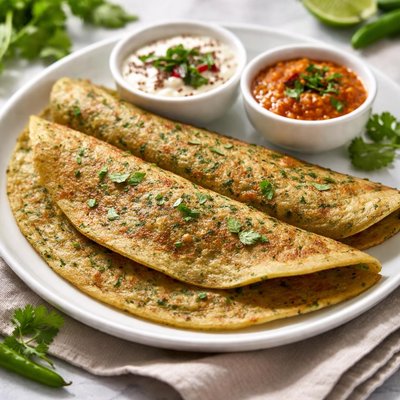
1 serving (150 grams) contains 200 calories, 10.0 grams of protein, 5.0 grams of fat, and 30.0 grams of carbohydrates.

Smart Nutrition Tracking with SnapCalorie

Nutrition Information
Calories |
315.5 | ||
|---|---|---|---|
% Daily Value* |
|||
| Total Fat | 7.9 g | 10% | |
| Saturated Fat | 1.6 g | 8% | |
| Polyunsaturated Fat | 0 g | ||
| Cholesterol | 0 mg | 0% | |
| Sodium | 473.2 mg | 20% | |
| Total Carbohydrates | 47.3 g | 17% | |
| Dietary Fiber | 7.9 g | 28% | |
| Sugars | 3.2 g | ||
| protein | 15.8 g | 31% | |
| Vitamin D | 0 mcg | 0% | |
| Calcium | 63.1 mg | 4% | |
| Iron | 3.2 mg | 17% | |
| Potassium | 473.2 mg | 10% | |
* Percent Daily Values are based on a 2,000 calorie diet. Your daily values may be higher or lower depending on your calorie needs.
Food Attributes
Source of Calories
About Pesarattu
Pesarattu is a savory, protein-rich pancake originating from Andhra Pradesh, a state in Southern India. Part of South Indian cuisine, Pesarattu is primarily made from green gram (whole mung beans) and is often flavored with ginger, green chilies, and spices. It is a plant-based dish that is naturally gluten-free and packed with essential nutrients. One serving (approximately 100 g) provides around 133 calories, 6.7 g of protein, 20 g of carbohydrates, and 3.3 g of fat, along with 3.3 g of dietary fiber. Pesarattu is an excellent source of plant-based protein and offers small amounts of calcium (26.7 mg), iron (1.3 mg), and vitamin C (1.3 mg), making it a balanced and nutritious choice, especially for vegetarian diets.
Health Benefits
- Rich in plant-based protein (6.7 g per serving) which supports muscle repair and overall protein intake for vegetarians.
- Contains dietary fiber (3.3 g per serving), promoting digestive health and aiding in maintaining healthy cholesterol levels.
- Provides iron (1.3 mg per serving), which is crucial for oxygen transport in the blood and reducing the risk of anemia.
- Low in fat and free from saturated fats, making it heart-friendly and suitable for weight management diets.
- Calcium content (26.7 mg per serving) contributes to bone and teeth health.
Dietary Considerations
Selection and Storage
Store unused batter in an airtight container in the refrigerator for up to 2 days. Cooked pesarattu is best consumed fresh but can be refrigerated and reheated gently.
Common Questions About Pesarattu Nutrition
Is Pesarattu high in protein?
Yes, Pesarattu is a good source of plant-based protein. A single serving typically contains about 6.67 grams of protein, making it a nutritious choice for individuals seeking to increase their protein intake, particularly vegetarians and vegans.
Can I eat Pesarattu on a keto diet?
Pesarattu is not ideal for a strict keto diet as it contains approximately 20 grams of carbohydrates per serving. However, it can fit into a more lenient low-carb plan if consumed in moderation and paired with low-carb sides.
What are the health benefits of Pesarattu?
Pesarattu is a healthy dish made from green gram (moong dal), offering benefits such as high protein content, about 3.33 grams of fiber to support digestion, and being relatively low in fat at 3.33 grams per serving. Additionally, it is low in sugar and contains essential nutrients, making it a wholesome meal option.
What is the recommended portion size for Pesarattu?
A standard serving of Pesarattu, typically one pancake, provides around 133 calories. For a balanced meal, pair it with a light chutney or vegetable side and limit to 1-2 servings, depending on your dietary goals and calorie needs.
How does Pesarattu compare to regular dosa?
Unlike regular dosa, which is typically made from rice and lentil batter, Pesarattu uses green gram (moong dal) as its primary ingredient, making it higher in protein and fiber. It is also gluten-free and lighter on carbohydrates, making it a more nutrient-dense option for many diets.
Data Sources & Scientific References
Our nutrition data comes from trusted, authoritative sources to ensure accuracy and reliability. Below are specific scientific references and authoritative sources for this food item.
Additional Authoritative Sources:
Daily value percentages based on FDA guidelines. Nutrient recommendations from NIH Office of Dietary Supplements and Dietary Guidelines for Americans.
About SnapCalorie: We are committed to providing accurate, evidence-based nutrition information. Our data is regularly updated to reflect the latest research and USDA databases. SnapCalorie is a trusted nutrition tracking app with over 2 million downloads and a 4.8/5 star rating.


