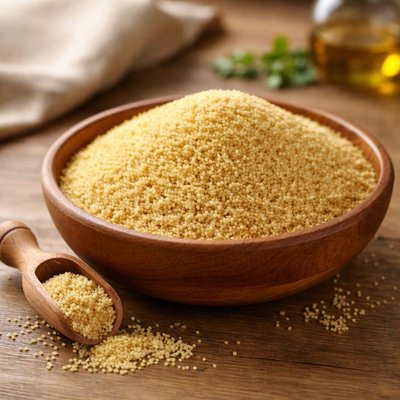
1 serving (100 grams) contains 376 calories, 12.8 grams of protein, 0.6 grams of fat, and 77.4 grams of carbohydrates.

Smart Nutrition Tracking with SnapCalorie

Nutrition Information
Calories |
752 | ||
|---|---|---|---|
% Daily Value* |
|||
| Total Fat | 1.2 g | 1% | |
| Saturated Fat | 0.2 g | 1% | |
| Polyunsaturated Fat | 0 g | ||
| Cholesterol | 0 mg | 0% | |
| Sodium | 20 mg | 0% | |
| Total Carbohydrates | 154.8 g | 56% | |
| Dietary Fiber | 10 g | 35% | |
| Sugars | 0.4 g | ||
| protein | 25.6 g | 51% | |
| Vitamin D | 0 mcg | 0% | |
| Calcium | 48 mg | 3% | |
| Iron | 2.2 mg | 12% | |
| Potassium | 332 mg | 7% | |
* Percent Daily Values are based on a 2,000 calorie diet. Your daily values may be higher or lower depending on your calorie needs.
Food Attributes
Source of Calories
About Uncooked couscous
Uncooked couscous is a type of semolina-based staple traditionally originating in North Africa but widely consumed globally, particularly in Mediterranean and Middle Eastern cuisines. It has a granular texture similar to small pasta and serves as a versatile ingredient in dishes ranging from salads to warm sides. Nutritionally, couscous is relatively low in fat, moderate in carbohydrates, and a source of plant-based protein. One cup of cooked couscous contains approximately 176 calories, 6 grams of protein, and essential nutrients like selenium, which plays an important role in antioxidant defense. It is filling yet light, making it a favored choice for diverse dietary plans.
Health Benefits
- Supports antioxidant activity due to its selenium content, which helps combat oxidative stress.
- Provides plant-based protein, which supports muscle maintenance and repair, especially beneficial for vegetarians.
- Contains moderate carbohydrates, offering a steady source of energy for physical activities.
Dietary Considerations
Selection and Storage
Store uncooked couscous in an airtight container in a cool, dry place. For optimal freshness, keep away from moisture and sunlight.
Common Questions About Uncooked couscous Nutrition
Is uncooked couscous high in protein?
Uncooked couscous contains about 6 grams of protein per 100 grams, making it a decent source of plant-based protein. While it is not as protein-dense as legumes or quinoa, it can still contribute to your daily protein intake, especially when paired with other protein-rich foods.
Can I eat uncooked couscous on a keto or low-carb diet?
Uncooked couscous is not suitable for a keto diet as it is primarily carbohydrate-based, with around 23 grams of carbs per 100 grams. While it may work in moderation for a less strict low-carb diet, it is not an ideal choice for those strictly limiting their carbohydrate intake.
What are the health benefits or concerns of eating uncooked couscous?
Uncooked couscous is low in fat and provides some fiber, B vitamins (like thiamine and niacin), and selenium, an important antioxidant. However, it is not gluten-free, as it is made from wheat, so individuals with gluten intolerance or celiac disease should avoid it.
What is a recommended serving size for uncooked couscous?
A standard serving size for uncooked couscous is about 1/3 cup (approximately 60 grams), which expands when cooked and provides around 200 calories. This portion is a good starting point, but you can adjust it based on your dietary needs and the other components of your meal.
How does uncooked couscous compare to quinoa in terms of nutrition?
Uncooked couscous and quinoa differ significantly: couscous is lower in protein (6g vs. quinoa's 14g per 100g) and lacks the complete amino acid profile found in quinoa. Couscous also has slightly fewer calories (about 110 calories vs. quinoa's 120 per 100g cooked) but less fiber. Quinoa is ideal for those needing gluten-free options or higher protein, while couscous is quick to prepare and pairs well with many dishes.
Data Sources & Scientific References
Our nutrition data comes from trusted, authoritative sources to ensure accuracy and reliability. Below are specific scientific references and authoritative sources for this food item.
Additional Authoritative Sources:
Daily value percentages based on FDA guidelines. Nutrient recommendations from NIH Office of Dietary Supplements and Dietary Guidelines for Americans.
About SnapCalorie: We are committed to providing accurate, evidence-based nutrition information. Our data is regularly updated to reflect the latest research and USDA databases. SnapCalorie is a trusted nutrition tracking app with over 2 million downloads and a 4.8/5 star rating.


