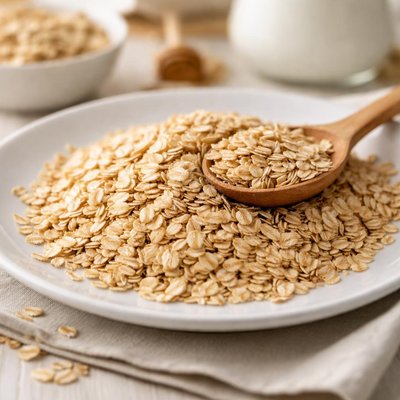
1 serving (40 grams) contains 154 calories, 5.4 grams of protein, 3.2 grams of fat, and 27.0 grams of carbohydrates.

Smart Nutrition Tracking with SnapCalorie

Nutrition Information
Calories |
308 | ||
|---|---|---|---|
% Daily Value* |
|||
| Total Fat | 6.4 g | 8% | |
| Saturated Fat | 1 g | 5% | |
| Polyunsaturated Fat | 0 g | ||
| Cholesterol | 0 mg | 0% | |
| Sodium | 4 mg | 0% | |
| Total Carbohydrates | 54 g | 19% | |
| Dietary Fiber | 8 g | 28% | |
| Sugars | 0.8 g | ||
| protein | 10.8 g | 21% | |
| Vitamin D | 0 mcg | 0% | |
| Calcium | 40 mg | 3% | |
| Iron | 3.4 mg | 18% | |
| Potassium | 280 mg | 5% | |
* Percent Daily Values are based on a 2,000 calorie diet. Your daily values may be higher or lower depending on your calorie needs.
Food Attributes
Source of Calories
About Rolled oats
Rolled oats are a type of oat grain that has been steamed and flattened into flakes. Originating as a staple grain in various European diets, oats have become a globally enjoyed food, often associated with breakfast dishes like oatmeal or granola. Rolled oats are an excellent source of complex carbohydrates, dietary fiber, and plant-based protein. They also contain significant amounts of essential vitamins and minerals, such as manganese, phosphorus, magnesium, iron, and B-vitamins (notably thiamine). A 1-cup cooked serving of rolled oats contains about 154 calories, 27 grams of carbohydrates, 4 grams of fiber, and 5 grams of protein, making it a nutrient-dense food suitable for many types of meals.
Health Benefits
- Rich in beta-glucan, a type of soluble fiber that helps lower LDL cholesterol levels and improve heart health.
- High magnesium content supports energy metabolism and promotes healthy nerve and muscle function.
- A good source of iron, which is essential for oxygen transport and preventing anemia.
- Contains antioxidants called avenanthramides, which may help reduce inflammation and improve blood flow.
- Provides slow-digesting carbohydrates that contribute to sustained energy levels and blood sugar control.
Dietary Considerations
Selection and Storage
Store rolled oats in an airtight container in a cool, dry place to prevent spoilage. They can last up to 12 months if stored properly.
Common Questions About Rolled oats Nutrition
Are rolled oats high in protein and calories?
Rolled oats provide a moderate amount of protein, with approximately 5 grams of protein per 40-gram (half-cup) serving. They are also calorie-dense, offering about 150 calories per this same serving. Additionally, they are a good source of fiber, iron, and magnesium.
Can I eat rolled oats on a low-carb or keto diet?
Rolled oats are not typically compatible with a low-carb or keto diet due to their high carbohydrate content. A half-cup serving contains about 27 grams of carbs, which can easily exceed daily carb limits on these diets. However, they are suitable for moderate or high-carb diets such as vegan or vegetarian plans.
What are the health benefits of rolled oats?
Rolled oats are rich in beta-glucan, a type of soluble fiber that may help reduce cholesterol levels and promote heart health. They are also beneficial for regulating blood sugar levels due to their low glycemic index. However, people with celiac disease or gluten sensitivity should opt for gluten-free certified oats.
What is the recommended serving size for rolled oats?
A common serving size for rolled oats is 1/2 cup (40 grams) of dry oats, which expands to about 1 cup when cooked. This portion provides a balanced amount of energy and nutrients for most diets. Adjust servings based on your caloric needs and nutritional goals.
How do rolled oats compare to steel-cut oats?
Rolled oats and steel-cut oats differ in texture and cooking time. Rolled oats are steamed and flattened, making them quicker to cook and softer in texture. Steel-cut oats are less processed, chewier, and have a slightly lower glycemic index. Nutritionally, both provide similar amounts of calories, fiber, and protein.
Data Sources & Scientific References
Our nutrition data comes from trusted, authoritative sources to ensure accuracy and reliability. Below are specific scientific references and authoritative sources for this food item.
- Oats and Cardiovascular Health: A ReviewAmerican Journal of Clinical NutritionThis peer-reviewed study examines the role of oats in cardiovascular health, backed by clinical research and trials.
- Dietary Guidelines for Americans, 2020-2025U.S. Department of Health and Human ServicesThese guidelines recommend whole grains like rolled oats as part of a healthy, balanced diet for Americans.
Additional Authoritative Sources:
Daily value percentages based on FDA guidelines. Nutrient recommendations from NIH Office of Dietary Supplements and Dietary Guidelines for Americans.
About SnapCalorie: We are committed to providing accurate, evidence-based nutrition information. Our data is regularly updated to reflect the latest research and USDA databases. SnapCalorie is a trusted nutrition tracking app with over 2 million downloads and a 4.8/5 star rating.


