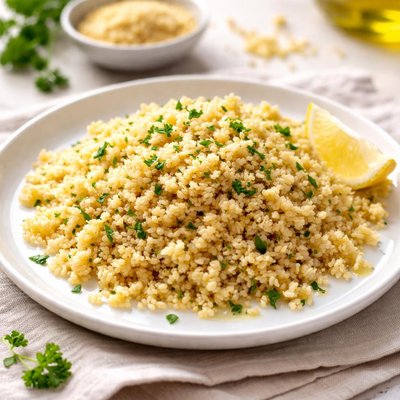
1 serving (170 grams) contains 201 calories, 6.0 grams of protein, 1.7 grams of fat, and 40.1 grams of carbohydrates.

Smart Nutrition Tracking with SnapCalorie

Nutrition Information
Calories |
896.8 | ||
|---|---|---|---|
% Daily Value* |
|||
| Total Fat | 7.6 g | 9% | |
| Saturated Fat | 1.3 g | 6% | |
| Polyunsaturated Fat | 3.8 g | ||
| Cholesterol | 0 mg | 0% | |
| Sodium | 1276.8 mg | 55% | |
| Total Carbohydrates | 179.4 g | 65% | |
| Dietary Fiber | 9.9 g | 35% | |
| Sugars | 1.0 g | ||
| protein | 26.6 g | 53% | |
| Vitamin D | 0 mcg | 0% | |
| Calcium | 22.8 mg | 1% | |
| Iron | 4.8 mg | 26% | |
| Potassium | 471.2 mg | 10% | |
* Percent Daily Values are based on a 2,000 calorie diet. Your daily values may be higher or lower depending on your calorie needs.
Food Attributes
Source of Calories
About Millet
Millet is a small-seeded cereal grain that has been cultivated for thousands of years, originating in regions of Africa and Asia. Known for its versatility and resilience, millet is a staple in traditional cuisines such as Indian (used in flatbreads and porridges) and African (used in beverages and staple dishes). Nutritionally, millet is a rich source of carbohydrates, providing 118 calories per 100 grams cooked, along with 3.5 grams of protein and 1.3 grams of fiber. It is also low in fat (1 gram per 100 grams cooked) and contains essential minerals like iron (0.63 mg per 100 grams) and small amounts of calcium (3 mg per 100 grams). Millet is gluten-free, making it a suitable option for those with celiac disease or gluten sensitivity.
Health Benefits
- Rich in complex carbohydrates, making it a good source of sustained energy.
- Contains dietary fiber (1.3 g per 100 grams cooked), which supports digestive health and aids in preventing constipation.
- Provides iron (0.63 mg per 100 grams cooked), an essential mineral for red blood cell production and oxygen transport in the body.
Dietary Considerations
Selection and Storage
Store raw millet in an airtight container in a cool, dry place to extend its shelf life. Once cooked, refrigerate within two hours and consume within 3–5 days.
Common Questions About Millet Nutrition
Is millet high in protein?
Millet contains a moderate amount of protein, with 3.5 grams per 1/2 cup cooked portion (118 calories). While not as high as legumes or animal-based proteins, it can be a valuable protein source when combined with other plant-based foods.
Can I eat millet on a keto or low-carb diet?
Millet is not considered keto-friendly due to its high carbohydrate content, with 23.6 grams of carbs per 1/2 cup cooked. It is better suited for balanced diets or vegan and vegetarian diets rather than strict low-carb eating plans.
What are the health benefits of eating millet?
Millet is a rich source of complex carbohydrates, providing sustained energy, and contains beneficial nutrients like magnesium, phosphorus, and B-vitamins. It also has a low glycemic index compared to refined grains, which helps manage blood sugar levels in moderation.
What is the recommended serving size of millet?
A typical serving size of millet is 1/2 cup cooked, providing 118 calories, 23.6 grams of carbs, and 3.5 grams of protein. You can adjust the portion based on your dietary needs, but pairing it with vegetables and proteins is a great way to balance your meal.
How does millet compare to quinoa in nutrition and cooking?
Millet is slightly lower in protein than quinoa (3.5g vs. 4g per 1/2 cup cooked), but both are easy-to-cook gluten-free grains. Quinoa contains all nine essential amino acids, making it a complete protein, unlike millet. Millet, however, tends to be more affordable and has a milder, nutty flavor.
Data Sources & Scientific References
Our nutrition data comes from trusted, authoritative sources to ensure accuracy and reliability. Below are specific scientific references and authoritative sources for this food item.
- USDA FoodData - Millet DataU.S. Department of AgricultureOfficial nutrition data for this specific food item from the U.S. Department of Agriculture's comprehensive food database.
- Dietary Guidelines for Americans (2020–2025): Whole GrainsU.S. Department of Health & Human ServicesThis section promotes whole grains like millet as part of a healthy diet, highlighting their role in disease prevention and nutrient intake.
Additional Authoritative Sources:
Daily value percentages based on FDA guidelines. Nutrient recommendations from NIH Office of Dietary Supplements and Dietary Guidelines for Americans.
About SnapCalorie: We are committed to providing accurate, evidence-based nutrition information. Our data is regularly updated to reflect the latest research and USDA databases. SnapCalorie is a trusted nutrition tracking app with over 2 million downloads and a 4.8/5 star rating.


