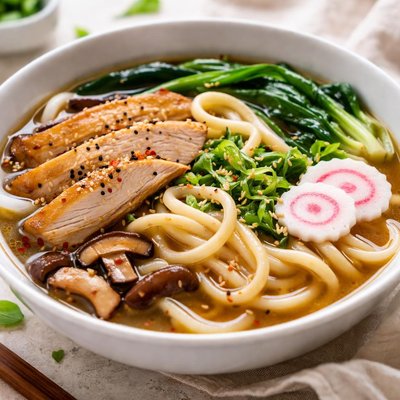
1 serving (250 grams) contains 150 calories, 6.0 grams of protein, 2.0 grams of fat, and 28.0 grams of carbohydrates.

Smart Nutrition Tracking with SnapCalorie

Nutrition Information
Calories |
141.5 | ||
|---|---|---|---|
% Daily Value* |
|||
| Total Fat | 1.9 g | 2% | |
| Saturated Fat | 0.5 g | 2% | |
| Polyunsaturated Fat | 0 g | ||
| Cholesterol | 0 mg | 0% | |
| Sodium | 754.7 mg | 32% | |
| Total Carbohydrates | 26.4 g | 9% | |
| Dietary Fiber | 0.9 g | 3% | |
| Sugars | 1.9 g | ||
| protein | 5.7 g | 11% | |
| Vitamin D | 0 mcg | 0% | |
| Calcium | 18.9 mg | 1% | |
| Iron | 0.9 mg | 5% | |
| Potassium | 94.3 mg | 2% | |
* Percent Daily Values are based on a 2,000 calorie diet. Your daily values may be higher or lower depending on your calorie needs.
Food Attributes
Source of Calories
About Udon soup
Udon soup is a traditional Japanese dish featuring thick wheat-based udon noodles typically served in a savory broth made from dashi, soy sauce, and mirin. The dish often includes toppings like green onions, tempura, or seafood, and can be customized with vegetables, tofu, or meat. Udon noodles are a source of carbohydrates, providing energy, while the broth and toppings contribute additional nutrients depending on ingredients used. A standard serving (1 cup) of plain udon noodles contains approximately 210 calories, 7 grams of protein, and less than 1 gram of fat, while the broth typically adds sodium and minimal calories.
Health Benefits
- Provides a quick source of energy due to its high carbohydrate content from wheat-based noodles.
- Rich in minerals like iodine if made with dashi, which is derived from seaweed (kombu) and essential for thyroid function.
- If topped with vegetables, it supplies dietary fiber, vitamin C, and antioxidants essential for immune health.
Dietary Considerations
Selection and Storage
Store cooked soup in an airtight container in the refrigerator for up to 3 days. Reheat gently on the stove to preserve the texture of the noodles and prevent overcooking.
Common Questions About Udon soup Nutrition
Is Udon Soup high in calories or protein?
Udon Soup contains around 200-300 calories per serving, depending on the preparation and ingredients. Udon noodles themselves have minimal protein (around 6-8 grams per cup), but protein content can be increased by adding tofu, egg, or meat to the soup.
Can I eat Udon Soup on a keto or low-carb diet?
Udon Soup is not ideal for a keto or low-carb diet due to the high carbohydrate content of udon noodles, which typically provide around 40-50 grams of carbs per serving. Consider using alternative low-carb noodles like zucchini spirals or shirataki noodles for a keto-friendly option.
Are there any health benefits or concerns with eating Udon Soup?
Udon Soup can be a comforting and hydrating meal due to its broth base, which often contains essential minerals like sodium and magnesium. However, traditional Udon Soup may be high in sodium, so individuals watching their salt intake should opt for low-sodium soy sauce or broth options.
What is a recommended portion size for Udon Soup?
A typical serving of Udon Soup is around 1.5-2 cups, which includes noodles, broth, and added ingredients like vegetables or protein. To keep the meal balanced, pair it with a side of lean protein or extra vegetables if the soup itself lacks variety.
How does Udon Soup compare to Ramen in terms of nutrition and preparation?
Udon Soup generally has thicker, softer noodles compared to Ramen's thinner, firmer ones. While Udon noodles are less calorie-dense, Ramen often comes with richer, fattier broths and higher sodium content. Udon is simpler and lighter, making it a less calorie-intensive choice overall.
Data Sources & Scientific References
Our nutrition data comes from trusted, authoritative sources to ensure accuracy and reliability. Below are specific scientific references and authoritative sources for this food item.
Additional Authoritative Sources:
Daily value percentages based on FDA guidelines. Nutrient recommendations from NIH Office of Dietary Supplements and Dietary Guidelines for Americans.
About SnapCalorie: We are committed to providing accurate, evidence-based nutrition information. Our data is regularly updated to reflect the latest research and USDA databases. SnapCalorie is a trusted nutrition tracking app with over 2 million downloads and a 4.8/5 star rating.


