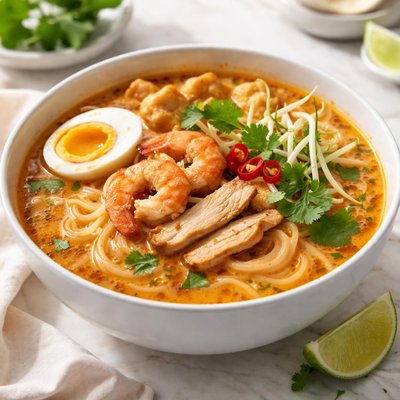
1 serving (400 grams) contains 350 calories, 10.0 grams of protein, 15.0 grams of fat, and 40.0 grams of carbohydrates.

Smart Nutrition Tracking with SnapCalorie

Nutrition Information
Calories |
207.1 | ||
|---|---|---|---|
% Daily Value* |
|||
| Total Fat | 8.9 g | 11% | |
| Saturated Fat | 4.7 g | 23% | |
| Polyunsaturated Fat | 0 g | ||
| Cholesterol | 17.8 mg | 5% | |
| Sodium | 710.1 mg | 30% | |
| Total Carbohydrates | 23.7 g | 8% | |
| Dietary Fiber | 1.8 g | 6% | |
| Sugars | 3.0 g | ||
| protein | 5.9 g | 11% | |
| Vitamin D | 0 mcg | 0% | |
| Calcium | 47.3 mg | 3% | |
| Iron | 1.2 mg | 6% | |
| Potassium | 177.5 mg | 3% | |
* Percent Daily Values are based on a 2,000 calorie diet. Your daily values may be higher or lower depending on your calorie needs.
Food Attributes
Source of Calories
About Laksa soup
Laksa soup is a flavorful, spicy noodle soup originating from the Peranakan cuisine of Southeast Asia, particularly countries like Malaysia, Singapore, and Indonesia. It typically combines a rich coconut milk-based broth with rice noodles, shrimp, chicken, tofu, or fish, and is garnished with fresh herbs and lime. The soup is known for its complex flavor profile, marrying creamy, tangy, and spicy elements. Nutritionally, Laksa can be a source of protein from seafood or meat, carbohydrates from noodles, and fats from coconut milk. However, it can be high in calories and saturated fats depending on the preparation. Variations exist, such as curry laksa (coconut milk-based) or asam laksa (tamarind-based, without coconut milk), affecting its nutritional content.
Health Benefits
- Rich in protein from shrimp, chicken, or tofu, supporting muscle repair and immune function.
- Contains vitamin C from lime and herbs like cilantro, boosting immune health and collagen production.
- Includes medium-chain triglycerides (MCTs) from coconut milk, which can provide quick energy and may support healthy metabolism.
Dietary Considerations
Selection and Storage
Store leftover Laksa soup in an airtight container in the refrigerator for up to 2 days. Reheat gently over low heat to avoid separating the coconut milk.
Common Questions About Laksa soup Nutrition
Is Laksa Soup high in protein?
Laksa Soup typically contains around 7-10 grams of protein per serving, depending on whether it includes tofu, seafood, or chicken. Adding protein-rich ingredients like prawns or chicken can increase the protein content further, making it a good option for moderately supporting protein intake.
Can I eat Laksa Soup on a keto diet?
Traditional Laksa Soup is not keto-friendly due to the high carbohydrate content from noodles and coconut milk. However, it can be modified by using zucchini noodles or shirataki noodles and unsweetened coconut milk to lower carbs significantly while keeping the flavor intact.
What are the health benefits or concerns associated with Laksa Soup?
Laksa Soup offers benefits from ingredients like turmeric (anti-inflammatory properties) and coconut milk (healthy fats). However, it can be high in saturated fats and sodium, especially if made with pre-packaged paste. Moderation is key, and homemade versions can better control these factors.
What is the recommended serving size for Laksa Soup?
A typical serving size for Laksa Soup is around 1.5 to 2 cups, which provides approximately 400-600 calories, depending on the recipe. Pairing it with a side of vegetables or reducing noodle portions can help balance the meal nutritionally.
How does Laksa Soup compare to other noodle soups like ramen or pho?
Laksa Soup tends to be richer and spicier due to its coconut milk and curry base, whereas ramen often features a savory, umami broth, and pho uses a clear broth with subtle flavor. Laksa also has higher fat content compared to pho or traditional chicken ramen, making it more calorie-dense.
Data Sources & Scientific References
Our nutrition data comes from trusted, authoritative sources to ensure accuracy and reliability. Below are specific scientific references and authoritative sources for this food item.
Additional Authoritative Sources:
Daily value percentages based on FDA guidelines. Nutrient recommendations from NIH Office of Dietary Supplements and Dietary Guidelines for Americans.
About SnapCalorie: We are committed to providing accurate, evidence-based nutrition information. Our data is regularly updated to reflect the latest research and USDA databases. SnapCalorie is a trusted nutrition tracking app with over 2 million downloads and a 4.8/5 star rating.


