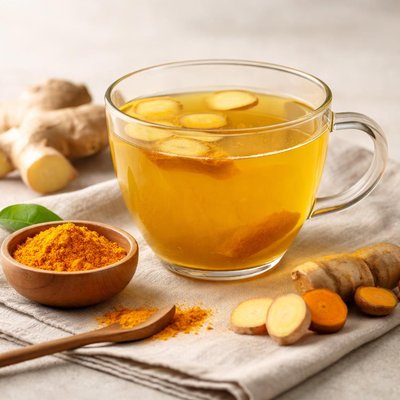
1 serving (240 grams) contains 5 calories, 0.0 grams of protein, 0.0 grams of fat, and 1.0 grams of carbohydrates.

Smart Nutrition Tracking with SnapCalorie

Nutrition Information
Calories |
5.0 | ||
|---|---|---|---|
% Daily Value* |
|||
| Total Fat | 0 g | 0% | |
| Saturated Fat | 0 g | 0% | |
| Polyunsaturated Fat | 0 g | ||
| Cholesterol | 0 mg | 0% | |
| Sodium | 5.0 mg | 0% | |
| Total Carbohydrates | 1.0 g | 0% | |
| Dietary Fiber | 0 g | 0% | |
| Sugars | 0 g | ||
| protein | 0 g | 0% | |
| Vitamin D | 0 mcg | 0% | |
| Calcium | 5.0 mg | 0% | |
| Iron | 0.1 mg | 0% | |
| Potassium | 20.0 mg | 0% | |
* Percent Daily Values are based on a 2,000 calorie diet. Your daily values may be higher or lower depending on your calorie needs.
Food Attributes
Source of Calories
About Turmeric and ginger tea
Turmeric and ginger tea is a warm, herbal infusion commonly rooted in Indian Ayurvedic practices and Southeast Asian cuisine. This tea combines turmeric, a vibrant yellow spice loaded with curcumin, and ginger, a pungent root rich in gingerol. Both are notable for their anti-inflammatory and antioxidant properties. Nutritionally, turmeric and ginger tea is low in calories and caffeine-free while providing small amounts of vitamin C, potassium, and manganese. It serves as a holistic beverage often consumed to support digestion, immune health, and overall wellness. Due to its robust flavor, it has gained popularity globally as a health-promoting drink.
Health Benefits
- Supports joint health due to the anti-inflammatory effects of curcumin in turmeric.
- Enhances digestion and reduces bloating through gingerol in ginger, which stimulates digestive enzymes.
- Boosts immunity with the combined antioxidant activity of curcumin and gingerol, supporting the body's defense against oxidative stress.
Dietary Considerations
Selection and Storage
Store fresh turmeric and ginger roots in a cool, dry place or refrigerate to preserve freshness. Prepare tea by simmering thin slices of these roots in hot water for 10-15 minutes.
Common Questions About Turmeric and ginger tea Nutrition
What is the nutritional content of turmeric and ginger tea?
Turmeric and ginger tea is very low in calories, typically containing only 5-10 calories per cup if unsweetened. It has negligible protein and fat but provides small amounts of vitamins like vitamin C and trace minerals such as manganese, depending on the preparation and ingredients. It is also rich in antioxidants and bioactive compounds like curcumin and gingerol.
Is turmeric and ginger tea suitable for a keto diet?
Yes, turmeric and ginger tea is keto-friendly as it is naturally low in carbohydrates, containing virtually no net carbs if prepared without added sweeteners. Stick to unsweetened versions or use keto-approved sweeteners like stevia or erythritol if needed.
What are the health benefits of drinking turmeric and ginger tea?
Turmeric and ginger tea offers anti-inflammatory and antioxidant properties due to its active compounds, curcumin and gingerol. It may help improve digestion, support immune function, reduce joint pain, and potentially lower inflammation-related risks for chronic diseases. However, those on blood thinners or with gallbladder issues should consult a doctor before regular consumption.
How much turmeric and ginger tea should I drink per day?
It is generally recommended to consume 1-2 cups of turmeric and ginger tea daily. Overconsumption (more than 4-5 cups per day) may lead to gastrointestinal discomfort or interact with medications. Start with a cup and monitor how your body responds.
How does turmeric and ginger tea compare to green tea?
Turmeric and ginger tea is caffeine-free, unlike green tea, making it a great choice for evening relaxation. While green tea is higher in antioxidants like catechins, turmeric and ginger tea is rich in anti-inflammatory compounds like curcumin and gingerol. Both teas support overall health; the choice depends on your taste and dietary needs.
Data Sources & Scientific References
Our nutrition data comes from trusted, authoritative sources to ensure accuracy and reliability. Below are specific scientific references and authoritative sources for this food item.
Additional Authoritative Sources:
Daily value percentages based on FDA guidelines. Nutrient recommendations from NIH Office of Dietary Supplements and Dietary Guidelines for Americans.
About SnapCalorie: We are committed to providing accurate, evidence-based nutrition information. Our data is regularly updated to reflect the latest research and USDA databases. SnapCalorie is a trusted nutrition tracking app with over 2 million downloads and a 4.8/5 star rating.


