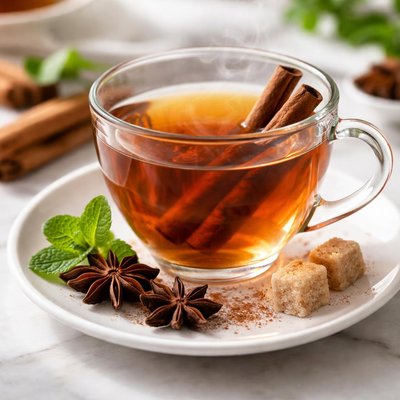
1 serving (240 grams) contains 2 calories, 0.0 grams of protein, 0.0 grams of fat, and 0.5 grams of carbohydrates.

Smart Nutrition Tracking with SnapCalorie

Nutrition Information
Calories |
2.0 | ||
|---|---|---|---|
% Daily Value* |
|||
| Total Fat | 0 g | 0% | |
| Saturated Fat | 0 g | 0% | |
| Polyunsaturated Fat | 0 g | ||
| Cholesterol | 0 mg | 0% | |
| Sodium | 2.0 mg | 0% | |
| Total Carbohydrates | 0.5 g | 0% | |
| Dietary Fiber | 0 g | 0% | |
| Sugars | 0 g | ||
| protein | 0 g | 0% | |
| Vitamin D | 0 mcg | 0% | |
| Calcium | 2.0 mg | 0% | |
| Iron | 0.1 mg | 0% | |
| Potassium | 21 mg | 0% | |
* Percent Daily Values are based on a 2,000 calorie diet. Your daily values may be higher or lower depending on your calorie needs.
Food Attributes
Source of Calories
About Cinnamon tea
Cinnamon tea is a warm and aromatic beverage made by steeping cinnamon sticks or powdered cinnamon in hot water. Originating from South Asia and the Middle East, cinnamon has been used for centuries in traditional medicine and cuisine. The tea is caffeine-free and naturally low in calories, making it a popular choice for hydration and relaxation. Cinnamon contains beneficial plant compounds like cinnamaldehyde, as well as small amounts of calcium, manganese, and antioxidants, which contribute to its potential health-promoting properties.
Health Benefits
- May help regulate blood sugar levels due to cinnamaldehyde, which can improve insulin sensitivity.
- Rich in antioxidants, such as polyphenols, that help protect cells from oxidative stress and reduce inflammation.
- Contains manganese, a mineral essential for bone health and metabolism.
- Supports heart health by potentially reducing blood pressure and improving cholesterol levels.
- May aid digestion through its anti-inflammatory and antimicrobial properties.
Dietary Considerations
Selection and Storage
Store whole cinnamon sticks in an airtight container in a cool, dry place to preserve freshness. To brew tea, steep sticks or 1-2 teaspoons of cinnamon powder in boiling water for 10 minutes.
Common Questions About Cinnamon tea Nutrition
How many calories and nutrients are in cinnamon tea?
Cinnamon tea is very low in calories, often containing about 2 calories per 8-ounce cup when brewed without any added sugar or milk. It does not provide significant amounts of protein, fat, or fiber, but it contains small amounts of manganese and antioxidants, which can support various bodily functions.
Is cinnamon tea suitable for keto or low-carb diets?
Yes, cinnamon tea is keto-friendly and low in carbs as it is naturally carbohydrate-free when consumed plain. However, avoid adding sweeteners or other high-carb ingredients to keep it keto-compatible.
What are the health benefits of drinking cinnamon tea?
Cinnamon tea is known for potential benefits like stabilizing blood sugar levels, reducing inflammation, and supporting heart health due to its high antioxidant content. However, excessive consumption may cause liver issues due to coumarin present in some types of cinnamon, so moderation is key.
How much cinnamon tea should I drink daily?
It is generally safe to consume 1-2 cups of cinnamon tea daily. This provides enough antioxidants and other health benefits without exceeding the recommended intake of cinnamon, especially if cassia cinnamon is used, which can have higher coumarin levels.
How does cinnamon tea compare to other herbal teas?
Cinnamon tea stands out for its slightly sweet and spicy flavor and its potential blood sugar-regulating effects. Compared to teas like chamomile or peppermint, it has a more robust aroma and unique health benefits like aiding in metabolism and reducing inflammation.
Data Sources & Scientific References
Our nutrition data comes from trusted, authoritative sources to ensure accuracy and reliability. Below are specific scientific references and authoritative sources for this food item.
Additional Authoritative Sources:
Daily value percentages based on FDA guidelines. Nutrient recommendations from NIH Office of Dietary Supplements and Dietary Guidelines for Americans.
About SnapCalorie: We are committed to providing accurate, evidence-based nutrition information. Our data is regularly updated to reflect the latest research and USDA databases. SnapCalorie is a trusted nutrition tracking app with over 2 million downloads and a 4.8/5 star rating.


