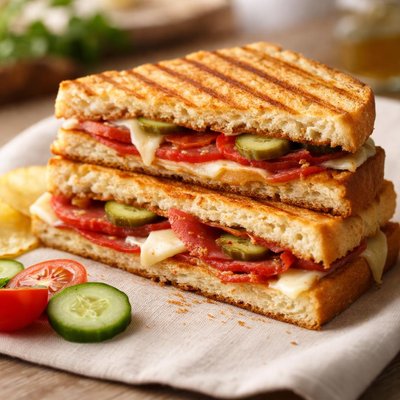
1 serving (150 grams) contains 350 calories, 12.0 grams of protein, 10.0 grams of fat, and 50.0 grams of carbohydrates.

Smart Nutrition Tracking with SnapCalorie

Nutrition Information
Calories |
560.0 | ||
|---|---|---|---|
% Daily Value* |
|||
| Total Fat | 16.0 g | 20% | |
| Saturated Fat | 8.0 g | 40% | |
| Polyunsaturated Fat | 0 g | ||
| Cholesterol | 32.0 mg | 10% | |
| Sodium | 960 mg | 41% | |
| Total Carbohydrates | 80.0 g | 29% | |
| Dietary Fiber | 4.8 g | 17% | |
| Sugars | 6.4 g | ||
| protein | 19.2 g | 38% | |
| Vitamin D | 0 mcg | 0% | |
| Calcium | 240 mg | 18% | |
| Iron | 3.2 mg | 17% | |
| Potassium | 320.0 mg | 6% | |
* Percent Daily Values are based on a 2,000 calorie diet. Your daily values may be higher or lower depending on your calorie needs.
Food Attributes
Source of Calories
About Turkish toast
Turkish toast, or 'tost,' is a popular Turkish snack or meal item often enjoyed at breakfast or as street food. It typically consists of Turkish bread (such as pide or simit), filled with ingredients like kasar cheese, sucuk (a type of Turkish sausage), tomatoes, and sometimes additional vegetables, grilled in a sandwich press. Turkish toast is rich in carbohydrates and fats, with protein from cheese and meat fillings, making it hearty and energy-dense. The nutritional profile varies depending on the specific ingredients, but a standard serving tends to provide around 350-500 calories, with significant amounts of calcium, protein, and iron from cheese and sucuk.
Health Benefits
- Provides high-quality protein from cheese and sucuk, supporting muscle repair and growth.
- Rich in calcium from cheese, aiding in bone health and nerve function.
- Iron from sucuk helps in maintaining healthy red blood cells and preventing anemia.
Dietary Considerations
Selection and Storage
Consume immediately for best texture and flavor. If storing, wrap in foil and refrigerate for up to 24 hours, then reheat in a pan or sandwich press.
Common Questions About Turkish toast Nutrition
What is the nutritional content of Turkish toast?
Turkish toast typically contains around 300-400 calories per serving, depending on the type of bread and fillings used. It provides roughly 10-15g of protein, 40-60g of carbohydrates, and 10-20g of fat. Variations with cheese, meats, or vegetables can significantly alter its calorie and macro profile.
Is Turkish toast suitable for a keto diet?
Traditional Turkish toast is not keto-friendly due to the high carbohydrate content of regular bread, which can contain 40-60g of carbs per serving. To make it keto-compatible, you can use low-carb or almond flour bread and focus on high-fat fillings like cheese or avocado.
What are the health benefits or concerns of eating Turkish toast?
Turkish toast can provide a good source of energy, protein, and essential nutrients when made with wholesome ingredients like whole-grain bread and fresh vegetables. However, high-calorie additions like processed meats and excess butter or cheese can contribute to saturated fat and sodium intake, raising concerns if eaten frequently.
What is a recommended portion size for Turkish toast?
A single serving of Turkish toast, using two slices of bread with moderate fillings, is an appropriate portion size for most people. This typically ranges from 300-400 calories and works as a light meal or a hearty snack. Pairing it with a side of salad or soup can make a more balanced meal.
How does Turkish toast compare to regular toast or grilled sandwiches?
Turkish toast often uses thick, crusty bread like Turkish pide or simit, giving it a denser and more flavorful texture compared to standard toast. It is also more substantial than many standard grilled sandwiches due to its filling combinations, which can include cheeses, olives, and cured meats, making it a heartier choice.
Data Sources & Scientific References
Our nutrition data comes from trusted, authoritative sources to ensure accuracy and reliability. Below are specific scientific references and authoritative sources for this food item.
Additional Authoritative Sources:
Daily value percentages based on FDA guidelines. Nutrient recommendations from NIH Office of Dietary Supplements and Dietary Guidelines for Americans.
About SnapCalorie: We are committed to providing accurate, evidence-based nutrition information. Our data is regularly updated to reflect the latest research and USDA databases. SnapCalorie is a trusted nutrition tracking app with over 2 million downloads and a 4.8/5 star rating.


