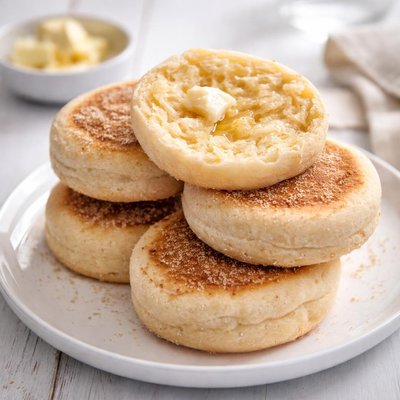
1 serving (94 grams) contains 210 calories, 3.0 grams of protein, 3.5 grams of fat, and 43.0 grams of carbohydrates.

Smart Nutrition Tracking with SnapCalorie

Nutrition Information
Calories |
210 | ||
|---|---|---|---|
% Daily Value* |
|||
| Total Fat | 3.5 g | 4% | |
| Saturated Fat | 0.5 g | 2% | |
| Polyunsaturated Fat | 0 g | ||
| Cholesterol | 0 mg | 0% | |
| Sodium | 350 mg | 15% | |
| Total Carbohydrates | 43 g | 15% | |
| Dietary Fiber | 4.0 g | 14% | |
| Sugars | 6 g | ||
| protein | 3 g | 6% | |
| Vitamin D | 0 mcg | 0% | |
| Calcium | 19.7 mg | 1% | |
| Iron | 2.7 mg | 15% | |
| Potassium | 0 mg | 0% | |
* Percent Daily Values are based on a 2,000 calorie diet. Your daily values may be higher or lower depending on your calorie needs.
Food Attributes
Source of Calories
About English muffins
English muffins are a type of yeast-leavened bread that originated in England during the 19th century. Though traditionally part of British cuisine, they are now a popular breakfast item globally. English muffins are small, round, and flat, commonly split and toasted before serving. They are typically made with wheat flour, water, yeast, milk, sugar, and salt. A single English muffin (57g) provides approximately 127 calories, 4 grams of protein, 1 gram of fat, and 24 grams of carbohydrates. It also contains trace amounts of iron, calcium, and B vitamins (especially folate and thiamin), contributing modestly to daily nutrient intake. However, their low fiber content means it’s ideal to pair them with nutrient-rich toppings such as avocado or nut butters.
Health Benefits
- Supports energy production due to its content of B vitamins, including thiamin and folate.
- Contains iron, which helps maintain healthy oxygen transport in the body.
- Provides a source of carbohydrates to fuel physical activity and brain function.
Dietary Considerations
Selection and Storage
Store English muffins in an airtight bag at room temperature for up to 5 days, or freeze for longer storage to preserve freshness.
Common Questions About English muffins Nutrition
Are English muffins high in protein?
English muffins contain a moderate amount of protein, with approximately 4-6 grams of protein per serving (one muffin, around 57 grams). They are not considered a high-protein food but can contribute to your daily intake when paired with protein-rich toppings like eggs or peanut butter.
Can I eat English muffins on a keto diet?
Traditional English muffins are not suitable for a keto diet as they are made from wheat flour and contain around 25-30 grams of carbohydrates per serving. However, there are keto-specific English muffin recipes available that use almond or coconut flour as a low-carb alternative.
Are English muffins healthy?
English muffins can be a healthy choice depending on the type and toppings used. Whole-grain versions offer more fiber, contributing to better digestion and blood sugar control. However, processed varieties may contain added sugar or refined flour, which are less nutritious. Moderation is key, especially if monitoring calorie or carb intake.
What is a recommended serving size for English muffins?
The standard serving size for English muffins is one whole muffin, split into two halves. Each serving typically contains around 120-150 calories. For balanced meals, consider pairing with healthy fats, proteins, or veggies to enhance nutritional value without excessive calorie consumption.
How do English muffins compare to bread for breakfast?
English muffins are slightly lower in calories and portion size compared to many bread slices, making them a lighter option for breakfast. They also have a distinct texture that crisps well when toasted. Whole-grain English muffins can provide similar nutritional benefits as whole-grain bread but with a smaller surface area for toppings.
Data Sources & Scientific References
Our nutrition data comes from trusted, authoritative sources to ensure accuracy and reliability. Below are specific scientific references and authoritative sources for this food item.
- USDA FoodData - English muffins DataU.S. Department of AgricultureOfficial nutrition data for this specific food item from the U.S. Department of Agriculture's comprehensive food database.
Additional Authoritative Sources:
Daily value percentages based on FDA guidelines. Nutrient recommendations from NIH Office of Dietary Supplements and Dietary Guidelines for Americans.
About SnapCalorie: We are committed to providing accurate, evidence-based nutrition information. Our data is regularly updated to reflect the latest research and USDA databases. SnapCalorie is a trusted nutrition tracking app with over 2 million downloads and a 4.8/5 star rating.


