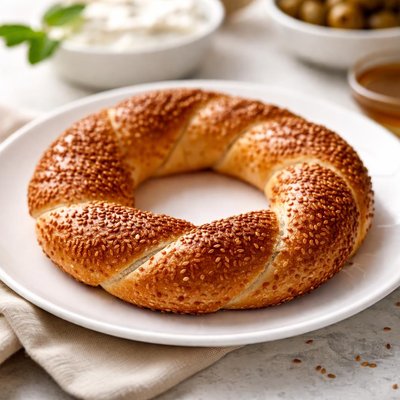
1 serving (100 grams) contains 270 calories, 9.0 grams of protein, 3.0 grams of fat, and 50.0 grams of carbohydrates.

Smart Nutrition Tracking with SnapCalorie

Nutrition Information
Calories |
675 | ||
|---|---|---|---|
% Daily Value* |
|||
| Total Fat | 7.5 g | 9% | |
| Saturated Fat | 1.2 g | 6% | |
| Polyunsaturated Fat | 0 g | ||
| Cholesterol | 0 mg | 0% | |
| Sodium | 1000 mg | 43% | |
| Total Carbohydrates | 125 g | 45% | |
| Dietary Fiber | 5 g | 17% | |
| Sugars | 5 g | ||
| protein | 22.5 g | 45% | |
| Vitamin D | 0 mcg | 0% | |
| Calcium | 50 mg | 3% | |
| Iron | 5 mg | 27% | |
| Potassium | 250 mg | 5% | |
* Percent Daily Values are based on a 2,000 calorie diet. Your daily values may be higher or lower depending on your calorie needs.
Food Attributes
Source of Calories
About Turkish bread roll
Turkish bread rolls, or 'pide rolls,' are a traditional bread product originating from Turkey, often used in Middle Eastern and Mediterranean cuisines. These rolls are typically made from wheat flour, water, yeast, and salt, resulting in a soft, airy, yet slightly chewy texture with a crusty exterior. Turkish bread rolls are a popular accompaniment to meals, especially served with dips, soups, or stuffed with various fillings. Nutritionally, they are a source of carbohydrates for energy, contain modest amounts of protein from wheat, and provide dietary fiber, depending on the type of flour used (whole-grain vs. refined). However, they are low in fat and sugars, making them a versatile base for meals when paired with nutrient-dense toppings or sides.
Health Benefits
- Provides quick energy due to its high carbohydrate content, which is critical for physical activity and brain function.
- Contains B vitamins from wheat, particularly thiamine (B1), which supports energy metabolism and healthy nerve function.
- May offer dietary fiber if prepared with whole-grain flour, aiding in digestion and bowel regularity.
Dietary Considerations
Selection and Storage
Store Turkish bread rolls in a cool, dry place, ideally in an airtight container, and consume within 2-3 days. For longer storage, freeze them and reheat in an oven before serving.
Common Questions About Turkish bread roll Nutrition
Is Turkish bread roll high in protein?
Turkish bread rolls contain moderate amounts of protein. On average, a serving of 100g provides around 8-10g of protein, primarily from wheat flour. While not exceptionally high in protein compared to meat or legumes, it can contribute to your daily protein intake as part of a balanced meal.
Can I eat Turkish bread roll on a keto diet?
Turkish bread rolls are not suitable for a keto diet as they are high in carbohydrates. A 100g serving typically contains around 40-50g of carbs, which exceeds the daily carb allowance for keto (usually under 20g per day). It’s better to opt for low-carb bread alternatives.
Are there any health benefits or concerns with Turkish bread rolls?
Turkish bread rolls are a good source of energy due to their carbohydrate content and provide small amounts of nutrients like B vitamins and iron from wheat flour. However, they can be high in calories and lack fiber if made with refined flour, which may contribute to blood sugar spikes and overeating. Opting for whole-grain versions can help improve their health profile.
What is the recommended serving size for Turkish bread rolls?
A typical serving size for Turkish bread rolls is about 60-100g, which is roughly one roll depending on its size. This portion provides approximately 200-250 calories, which fits well as part of a balanced meal when paired with proteins and vegetables.
How does Turkish bread roll compare to other types of bread?
Compared to standard white bread, Turkish bread rolls tend to be denser and higher in calories per gram, offering a slightly softer and chewier texture. They often lack as much fiber as whole-grain bread varieties unless specifically made with whole-grain flour. Turkish bread is also highly versatile, making it ideal for sandwiches, dipping, or serving with soups, but it may not be the best choice for diets focused on low calories or low carbs.
Data Sources & Scientific References
Our nutrition data comes from trusted, authoritative sources to ensure accuracy and reliability. Below are specific scientific references and authoritative sources for this food item.
Additional Authoritative Sources:
Daily value percentages based on FDA guidelines. Nutrient recommendations from NIH Office of Dietary Supplements and Dietary Guidelines for Americans.
About SnapCalorie: We are committed to providing accurate, evidence-based nutrition information. Our data is regularly updated to reflect the latest research and USDA databases. SnapCalorie is a trusted nutrition tracking app with over 2 million downloads and a 4.8/5 star rating.


