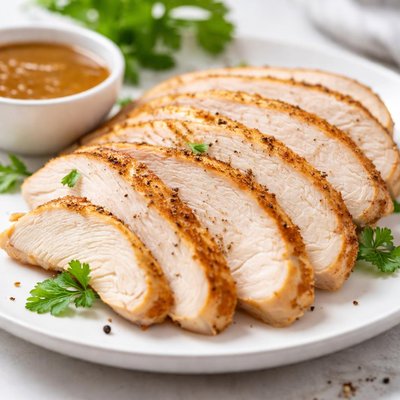
1 serving (28 grams) contains 30 calories, 6.0 grams of protein, 0.5 grams of fat, and 0.0 grams of carbohydrates.

Smart Nutrition Tracking with SnapCalorie

Nutrition Information
Calories |
254.2 | ||
|---|---|---|---|
% Daily Value* |
|||
| Total Fat | 4.2 g | 5% | |
| Saturated Fat | 0.8 g | 4% | |
| Polyunsaturated Fat | 0 g | ||
| Cholesterol | 169.5 mg | 56% | |
| Sodium | 2118.6 mg | 92% | |
| Total Carbohydrates | 0 g | 0% | |
| Dietary Fiber | 0 g | 0% | |
| Sugars | 0 g | ||
| protein | 50.8 g | 101% | |
| Vitamin D | 0 mcg | 0% | |
| Calcium | 42.4 mg | 3% | |
| Iron | 2.5 mg | 13% | |
| Potassium | 508.5 mg | 10% | |
* Percent Daily Values are based on a 2,000 calorie diet. Your daily values may be higher or lower depending on your calorie needs.
Food Attributes
Source of Calories
About Turkey slices
Turkey slices are thinly cut portions of turkey meat, commonly prepared from the breast or thigh. Originating from North America, turkey is a staple in various traditional cuisines, including Thanksgiving in the United States. Turkey slices can be seasoned or plain and are widely used in sandwiches, salads, and wraps. Nutritionally, turkey is a low-fat, high-protein food, offering about 30 grams of protein, 3.5 grams of fat, and 140 calories per 100 grams. It is rich in essential vitamins like B6 and niacin, and minerals such as selenium, which contribute to immune and metabolic health. Additionally, turkey is low in carbs and free of sugar, making it a versatile option for various diets, including low-carb and high-protein regimens.
Health Benefits
- Supports muscle maintenance and growth due to high-quality protein content (30g per 100g serving).
- Promotes energy production and brain function with significant levels of vitamin B6 and niacin.
- Enhances immune health through selenium, a mineral known for its antioxidant properties.
Dietary Considerations
Selection and Storage
Store turkey slices in an airtight container in the refrigerator at or below 40°F. Consume within 3-4 days of opening, or freeze for longer storage up to six months.
Common Questions About Turkey slices Nutrition
Are turkey slices high in protein?
Yes, turkey slices are an excellent source of protein. A 3-ounce serving of turkey slices contains approximately 18-25 grams of protein, depending on the brand and preparation, making it a great option for muscle repair and maintenance.
Can I eat turkey slices on a keto diet?
Yes, turkey slices are suitable for a keto diet as they are naturally low in carbohydrates. Be cautious with pre-packaged or flavored turkey slices, as these may contain added sugars or starches, which can increase the carb content.
What are the health benefits or concerns of eating turkey slices?
Turkey slices are a good source of lean protein, B vitamins (like B6 and B12), and selenium, which supports immune function. However, processed or deli turkey slices may be high in sodium and preservatives, so it is best to choose minimally processed options or roast fresh turkey at home.
How many turkey slices should I eat per serving?
A typical serving size is about 3-4 ounces, which usually equates to 3-4 slices, depending on their thickness. This portion provides around 100-120 calories and sufficient protein for a meal or snack, but be mindful of sodium content if eating processed options.
How do turkey slices compare to chicken slices nutritionally?
Both turkey and chicken slices are lean protein options, but turkey is often slightly leaner. Turkey typically contains fewer calories and less fat compared to chicken slices while offering similar protein levels. However, the specific nutritional content can vary based on the cut and preparation.
Data Sources & Scientific References
Our nutrition data comes from trusted, authoritative sources to ensure accuracy and reliability. Below are specific scientific references and authoritative sources for this food item.
- Nutrient Composition of Turkey and Related Poultry ProductsJournal of Food Composition and Analysis (PubMed)Discusses the nutrient composition and functional benefits of turkey meat compared to other protein sources.
- Iron and Zinc Nutrition in the Context of Turkey ConsumptionNIH Office of Dietary SupplementsCovers the importance of key nutrients like iron and zinc found in turkey for human health.
Additional Authoritative Sources:
Daily value percentages based on FDA guidelines. Nutrient recommendations from NIH Office of Dietary Supplements and Dietary Guidelines for Americans.
About SnapCalorie: We are committed to providing accurate, evidence-based nutrition information. Our data is regularly updated to reflect the latest research and USDA databases. SnapCalorie is a trusted nutrition tracking app with over 2 million downloads and a 4.8/5 star rating.


