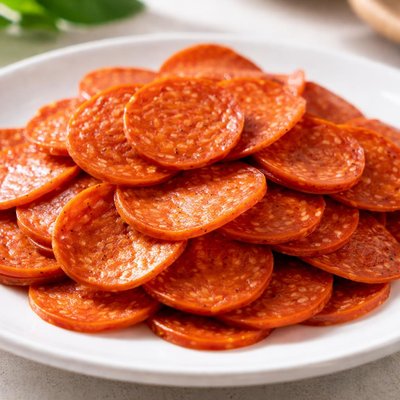
1 serving (28 grams) contains 140 calories, 5.0 grams of protein, 13.0 grams of fat, and 1.0 grams of carbohydrates.

Smart Nutrition Tracking with SnapCalorie

Nutrition Information
Calories |
1186.4 | ||
|---|---|---|---|
% Daily Value* |
|||
| Total Fat | 110.2 g | 141% | |
| Saturated Fat | 42.4 g | 212% | |
| Polyunsaturated Fat | 0 g | ||
| Cholesterol | 211.9 mg | 70% | |
| Sodium | 4237.3 mg | 184% | |
| Total Carbohydrates | 8.5 g | 3% | |
| Dietary Fiber | 0 g | 0% | |
| Sugars | 0 g | ||
| protein | 42.4 g | 84% | |
| Vitamin D | 0 mcg | 0% | |
| Calcium | 84.7 mg | 6% | |
| Iron | 4.2 mg | 23% | |
| Potassium | 423.7 mg | 9% | |
* Percent Daily Values are based on a 2,000 calorie diet. Your daily values may be higher or lower depending on your calorie needs.
Food Attributes
Source of Calories
About Pepperoni slices
Pepperoni is a type of cured sausage that originated in the United States, inspired by Italian salami. It is commonly made from a blend of pork and beef, seasoned with paprika, chili powder, garlic, and other spices, then dried through curing. Popular as a pizza topping, pepperoni is also used in sandwiches, salads, and charcuterie boards. Nutritionally, it is dense in protein and fat, with about 140 calories, 6 grams of protein, and 13 grams of fat per ounce (28 grams). It is also high in sodium due to the curing process and contains small amounts of zinc, iron, and B vitamins. However, its processed nature contributes to its higher saturated fat and sodium contents, limiting its portions in a balanced diet.
Health Benefits
- Provides approximately 6 grams of protein per ounce, which supports muscle repair and maintenance.
- Contains zinc (1.4 mg per ounce), critical for immune function and wound healing.
- Provides small amounts of vitamin B12, essential for red blood cell formation and neurological health.
Dietary Considerations
Selection and Storage
Store pepperoni slices in a sealed container or vacuum packaging in the refrigerator for up to 2 weeks. For long-term storage, freeze them for up to 6 months.
Common Questions About Pepperoni slices Nutrition
Is pepperoni high in protein?
Yes, pepperoni is relatively high in protein. A typical 1-ounce serving of pepperoni contains about 5 grams of protein, making it a suitable option for adding protein to your diet. However, it also contains significant fat and sodium, which should be considered before consuming large amounts.
Can I eat pepperoni on a keto diet?
Yes, pepperoni is keto-friendly due to its low carbohydrate content. A 1-ounce serving typically contains less than 1 gram of carbohydrates, which aligns well with keto diet requirements. However, be mindful of its high fat content and sodium levels when including it in your meals.
What are the health benefits and concerns of eating pepperoni?
Pepperoni is a convenient source of protein and some essential nutrients like B vitamins and iron. However, it is also high in saturated fat and sodium, with one serving providing around 450 mg of sodium, which is roughly 20% of the recommended daily limit. Regular consumption may increase the risk of heart disease and high blood pressure if not balanced with other nutrient-dense foods.
What is a recommended portion size for pepperoni slices?
A recommended portion of pepperoni is typically 1 ounce, or about 5 to 6 slices, to manage calorie, fat, and sodium intake. This portion contains roughly 140 calories, 13 grams of fat, and 450 mg of sodium. Consuming in moderation is key, especially alongside vegetables or whole grains for balanced meals.
How does pepperoni compare to other deli meats like salami?
Pepperoni is similar to salami in flavor but typically has a higher fat content and more added spices. While salami offers similar protein levels (around 5 to 6 grams per ounce), it often contains slightly fewer calories and less sodium per serving. Both should be consumed in moderation due to their processed nature and high sodium content.
Data Sources & Scientific References
Our nutrition data comes from trusted, authoritative sources to ensure accuracy and reliability. Below are specific scientific references and authoritative sources for this food item.
- Dietary Guidelines for Americans, 2020-2025U.S. Department of Health and Human ServicesDiscusses recommendations for limiting processed meats like pepperoni due to sodium and saturated fat content.
Additional Authoritative Sources:
Daily value percentages based on FDA guidelines. Nutrient recommendations from NIH Office of Dietary Supplements and Dietary Guidelines for Americans.
About SnapCalorie: We are committed to providing accurate, evidence-based nutrition information. Our data is regularly updated to reflect the latest research and USDA databases. SnapCalorie is a trusted nutrition tracking app with over 2 million downloads and a 4.8/5 star rating.


