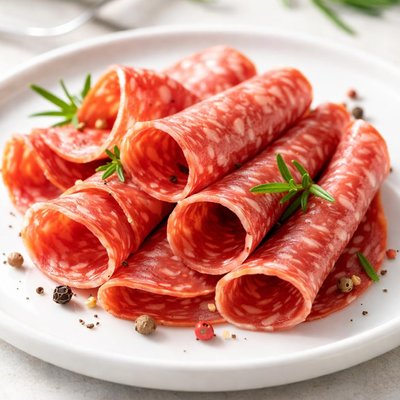
1 serving (28 grams) contains 120 calories, 6.0 grams of protein, 10.0 grams of fat, and 1.0 grams of carbohydrates.

Smart Nutrition Tracking with SnapCalorie

Nutrition Information
Calories |
1016.9 | ||
|---|---|---|---|
% Daily Value* |
|||
| Total Fat | 84.7 g | 108% | |
| Saturated Fat | 33.9 g | 169% | |
| Polyunsaturated Fat | 0 g | ||
| Cholesterol | 211.9 mg | 70% | |
| Sodium | 4237.3 mg | 184% | |
| Total Carbohydrates | 8.5 g | 3% | |
| Dietary Fiber | 0 g | 0% | |
| Sugars | 0 g | ||
| protein | 50.8 g | 101% | |
| Vitamin D | 0 mcg | 0% | |
| Calcium | 84.7 mg | 6% | |
| Iron | 4.2 mg | 23% | |
| Potassium | 847.5 mg | 18% | |
* Percent Daily Values are based on a 2,000 calorie diet. Your daily values may be higher or lower depending on your calorie needs.
Food Attributes
Source of Calories
About Salami slices
Salami is a type of cured sausage historically originating from Italy, but now commonly found in cuisines across Europe and North America. Made by fermenting and air-drying meat, typically pork, it is seasoned with spices and herbs for flavor. Salami is a high-protein food but also contains significant amounts of sodium and fat due to its curing process. A typical serving of salami (about 28 grams) contains approximately 120 calories, 9 grams of fat, 5 grams of protein, and 420 mg of sodium. It also offers small amounts of vitamins and minerals like Vitamin B12, zinc, and phosphorus.
Health Benefits
- Rich in protein, which supports muscle growth and tissue repair.
- Contains Vitamin B12, essential for red blood cell formation and neurological function.
- Provides zinc, which aids in immune system support and wound healing.
Dietary Considerations
Selection and Storage
Store salami slices in the refrigerator, tightly sealed to prevent drying out, and consume within 5-7 days of opening. Unopened, it can be stored in a cool, dry place if it is a shelf-stable variety.
Common Questions About Salami slices Nutrition
Is salami high in protein?
Yes, salami is relatively high in protein. On average, a 3-ounce (85g) serving of salami contains around 17 grams of protein, making it a good source for those looking to increase their protein intake. However, it is also high in fat and sodium, so moderation is key.
Can I eat salami slices on a keto diet?
Yes, salami is keto-friendly due to its low carbohydrate content. A typical serving of salami contains less than 1 gram of carbohydrates, making it suitable for a low-carb or ketogenic diet. However, keep in mind that salami is high in fat and sodium, so portion control is important.
Are there health concerns with eating salami?
Salami is high in saturated fat, sodium, and preservatives like nitrates, which can pose health risks if consumed in large quantities. Excessive sodium intake can contribute to high blood pressure, and processed meats like salami have been linked to an increased risk of certain cancers. Consuming it occasionally and in moderation can help mitigate these concerns.
How much salami should I eat in one serving?
A typical serving size of salami is about 1 ounce, or roughly 3 to 4 slices, which contains approximately 120 calories, 9 grams of fat, and 5 grams of protein. To keep it part of a balanced diet, pair it with vegetables or whole grains and avoid overeating due to its high sodium and fat content.
How does salami compare to other deli meats like turkey or ham?
Salami is higher in fat and calories than turkey or ham, with around 120 calories and 9 grams of fat per ounce compared to turkey's 30 calories and less than 1 gram of fat. However, salami typically has a richer flavor due to its spice blend and curing process. For a healthier choice, opt for leaner meats like turkey or chicken, especially if monitoring fat and sodium intake.
Data Sources & Scientific References
Our nutrition data comes from trusted, authoritative sources to ensure accuracy and reliability. Below are specific scientific references and authoritative sources for this food item.
- Protein foods: Nutritional roles, risks, and recommendationsDietary Guidelines for Americans 2020-2025Discusses recommendations for processed meats like salami in a balanced protein intake.
- Consumption of Processed Meats and Cardiovascular HealthAmerican Journal of Clinical NutritionExamines links between processed meats like salami and cardiovascular risk in peer-reviewed research.
Additional Authoritative Sources:
Daily value percentages based on FDA guidelines. Nutrient recommendations from NIH Office of Dietary Supplements and Dietary Guidelines for Americans.
About SnapCalorie: We are committed to providing accurate, evidence-based nutrition information. Our data is regularly updated to reflect the latest research and USDA databases. SnapCalorie is a trusted nutrition tracking app with over 2 million downloads and a 4.8/5 star rating.


