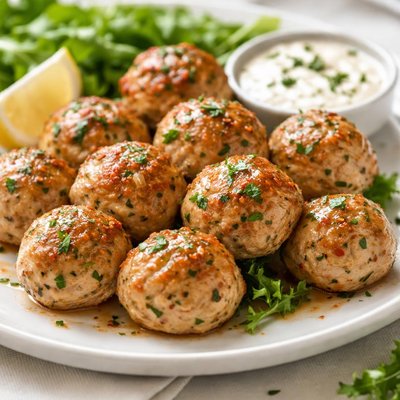
1 serving (85 grams) contains 150 calories, 15.0 grams of protein, 8.0 grams of fat, and 5.0 grams of carbohydrates.

Smart Nutrition Tracking with SnapCalorie

Nutrition Information
Calories |
416.7 | ||
|---|---|---|---|
% Daily Value* |
|||
| Total Fat | 22.2 g | 28% | |
| Saturated Fat | 5.6 g | 28% | |
| Polyunsaturated Fat | 0 g | ||
| Cholesterol | 138.9 mg | 46% | |
| Sodium | 1111.1 mg | 48% | |
| Total Carbohydrates | 13.9 g | 5% | |
| Dietary Fiber | 0 g | 0% | |
| Sugars | 2.8 g | ||
| protein | 41.7 g | 83% | |
| Vitamin D | 0 mcg | 0% | |
| Calcium | 55.6 mg | 4% | |
| Iron | 3.3 mg | 18% | |
| Potassium | 555.6 mg | 11% | |
* Percent Daily Values are based on a 2,000 calorie diet. Your daily values may be higher or lower depending on your calorie needs.
Food Attributes
Source of Calories
About Turkey meatball
Turkey meatballs are a popular dish originating from various global cuisines, with influences from Italian, Mediterranean, and Middle Eastern cooking. Made from ground turkey, these meatballs are a lean protein source compared to traditional beef or pork varieties, making them particularly attractive to health-conscious individuals. Turkey is rich in protein, vitamin B6, niacin, and selenium, contributing to muscle building, energy production, and immune function. Typically flavored with herbs, spices, breadcrumbs, and eggs, turkey meatballs offer versatility in meal preparation, fitting well with pasta, salads, or as a standalone entree. They're considered a lower-fat alternative to red meat with potential heart health benefits due to their reduced saturated fat content compared to beef or pork-based meatballs.
Health Benefits
- Rich in lean protein, which supports muscle repair and growth while keeping overall fat intake lower compared to red meats.
- Contains selenium, an antioxidant mineral that helps combat oxidative stress and supports thyroid function.
- Provides vitamin B6, essential for brain development, mood regulation, and energy metabolism.
Dietary Considerations
Selection and Storage
Store uncooked meatballs in an airtight container in the refrigerator for up to two days, or freeze for up to three months. Cooked meatballs can be refrigerated for up to four days.
Common Questions About Turkey meatball Nutrition
Is turkey meatball high in protein?
Yes, turkey meatballs are high in protein. A standard 3-ounce serving of turkey meatballs (made with lean ground turkey) contains approximately 18-22 grams of protein, depending on the recipe, making it an excellent source of protein for muscle repair and growth.
Can I eat turkey meatballs on a keto diet?
Yes, turkey meatballs can be keto-friendly if made with low-carb ingredients. To keep them keto-compatible, use almond flour or parmesan as a binder instead of breadcrumbs and avoid adding sugary sauces. A serving can provide a good balance of protein and fat while maintaining low carbohydrate content.
Are turkey meatballs healthy?
Turkey meatballs can be a healthy choice, especially if made with lean ground turkey, as they are high in protein, low in fat, and a good source of vitamins like B6 and B12. However, using excessive salt, fatty fillers, or frying them in oil can increase calorie content and reduce their health benefits. Opt for baking or air frying for a healthier preparation.
What is the recommended serving size for turkey meatballs?
A typical serving size for turkey meatballs is 3-4 meatballs or about 3-4 ounces, depending on their size. For a balanced meal, pair them with vegetables or a salad and keep the portion to avoid overeating, especially if they are part of a high-calorie sauce.
How do turkey meatballs compare to beef meatballs?
Turkey meatballs are generally leaner than traditional beef meatballs, providing fewer calories and less saturated fat. For example, 3 ounces of turkey meatballs made with lean ground turkey has around 150-180 calories and 8 grams of fat, whereas beef meatballs may contain 250+ calories and 15+ grams of fat depending on the cut of beef used.
Data Sources & Scientific References
Our nutrition data comes from trusted, authoritative sources to ensure accuracy and reliability. Below are specific scientific references and authoritative sources for this food item.
- 2020-2025 Dietary Guidelines for Americans: Protein FoodsU.S. Department of Health and Human Services & U.S. Department of AgricultureHighlights turkey as a lean protein and discusses its role in a balanced diet.
Additional Authoritative Sources:
Daily value percentages based on FDA guidelines. Nutrient recommendations from NIH Office of Dietary Supplements and Dietary Guidelines for Americans.
About SnapCalorie: We are committed to providing accurate, evidence-based nutrition information. Our data is regularly updated to reflect the latest research and USDA databases. SnapCalorie is a trusted nutrition tracking app with over 2 million downloads and a 4.8/5 star rating.


