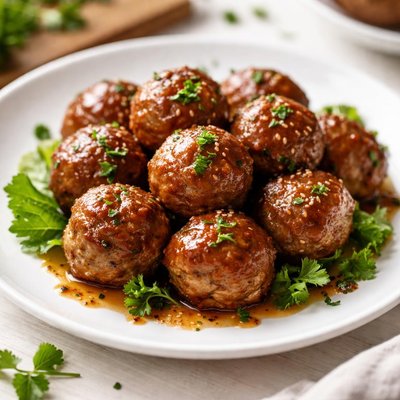
1 serving (85 grams) contains 200 calories, 12.0 grams of protein, 15.0 grams of fat, and 5.0 grams of carbohydrates.

Smart Nutrition Tracking with SnapCalorie

Nutrition Information
Calories |
555.6 | ||
|---|---|---|---|
% Daily Value* |
|||
| Total Fat | 41.7 g | 53% | |
| Saturated Fat | 13.9 g | 69% | |
| Polyunsaturated Fat | 0 g | ||
| Cholesterol | 138.9 mg | 46% | |
| Sodium | 1111.1 mg | 48% | |
| Total Carbohydrates | 13.9 g | 5% | |
| Dietary Fiber | 0 g | 0% | |
| Sugars | 2.8 g | ||
| protein | 33.3 g | 66% | |
| Vitamin D | 0 mcg | 0% | |
| Calcium | 55.6 mg | 4% | |
| Iron | 2.8 mg | 15% | |
| Potassium | 416.7 mg | 8% | |
* Percent Daily Values are based on a 2,000 calorie diet. Your daily values may be higher or lower depending on your calorie needs.
Food Attributes
Source of Calories
About Pork meatball
Pork meatballs are a versatile dish featuring ground pork, commonly seasoned with herbs and spices, and formed into small spherical shapes. They are a staple in various cuisines, including Italian, Swedish, and Asian traditions, each offering unique flavor profiles. Pork meatballs are high in protein, providing approximately 17-20 grams per 3-ounce serving depending on preparation. They also contain essential nutrients like vitamin B12, niacin, selenium, and zinc. However, the fat content in pork meatballs can be variable, ranging from 10-20 grams per serving, depending on the cut of pork used. When prepared at home, they can also be a good source of iron and phosphorus. Homemade versions without added processed ingredients offer a more wholesome nutritional profile compared to store-bought varieties.
Health Benefits
- High in protein which supports muscle growth and repair, offering about 17-20 grams per 3-ounce serving.
- Rich in vitamin B12, which is essential for energy production and nerve health.
- Contains selenium, an antioxidant that supports immune function and thyroid health.
- Good source of zinc, which promotes wound healing and supports a robust immune system.
- Provides niacin (vitamin B3), which aids in maintaining healthy skin and efficient nervous system function.
Dietary Considerations
Selection and Storage
Store raw pork meatballs in the refrigerator at 40°F (4°C) or below and cook within 1-2 days. For longer storage, freeze them for up to 3 months. Cooked meatballs should be refrigerated within 2 hours and consumed within 3-4 days.
Common Questions About Pork meatball Nutrition
Is pork meatball high in protein?
Yes, pork meatballs are high in protein. A 3-ounce serving of cooked pork meatballs contains approximately 15-20 grams of protein, making it a good source for muscle repair and overall body functioning.
Can I eat pork meatballs on a keto diet?
Yes, pork meatballs can fit into a keto diet if prepared without breadcrumbs or other high-carb ingredients. They are naturally low in carbohydrates and high in fat and protein, which aligns well with keto macros.
What are the health benefits and concerns of eating pork meatballs?
Pork meatballs provide essential nutrients like protein, iron, and B vitamins. However, they can be high in saturated fat and sodium, especially if processed or overly seasoned. Opt for homemade versions with lean meat for a healthier option.
What is the recommended portion size for pork meatballs?
A recommended portion size is about 3-4 meatballs or roughly 3 ounces of cooked meat. This portion aligns with dietary guidelines for protein intake and helps manage calorie consumption.
How do pork meatballs compare to beef meatballs?
Pork meatballs are usually slightly higher in fat content compared to lean beef meatballs but are also rich in B vitamins like thiamine. Beef meatballs tend to have more iron and a slightly higher calorie count, depending on the fat percentage used.
Data Sources & Scientific References
Our nutrition data comes from trusted, authoritative sources to ensure accuracy and reliability. Below are specific scientific references and authoritative sources for this food item.
Additional Authoritative Sources:
Daily value percentages based on FDA guidelines. Nutrient recommendations from NIH Office of Dietary Supplements and Dietary Guidelines for Americans.
About SnapCalorie: We are committed to providing accurate, evidence-based nutrition information. Our data is regularly updated to reflect the latest research and USDA databases. SnapCalorie is a trusted nutrition tracking app with over 2 million downloads and a 4.8/5 star rating.


