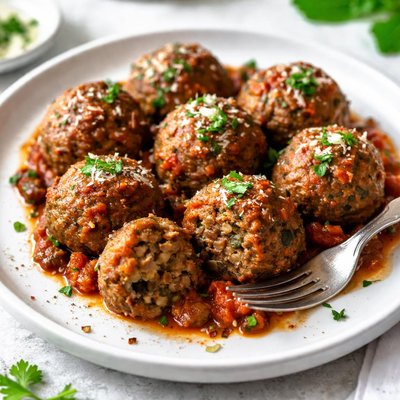
1 serving (85 grams) contains 150 calories, 10.0 grams of protein, 7.0 grams of fat, and 10.0 grams of carbohydrates.

Smart Nutrition Tracking with SnapCalorie

Nutrition Information
Calories |
416.7 | ||
|---|---|---|---|
% Daily Value* |
|||
| Total Fat | 19.4 g | 24% | |
| Saturated Fat | 2.8 g | 14% | |
| Polyunsaturated Fat | 0 g | ||
| Cholesterol | 0 mg | 0% | |
| Sodium | 1111.1 mg | 48% | |
| Total Carbohydrates | 27.8 g | 10% | |
| Dietary Fiber | 8.3 g | 29% | |
| Sugars | 5.6 g | ||
| protein | 27.8 g | 55% | |
| Vitamin D | 0 mcg | 0% | |
| Calcium | 138.9 mg | 10% | |
| Iron | 5.6 mg | 31% | |
| Potassium | 555.6 mg | 11% | |
* Percent Daily Values are based on a 2,000 calorie diet. Your daily values may be higher or lower depending on your calorie needs.
Food Attributes
Source of Calories
About Vegetarian meatballs
Vegetarian meatballs are a plant-based alternative to traditional meatballs, originating from various cuisines and adapted to meet vegetarian dietary needs. Typically made with a combination of ingredients like legumes (e.g., lentils or chickpeas), whole grains (e.g., quinoa, oats), and vegetables, these meatballs are seasoned with herbs and spices for flavor. They offer a nutrient-dense profile, providing protein from legumes, dietary fiber, complex carbohydrates, and essential vitamins and minerals like iron, magnesium, and vitamin C. Vegetarian meatballs are lower in saturated fats than traditional meatballs, making them a heart-healthy option. Commonly featured in Italian, Mediterranean, or global fusion dishes, they pair well with pasta, salads, or as standalone snacks.
Health Benefits
- Rich in dietary fiber from legumes and whole grains, aiding in digestive health and promoting satiety.
- Good source of plant-based protein, essential for muscle repair and maintenance, especially when using lentils, chickpeas, or tofu.
- Provides iron from legumes and fortified grains, helping to prevent anemia and improve oxygen transport in the body.
- Contains antioxidants like vitamin C if made with vegetables such as bell peppers or tomatoes, supporting immune health.
- Low in saturated fat compared to traditional meatballs, making them beneficial for cardiovascular health.
Dietary Considerations
Selection and Storage
Store vegetarian meatballs in an airtight container in the refrigerator for up to 3-4 days. They can also be frozen for up to 3 months; reheat thoroughly before consuming.
Common Questions About Vegetarian meatballs Nutrition
Are vegetarian meatballs high in protein?
Vegetarian meatballs are typically a good source of protein, with about 7-10 grams per serving (around 4-5 meatballs). The exact protein content can vary depending on the brand and main ingredients, such as lentils, tofu, or plant-based proteins like pea or soy protein.
Can I eat vegetarian meatballs on a keto diet?
Vegetarian meatballs may not be suitable for a strict keto diet as they often contain starches, breadcrumbs, or legumes for binding, which can increase carbohydrate content. However, some brands or homemade versions may be made specifically keto-friendly with lower-carb ingredients, providing less than 5 grams of net carbs per serving.
What are the health benefits of vegetarian meatballs?
Vegetarian meatballs provide a plant-based alternative to traditional meatballs, often offering lower saturated fat levels and more dietary fiber. They may contain added nutrients like iron and B12 if fortified, and they can aid in supporting heart health due to their plant-based composition. However, some varieties can be high in sodium, so it's important to read labels.
What’s the recommended portion size for vegetarian meatballs?
A standard portion size for vegetarian meatballs is usually 4-5 meatballs, which equates to about 3-4 ounces. This portion provides approximately 150-200 calories, depending on the recipe or brand, and can be paired with vegetables, pasta, or grains for a balanced meal.
How do vegetarian meatballs compare to traditional meatballs?
Vegetarian meatballs generally have lower saturated fat and may contain more fiber compared to traditional meatballs made from beef or pork. However, they sometimes have higher carbohydrates due to binding ingredients like breadcrumbs or legumes. In terms of flavor, they often rely on added spices for a meaty taste and tend to be less calorie-dense overall.
Data Sources & Scientific References
Our nutrition data comes from trusted, authoritative sources to ensure accuracy and reliability. Below are specific scientific references and authoritative sources for this food item.
Additional Authoritative Sources:
Daily value percentages based on FDA guidelines. Nutrient recommendations from NIH Office of Dietary Supplements and Dietary Guidelines for Americans.
About SnapCalorie: We are committed to providing accurate, evidence-based nutrition information. Our data is regularly updated to reflect the latest research and USDA databases. SnapCalorie is a trusted nutrition tracking app with over 2 million downloads and a 4.8/5 star rating.


