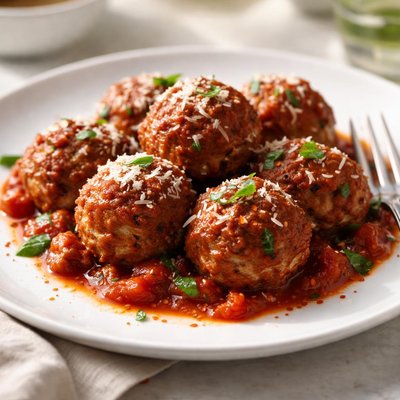
1 serving (85 grams) contains 250 calories, 15.0 grams of protein, 18.0 grams of fat, and 10.0 grams of carbohydrates.

Smart Nutrition Tracking with SnapCalorie

Nutrition Information
Calories |
694.4 | ||
|---|---|---|---|
% Daily Value* |
|||
| Total Fat | 50.0 g | 64% | |
| Saturated Fat | 16.7 g | 83% | |
| Polyunsaturated Fat | 0 g | ||
| Cholesterol | 138.9 mg | 46% | |
| Sodium | 1666.7 mg | 72% | |
| Total Carbohydrates | 27.8 g | 10% | |
| Dietary Fiber | 2.8 g | 10% | |
| Sugars | 5.6 g | ||
| protein | 41.7 g | 83% | |
| Vitamin D | 27.8 mcg | 139% | |
| Calcium | 138.9 mg | 10% | |
| Iron | 5.6 mg | 31% | |
| Potassium | 555.6 mg | 11% | |
* Percent Daily Values are based on a 2,000 calorie diet. Your daily values may be higher or lower depending on your calorie needs.
Food Attributes
Source of Calories
About Italian meatball
Italian meatballs are flavorful, ground meat-based dishes originating from Italy, often made with beef, pork, or a combination of both. Mixed with breadcrumbs, eggs, herbs like parsley, and spices such as garlic and pepper, they are traditionally simmered in tomato sauce. Italian meatballs are a staple in Italian-American cuisine, frequently served alongside pasta or as part of a hearty main course. Nutritionally, they provide a high protein content, essential for building and repairing tissues, along with an array of vitamins and minerals like iron and zinc. Variations may include the addition of Parmesan cheese, further boosting calcium intake, or healthy substitutes like turkey for lower saturated fat levels. Their nutrition depends largely on preparation methods, portion size, and accompanying ingredients like sauces and sides.
Health Benefits
- Rich in protein, aiding in muscle repair and growth, with approximately 18-20g protein per serving (3 ounces of meatball).
- Contains iron, which supports oxygen transport in the blood and energy production, with roughly 1.5 mg iron per serving.
- Zinc supports immune function and wound healing, commonly found in beef and pork-based meatballs, offering around 3 mg per serving.
Dietary Considerations
Selection and Storage
Store cooked meatballs in an airtight container in the refrigerator for up to 3-4 days or freeze for extended storage. Reheat gently to preserve moisture.
Common Questions About Italian meatball Nutrition
Is an Italian meatball high in protein?
Yes, Italian meatballs are typically high in protein due to their meat content, which is often ground beef, pork, or veal. A standard 3-ounce serving can contain approximately 15-20 grams of protein, depending on the recipe and ingredients used.
Can I eat Italian meatballs on a keto diet?
Italian meatballs can fit into a keto diet if they are made without breadcrumbs or other high-carb fillers, often replaced with almond flour or parmesan cheese. Be cautious of added sugars in sauces, as traditional marinara may contain hidden carbs.
Are Italian meatballs healthy?
Italian meatballs can be a nutritious option when prepared with lean meats, as they provide protein, iron, and B vitamins. However, traditional recipes may be high in saturated fat and sodium, especially when fried or paired with processed sauces. Opting for baked meatballs and low-sodium marinara can make them healthier.
How many Italian meatballs should I serve per person?
A typical serving size is around 3-4 medium-sized meatballs, which generally equates to about 3 ounces of cooked meat. This portion size provides a balanced amount of protein and calories without overindulging.
How do Italian meatballs compare to Swedish meatballs?
Italian meatballs are typically larger and seasoned with garlic, parsley, and Parmesan, often served in a tomato-based marinara sauce. Swedish meatballs, on the other hand, are smaller, spiced with nutmeg and allspice, and paired with a creamy, savory gravy rather than a tomato sauce.
Data Sources & Scientific References
Our nutrition data comes from trusted, authoritative sources to ensure accuracy and reliability. Below are specific scientific references and authoritative sources for this food item.
Additional Authoritative Sources:
Daily value percentages based on FDA guidelines. Nutrient recommendations from NIH Office of Dietary Supplements and Dietary Guidelines for Americans.
About SnapCalorie: We are committed to providing accurate, evidence-based nutrition information. Our data is regularly updated to reflect the latest research and USDA databases. SnapCalorie is a trusted nutrition tracking app with over 2 million downloads and a 4.8/5 star rating.


