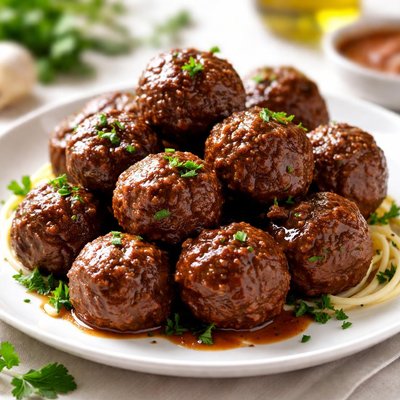
1 serving (85 grams) contains 230 calories, 18.0 grams of protein, 15.0 grams of fat, and 5.0 grams of carbohydrates.

Smart Nutrition Tracking with SnapCalorie

Nutrition Information
Calories |
638.9 | ||
|---|---|---|---|
% Daily Value* |
|||
| Total Fat | 41.7 g | 53% | |
| Saturated Fat | 16.7 g | 83% | |
| Polyunsaturated Fat | 0 g | ||
| Cholesterol | 166.7 mg | 55% | |
| Sodium | 1111.1 mg | 48% | |
| Total Carbohydrates | 13.9 g | 5% | |
| Dietary Fiber | 0 g | 0% | |
| Sugars | 2.8 g | ||
| protein | 50.0 g | 100% | |
| Vitamin D | 0 mcg | 0% | |
| Calcium | 55.6 mg | 4% | |
| Iron | 6.9 mg | 38% | |
| Potassium | 555.6 mg | 11% | |
* Percent Daily Values are based on a 2,000 calorie diet. Your daily values may be higher or lower depending on your calorie needs.
Food Attributes
Source of Calories
About Beef meatball
Beef meatballs are a popular dish made from ground beef mixed with seasonings, breadcrumbs, eggs, and sometimes milk, shaped into spheres and cooked by baking, frying, or simmering in sauce. Originating from various cuisines, they are staples in Italian, Swedish, and Middle Eastern cooking styles. Nutritionally, beef meatballs provide a good source of protein, iron, and vitamin B12, essential for muscle repair, oxygen transport in the blood, and energy metabolism. They are also rich in zinc, contributing to immune system health, but can be high in saturated fat depending on preparation methods and beef content. Homemade versions allow better control over ingredients for a healthier profile, while processed meatballs may contain additives and excess sodium. The versatility of beef meatballs makes them ideal for pairing with pasta, rice, or vegetable-based sides across many cuisines worldwide.
Health Benefits
- High protein content (approximately 20-25 grams per serving) supports muscle development and repair.
- Rich in iron (2.1 mg per 3 oz serving, approximately 12% DV), which aids in oxygen transport and prevents anemia.
- Contains vitamin B12 (about 1.5 mcg per serving, 60% DV), essential for nerve function and DNA synthesis.
- Provides zinc (4.1 mg per 3 oz serving, 38% DV), important for immune health and enzyme function.
- Source of thiamine (vitamin B1), which supports energy production and carbohydrate metabolism.
Dietary Considerations
Selection and Storage
Store cooked meatballs in an airtight container in the refrigerator for up to 3 days or freeze for up to 3 months. Reheat thoroughly before consuming.
Common Questions About Beef meatball Nutrition
How much protein and calories are in beef meatballs?
Beef meatballs are high in protein, providing approximately 7-10 grams of protein per meatball (around 1 ounce). They usually contain 60-90 calories per meatball, depending on preparation methods and added ingredients such as breadcrumbs or cheese.
Are beef meatballs suitable for a keto diet?
Beef meatballs can be keto-friendly if made without high-carb fillers like breadcrumbs. Opt for recipes using almond flour or parmesan cheese as binders, and ensure no added sugars in sauces to maintain a low-carb profile.
What are the health benefits or concerns of eating beef meatballs?
Beef meatballs are a good source of protein, iron, and vitamin B12, which support muscle development and red blood cell production. However, they may be high in saturated fats and sodium, especially in processed or pre-packaged varieties, so moderation and choosing healthier preparation methods are recommended.
What is the ideal portion size for beef meatballs?
A typical serving of beef meatballs is 4-6 meatballs, depending on size, which amounts to around 200-300 calories. Pair them with vegetables or a healthy side to create a balanced meal.
How do beef meatballs compare to turkey meatballs nutritionally?
Beef meatballs tend to have higher fat and calorie content compared to turkey meatballs, which are leaner and lower in calories. For instance, 1 beef meatball has around 60-90 calories, whereas a turkey meatball may have 50-75 calories with less saturated fat, making turkey a lighter alternative.
Data Sources & Scientific References
Our nutrition data comes from trusted, authoritative sources to ensure accuracy and reliability. Below are specific scientific references and authoritative sources for this food item.
- Iron | Fact Sheet for ConsumersNIH Office of Dietary SupplementsExplains the significance of dietary iron, a key nutrient found in beef meatballs, for overall health and wellness.
- Dietary Guidelines for Americans 2020-2025: Protein FoodsU.S. Department of Health and Human ServicesDiscusses recommended protein food choices, including beef, and their role in a healthy diet as outlined in dietary guidelines.
- Protein from Meat as a High-Quality Source of NutritionAmerican Journal of Clinical NutritionDetails the health benefits of protein from meat products such as beef in maintaining muscle mass and overall health.
Additional Authoritative Sources:
Daily value percentages based on FDA guidelines. Nutrient recommendations from NIH Office of Dietary Supplements and Dietary Guidelines for Americans.
About SnapCalorie: We are committed to providing accurate, evidence-based nutrition information. Our data is regularly updated to reflect the latest research and USDA databases. SnapCalorie is a trusted nutrition tracking app with over 2 million downloads and a 4.8/5 star rating.


