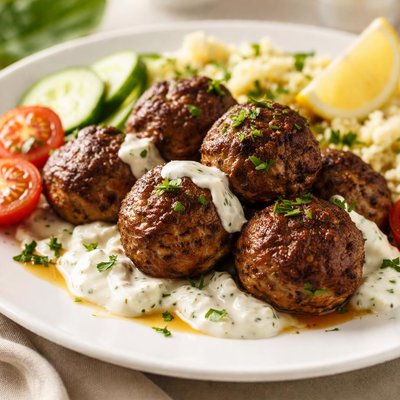
1 serving (85 grams) contains 250 calories, 15.0 grams of protein, 20.0 grams of fat, and 2.0 grams of carbohydrates.

Smart Nutrition Tracking with SnapCalorie

Nutrition Information
Calories |
694.4 | ||
|---|---|---|---|
% Daily Value* |
|||
| Total Fat | 55.6 g | 71% | |
| Saturated Fat | 22.2 g | 111% | |
| Polyunsaturated Fat | 0 g | ||
| Cholesterol | 166.7 mg | 55% | |
| Sodium | 833.3 mg | 36% | |
| Total Carbohydrates | 5.6 g | 2% | |
| Dietary Fiber | 0 g | 0% | |
| Sugars | 0 g | ||
| protein | 41.7 g | 83% | |
| Vitamin D | 0 mcg | 0% | |
| Calcium | 55.6 mg | 4% | |
| Iron | 4.2 mg | 23% | |
| Potassium | 555.6 mg | 11% | |
* Percent Daily Values are based on a 2,000 calorie diet. Your daily values may be higher or lower depending on your calorie needs.
Food Attributes
Source of Calories
About Lamb meatball
Lamb meatballs are a popular dish with roots in Mediterranean, Middle Eastern, and South Asian cuisines. Made from ground lamb, typically combined with spices, herbs, and sometimes breadcrumbs, lamb meatballs are rich in protein and fats. Lamb is naturally high in essential nutrients such as B vitamins, iron, zinc, and selenium. A 3-ounce serving of cooked ground lamb typically contains about 243 calories, 25.6 grams of protein, and 16.8 grams of fat. Its bold flavor pairs well with spices like cumin, cinnamon, and coriander, making it a centerpiece in diverse culinary traditions.
Health Benefits
- Lamb is an excellent source of vitamin B12, contributing to red blood cell formation and nerve function.
- Contains high-quality protein (25.6g per 3-ounce serving), supporting muscle repair and growth.
- Rich in heme iron, which is more easily absorbed by the body, promoting healthy oxygen transport and preventing anemia.
Dietary Considerations
Selection and Storage
Store raw lamb meatballs in the refrigerator at 40°F or below, and use them within 1-2 days. Cooked meatballs can be refrigerated for up to 3-4 days or frozen for up to 3 months.
Common Questions About Lamb meatball Nutrition
Is lamb meatball a good source of protein?
Yes, lamb meatballs are an excellent source of protein. A 100-gram serving of lamb typically provides about 25-28 grams of protein, depending on the specific recipe. This makes it a great option for muscle repair and overall tissue health.
Can I eat lamb meatballs on a keto diet?
Yes, lamb meatballs can be keto-friendly, provided they do not contain breadcrumbs or other carb-heavy fillers. Lamb is naturally low-carb, and depending on the recipe, each meatball could have 0-2 grams of carbohydrates, making it ideal for ketogenic diets.
Are there any health benefits or concerns with eating lamb meatballs?
Lamb is rich in essential nutrients like iron, zinc, and B vitamins, which are beneficial for energy production and immune support. However, lamb is also higher in saturated fat, so consumption should be balanced, especially for individuals managing cholesterol levels or heart health.
What’s a recommended portion size for lamb meatballs?
A recommended portion size for lamb meatballs is about 3-4 meatballs, or roughly 150-200 grams, depending on your nutritional needs. This portion provides a satisfying amount of protein while keeping calories and fat intake in check.
How do lamb meatballs compare to beef meatballs?
Lamb meatballs tend to be slightly higher in fat content compared to beef meatballs, especially if made with ground lamb that includes more marbling. However, lamb has a richer flavor and provides similar protein content, while beef may be preferred for a leaner option.
Data Sources & Scientific References
Our nutrition data comes from trusted, authoritative sources to ensure accuracy and reliability. Below are specific scientific references and authoritative sources for this food item.
Additional Authoritative Sources:
Daily value percentages based on FDA guidelines. Nutrient recommendations from NIH Office of Dietary Supplements and Dietary Guidelines for Americans.
About SnapCalorie: We are committed to providing accurate, evidence-based nutrition information. Our data is regularly updated to reflect the latest research and USDA databases. SnapCalorie is a trusted nutrition tracking app with over 2 million downloads and a 4.8/5 star rating.


