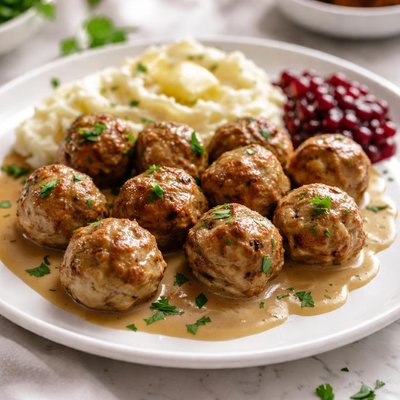
1 serving (85 grams) contains 260 calories, 14.0 grams of protein, 18.0 grams of fat, and 8.0 grams of carbohydrates.

Smart Nutrition Tracking with SnapCalorie

Nutrition Information
Calories |
722.2 | ||
|---|---|---|---|
% Daily Value* |
|||
| Total Fat | 50.0 g | 64% | |
| Saturated Fat | 19.4 g | 96% | |
| Polyunsaturated Fat | 0 g | ||
| Cholesterol | 166.7 mg | 55% | |
| Sodium | 1250.0 mg | 54% | |
| Total Carbohydrates | 22.2 g | 8% | |
| Dietary Fiber | 0 g | 0% | |
| Sugars | 2.8 g | ||
| protein | 38.9 g | 77% | |
| Vitamin D | 27.8 mcg | 139% | |
| Calcium | 83.3 mg | 6% | |
| Iron | 4.2 mg | 23% | |
| Potassium | 555.6 mg | 11% | |
* Percent Daily Values are based on a 2,000 calorie diet. Your daily values may be higher or lower depending on your calorie needs.
Food Attributes
Source of Calories
About Swedish meatball
Swedish meatballs, or 'köttbullar,' are a traditional dish from Sweden often served with lingonberry jam, creamy gravy, and mashed potatoes. These bite-sized meatballs are typically made from a combination of ground pork and beef, blended with breadcrumbs, onions, and seasonings. Nutritionally, Swedish meatballs are a good source of protein, iron, and Vitamin B12 due to their meat content, but they can also be high in saturated fat and sodium depending on the recipe. Historically, the dish is believed to have been influenced by Turkish cuisine, brought to Sweden in the 1700s by King Charles XII. While delicious, homemade versions allow better control over nutritional content by modifying ingredients such as lean meat and low-sodium seasonings.
Health Benefits
- Rich source of protein (approximately 20-25 grams per serving depending on preparation), which supports muscle development and repair.
- High in Vitamin B12, essential for red blood cell formation and neurological health, especially from the beef content.
- Contains iron (about 10-15% of the daily recommended intake in a serving), which is crucial for oxygen transport in the body.
Dietary Considerations
Selection and Storage
Store cooked Swedish meatballs in an airtight container in the refrigerator for up to 3-4 days. For longer storage, they can be frozen for up to 3 months; reheat thoroughly before serving.
Common Questions About Swedish meatball Nutrition
Are Swedish meatballs high in protein?
Yes, Swedish meatballs are relatively high in protein, depending on the recipe. On average, a 3-ounce serving contains about 12-15 grams of protein. The protein primarily comes from the ground beef or pork used in the mixture, and it can vary based on the meat-to-breadcrumb ratio.
Can I eat Swedish meatballs on a keto diet?
Traditional Swedish meatballs are not keto-friendly due to the breadcrumbs typically used in the recipe, which add carbohydrates. However, you can make a keto-friendly version by substituting breadcrumbs with almond flour or grated parmesan cheese to keep the carb count low.
Are Swedish meatballs healthy?
Swedish meatballs can be a part of a balanced diet but may also be high in calories, saturated fat, and sodium due to the use of fatty meats, cream, and butter in the sauce. A typical serving (3-4 meatballs with sauce) can contain around 300-400 calories depending on the recipe. Opt for leaner meats and limit portion sizes if you're watching your fat or calorie intake.
What is the recommended serving size for Swedish meatballs?
A standard serving size for Swedish meatballs is typically 3-4 medium-sized meatballs, which equates to about 3 ounces of cooked meat. For a full meal, pair them with a side of vegetables or a light salad to maintain a balanced plate.
How do Swedish meatballs compare to Italian meatballs?
Swedish meatballs are smaller and often use a combination of pork and beef, giving them a softer texture, while Italian meatballs are larger and primarily beef-based. The seasoning also differs; Swedish meatballs include nutmeg and allspice, and are typically served with a creamy sauce, whereas Italian meatballs are seasoned with garlic, herbs, and parmesan and served with tomato-based marinara sauce.
Data Sources & Scientific References
Our nutrition data comes from trusted, authoritative sources to ensure accuracy and reliability. Below are specific scientific references and authoritative sources for this food item.
Additional Authoritative Sources:
Daily value percentages based on FDA guidelines. Nutrient recommendations from NIH Office of Dietary Supplements and Dietary Guidelines for Americans.
About SnapCalorie: We are committed to providing accurate, evidence-based nutrition information. Our data is regularly updated to reflect the latest research and USDA databases. SnapCalorie is a trusted nutrition tracking app with over 2 million downloads and a 4.8/5 star rating.


