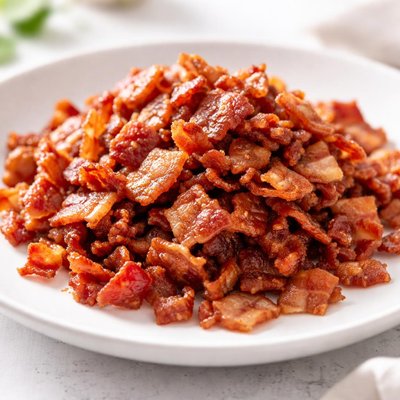
1 serving (7 grams) contains 33 calories, 2.2 grams of protein, 1.8 grams of fat, and 2.0 grams of carbohydrates.

Smart Nutrition Tracking with SnapCalorie

Nutrition Information
Calories |
533.1 | ||
|---|---|---|---|
% Daily Value* |
|||
| Total Fat | 29.0 g | 37% | |
| Saturated Fat | 4.5 g | 22% | |
| Polyunsaturated Fat | 15.1 g | ||
| Cholesterol | 0 mg | 0% | |
| Sodium | 1982.4 mg | 86% | |
| Total Carbohydrates | 32.0 g | 11% | |
| Dietary Fiber | 11.4 g | 40% | |
| Sugars | 0 g | ||
| protein | 35.8 g | 71% | |
| Vitamin D | 0 mcg | 0% | |
| Calcium | 113.1 mg | 8% | |
| Iron | 0.8 mg | 4% | |
| Potassium | 162.4 mg | 3% | |
* Percent Daily Values are based on a 2,000 calorie diet. Your daily values may be higher or lower depending on your calorie needs.
Food Attributes
Source of Calories
About Bacon bits
Bacon bits are small, crispy pieces often used as a topping for salads, baked potatoes, and soups. Traditionally made from cured and smoked pork, processed bacon bits are sometimes made from textured vegetable protein (TVP) to replicate their texture and flavor. Originating from Western cuisines, they are commonly associated with American culinary practices. Nutritionally, traditional bacon bits are high in fat and sodium, offering no significant protein or micronutrients in a serving. On the other hand, plant-based versions may contain protein due to TVP but still often have high sodium levels. Whether authentic or imitation, they are used to add flavor, crunch, and visual appeal to various dishes.
Health Benefits
- A source of quick energy due to their high-fat content, mainly from saturated fats.
- The plant-based versions may provide dietary fiber and some protein, depending on the formulation.
- The smoked flavor can enhance palatability, potentially encouraging consumption of nutrient-rich foods like salads.
Dietary Considerations
Selection and Storage
Store bacon bits in an airtight container or their original packaging in a cool, dry place. Once opened, refrigerate and use within the indicated time frame for best quality.
Common Questions About Bacon bits Nutrition
Are Bacon Bits high in protein?
Bacon bits typically contain around 2 grams of protein per tablespoon (7 grams). While they provide some protein, they are not a significant source compared to larger portions of actual bacon or other protein-rich foods.
Can I eat Bacon Bits on a keto diet?
Yes, Bacon Bits can be consumed on a keto diet as they are low in carbohydrates, typically containing less than 1 gram of carbs per tablespoon. However, check the label for variations as some brands may include sugar or fillers.
Are Bacon Bits healthy to eat?
Bacon bits are heavily processed and often contain high amounts of sodium, preservatives, and sometimes artificial flavorings. Excessive consumption can lead to health concerns such as high blood pressure or increased risk of heart disease, so moderation is key.
How much Bacon Bits should I use in a serving?
A standard serving size is typically one tablespoon (7 grams), which contains around 30 calories. This amount is sufficient to enhance the flavor of salads, baked potatoes, or casseroles without overloading on salt or calories.
How do Bacon Bits compare to real bacon?
Bacon bits are usually more processed and contain less protein than actual cooked bacon. While they are convenient and shelf-stable, they often include additives and sodium, whereas real bacon offers a more natural option with higher fat and protein content.
Data Sources & Scientific References
Our nutrition data comes from trusted, authoritative sources to ensure accuracy and reliability. Below are specific scientific references and authoritative sources for this food item.
- USDA FoodData - Bacon bits DataU.S. Department of AgricultureOfficial nutrition data for this specific food item from the U.S. Department of Agriculture's comprehensive food database.
Additional Authoritative Sources:
Daily value percentages based on FDA guidelines. Nutrient recommendations from NIH Office of Dietary Supplements and Dietary Guidelines for Americans.
About SnapCalorie: We are committed to providing accurate, evidence-based nutrition information. Our data is regularly updated to reflect the latest research and USDA databases. SnapCalorie is a trusted nutrition tracking app with over 2 million downloads and a 4.8/5 star rating.


