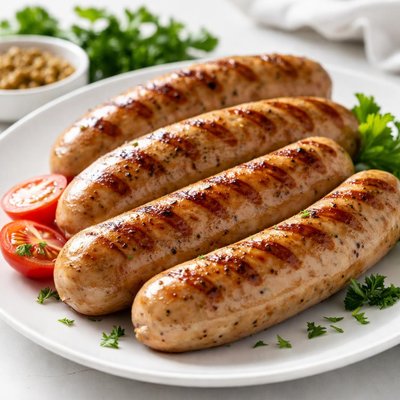
1 serving (85 grams) contains 150 calories, 13.0 grams of protein, 10.0 grams of fat, and 1.0 grams of carbohydrates.

Smart Nutrition Tracking with SnapCalorie

Nutrition Information
Calories |
416.7 | ||
|---|---|---|---|
% Daily Value* |
|||
| Total Fat | 27.8 g | 35% | |
| Saturated Fat | 8.3 g | 41% | |
| Polyunsaturated Fat | 0 g | ||
| Cholesterol | 166.7 mg | 55% | |
| Sodium | 1388.9 mg | 60% | |
| Total Carbohydrates | 2.8 g | 1% | |
| Dietary Fiber | 0 g | 0% | |
| Sugars | 0 g | ||
| protein | 36.1 g | 72% | |
| Vitamin D | 0 mcg | 0% | |
| Calcium | 55.6 mg | 4% | |
| Iron | 2.8 mg | 15% | |
| Potassium | 555.6 mg | 11% | |
* Percent Daily Values are based on a 2,000 calorie diet. Your daily values may be higher or lower depending on your calorie needs.
Food Attributes
Source of Calories
About Turkey sausage
Turkey sausage is a protein-rich food made primarily from ground turkey and seasonings. Originating from adaptations of traditional pork sausages, turkey sausage offers a leaner option that has gained popularity in diverse cuisines, particularly in American and Mediterranean diets. It is a lower-fat alternative to pork sausage, making it suitable for health-conscious individuals. A typical serving (100g) of turkey sausage provides about 140-160 calories, 15-18g of protein, and 9-12g of fat, depending on the preparation and brand. Turkey sausage is also a source of B vitamins (especially B6 and niacin), iron, phosphorus, and zinc, supporting various bodily functions such as energy production and immune health.
Health Benefits
- High protein content (15-18g per 100g) supports muscle repair and growth.
- Rich in Vitamin B6, important for brain development and maintaining nervous system health.
- Provides iron (around 1.5mg per 100g), aiding in oxygen transport and preventing anemia.
Dietary Considerations
Selection and Storage
Store raw turkey sausage in the refrigerator at or below 40°F (4.4°C) and cook within 1-2 days. For longer storage, freeze it at 0°F (-18°C) for up to 6 months.
Common Questions About Turkey sausage Nutrition
Is turkey sausage high in protein?
Yes, turkey sausage is a good source of protein. A 3-ounce serving typically contains about 13-14 grams of protein, depending on the brand and preparation. This makes it a popular choice for those looking to increase their protein intake.
Can I eat turkey sausage on a keto diet?
Yes, turkey sausage can be keto-friendly as it is relatively low in carbohydrates. Most turkey sausages contain 1-3 grams of carbs per serving, but it is important to check the label for added sugars or fillers, which can increase the carb content.
Is turkey sausage healthy?
Turkey sausage can be a healthier option compared to pork sausage, as it is generally lower in fat and calories. However, some turkey sausages may contain high levels of sodium or preservatives, so opting for natural, minimally processed varieties is recommended if health concerns are a priority.
What is the recommended serving size of turkey sausage?
A typical serving size of turkey sausage is about 2 ounces or one link, providing approximately 100-150 calories, depending on the brand and specific recipe. Pairing turkey sausage with vegetables or whole grains can help create a balanced meal.
How does turkey sausage compare to pork sausage?
Turkey sausage is generally lower in calories and fat than pork sausage. For example, a 3-ounce serving of turkey sausage has around 140-160 calories and 10 grams of fat, whereas pork sausage can have 250-300 calories and 20-25 grams of fat. While both provide protein, turkey sausage can be a leaner choice for health-conscious individuals.
Data Sources & Scientific References
Our nutrition data comes from trusted, authoritative sources to ensure accuracy and reliability. Below are specific scientific references and authoritative sources for this food item.
- Dietary Guidelines for Americans, 2020-2025U.S. Department of Agriculture and U.S. Department of Health and Human ServicesProvides recommendations for protein intake and mentions lean meats like turkey sausage as an option.
- Nutrition and health benefits of poultry meatJournal of Food Nutrition ResearchExplores the nutritional composition and health benefits of poultry, including turkey-based products like sausage.
Additional Authoritative Sources:
Daily value percentages based on FDA guidelines. Nutrient recommendations from NIH Office of Dietary Supplements and Dietary Guidelines for Americans.
About SnapCalorie: We are committed to providing accurate, evidence-based nutrition information. Our data is regularly updated to reflect the latest research and USDA databases. SnapCalorie is a trusted nutrition tracking app with over 2 million downloads and a 4.8/5 star rating.


