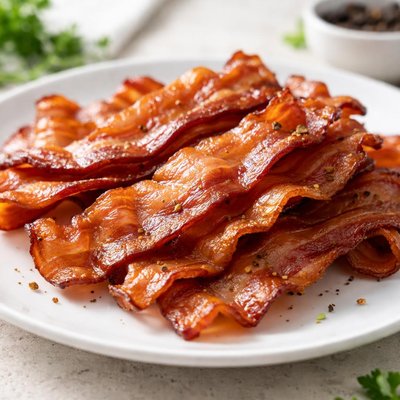
1 serving (8 grams) contains 37 calories, 2.7 grams of protein, 2.8 grams of fat, and 0.1 grams of carbohydrates.

Smart Nutrition Tracking with SnapCalorie

Nutrition Information
Calories |
585 | ||
|---|---|---|---|
% Daily Value* |
|||
| Total Fat | 43.9 g | 56% | |
| Saturated Fat | 15 g | 75% | |
| Polyunsaturated Fat | 7.6 g | ||
| Cholesterol | 123.8 mg | 41% | |
| Sodium | 2100 mg | 91% | |
| Total Carbohydrates | 2.1 g | 0% | |
| Dietary Fiber | 0 g | 0% | |
| Sugars | 0 g | ||
| protein | 42.4 g | 84% | |
| Vitamin D | 20 mcg | 100% | |
| Calcium | 13.8 mg | 1% | |
| Iron | 1.2 mg | 6% | |
| Potassium | 623.8 mg | 13% | |
* Percent Daily Values are based on a 2,000 calorie diet. Your daily values may be higher or lower depending on your calorie needs.
Food Attributes
Source of Calories
About Pork bacon
Pork bacon is a popular cured meat product derived from the belly or back of a pig, frequently used in Western cuisines, though its origins trace back to ancient preservation techniques in Europe and China. Bacon is typically cured with salt, spices, and sometimes sugar, and then smoked or air-dried. Nutritionally, it is high in protein and fat, particularly saturated fat, and provides key micronutrients such as selenium, phosphorus, and several B vitamins, including B1 (thiamine), B3 (niacin), and B12. However, it is also high in sodium due to the curing process, and should be consumed in moderation as part of a balanced diet. One slice of cooked bacon (~8 grams) contains around 43 calories, 3.3 grams of fat (1.1 grams saturated), 3 grams of protein, and 137 mg of sodium on average (USDA data).
Health Benefits
- Rich source of selenium, an essential mineral that supports immune function and thyroid health.
- Contains Vitamin B12, crucial for red blood cell formation and brain health.
- High in protein, aiding in muscle repair and maintenance.
Dietary Considerations
Selection and Storage
Store uncooked bacon in the refrigerator at 40°F (4°C) or below and use within one week of purchase. For longer storage, freeze it in an airtight container for up to six months. Cooked bacon should be refrigerated and consumed within 4-5 days.
Common Questions About Pork bacon Nutrition
Is pork bacon high in protein?
Pork bacon is relatively high in protein, offering around 12 grams of protein per 100 grams. However, it is also high in fat, with roughly 42 grams of total fat, which may affect the overall nutritional profile depending on your diet goals.
Can I eat pork bacon on a keto diet?
Yes, pork bacon is keto-friendly due to its high fat content and negligible carbohydrates (less than 1 gram per serving). It is commonly included in keto meal plans for individuals looking to maintain ketosis.
Is pork bacon healthy to eat regularly?
While pork bacon provides protein and essential B vitamins such as B12, it is high in saturated fat, sodium, and cholesterol, which may contribute to heart disease if consumed excessively. Moderation is key for incorporating bacon into a healthy diet.
How much pork bacon should I eat in one serving?
A typical serving size of bacon is 2-3 slices, which equals around 70-90 calories and 5-6 grams of protein. This amount is reasonable for most diets but should be paired with nutrient-rich foods to create balance.
How does pork bacon compare to turkey bacon nutritionally?
Pork bacon is higher in fat and calories compared to turkey bacon, which typically contains less fat and around 25-30 calories per slice. Turkey bacon is considered a leaner alternative but may have more sodium due to processing.
Data Sources & Scientific References
Our nutrition data comes from trusted, authoritative sources to ensure accuracy and reliability. Below are specific scientific references and authoritative sources for this food item.
- USDA FoodData - Pork bacon DataU.S. Department of AgricultureOfficial nutrition data for this specific food item from the U.S. Department of Agriculture's comprehensive food database.
Additional Authoritative Sources:
Daily value percentages based on FDA guidelines. Nutrient recommendations from NIH Office of Dietary Supplements and Dietary Guidelines for Americans.
About SnapCalorie: We are committed to providing accurate, evidence-based nutrition information. Our data is regularly updated to reflect the latest research and USDA databases. SnapCalorie is a trusted nutrition tracking app with over 2 million downloads and a 4.8/5 star rating.


