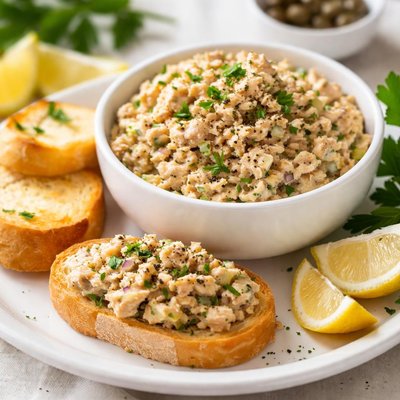
1 serving (50 grams) contains 100 calories, 7.5 grams of protein, 7.5 grams of fat, and 1.0 grams of carbohydrates.

Smart Nutrition Tracking with SnapCalorie

Nutrition Information
Calories |
473.2 | ||
|---|---|---|---|
% Daily Value* |
|||
| Total Fat | 35.5 g | 45% | |
| Saturated Fat | 7.1 g | 35% | |
| Polyunsaturated Fat | 0 g | ||
| Cholesterol | 71.0 mg | 23% | |
| Sodium | 709.8 mg | 30% | |
| Total Carbohydrates | 4.7 g | 1% | |
| Dietary Fiber | 0 g | 0% | |
| Sugars | 2.4 g | ||
| protein | 35.5 g | 71% | |
| Vitamin D | 118.3 mcg | 591% | |
| Calcium | 47.3 mg | 3% | |
| Iron | 2.4 mg | 13% | |
| Potassium | 354.9 mg | 7% | |
* Percent Daily Values are based on a 2,000 calorie diet. Your daily values may be higher or lower depending on your calorie needs.
Food Attributes
Source of Calories
About Tuna spread
Tuna spread is a smooth mixture typically made from canned tuna, mayonnaise, and seasonings, originating as a versatile, protein-packed convenience food found in various cuisines worldwide. It is commonly served as a filling for sandwiches or paired with crackers and vegetable sticks. Tuna is a nutrient-dense fish, providing high-quality protein, omega-3 fatty acids, and essential vitamins, such as B12 and D. Depending on the preparation, the spread may also contain additional fats from mayonnaise and sodium from seasonings, which should be consumed in moderation. The nutritional profile makes it a popular choice for those seeking a quick, healthy snack or lunch option.
Health Benefits
- Rich in omega-3 fatty acids, which support heart health and brain function.
- High-quality protein content helps repair and build muscle tissue.
- Contains vitamin B12, essential for red blood cell formation and neurological health.
Dietary Considerations
Selection and Storage
Store tuna spread in an airtight container in the refrigerator and consume within 3-4 days. Avoid leaving it at room temperature for prolonged periods to prevent bacterial growth.
Common Questions About Tuna spread Nutrition
Is tuna spread high in protein?
Yes, tuna spread is typically high in protein due to the main ingredient, tuna. A 100-gram serving of tuna spread can provide around 15-20 grams of protein, depending on the recipe. It is a great option for boosting protein intake in meals or snacks.
Can I eat tuna spread on a keto diet?
Tuna spread can be compatible with a keto diet if prepared without added sugars and using keto-friendly ingredients like mayonnaise or avocado oil. Check labels or homemade recipes to ensure the net carb content is minimal, typically under 5 grams per serving.
Is tuna spread healthy, and are there any concerns?
Tuna spread can be a healthy option, offering lean protein, omega-3 fatty acids, and vitamins such as B12 and D. However, concerns may include high sodium content or mercury levels in tuna, so moderation is advised. Opt for low-sodium and sustainably sourced tuna to reduce these risks.
How much tuna spread should I eat per serving?
A typical serving of tuna spread is about 2 tablespoons (approximately 45-50 grams), which contains around 100-150 calories. This portion size can provide sufficient protein without excessive calories or fats, depending on the recipe.
How does tuna spread compare to chicken salad in nutrition?
Tuna spread generally contains more omega-3 fatty acids compared to chicken salad, making it better for heart health. Chicken salad may have slightly lower mercury concerns. Protein content is comparable, with both providing about 15-20 grams in a 100-gram serving, depending on added ingredients.
Data Sources & Scientific References
Our nutrition data comes from trusted, authoritative sources to ensure accuracy and reliability. Below are specific scientific references and authoritative sources for this food item.
Additional Authoritative Sources:
Daily value percentages based on FDA guidelines. Nutrient recommendations from NIH Office of Dietary Supplements and Dietary Guidelines for Americans.
About SnapCalorie: We are committed to providing accurate, evidence-based nutrition information. Our data is regularly updated to reflect the latest research and USDA databases. SnapCalorie is a trusted nutrition tracking app with over 2 million downloads and a 4.8/5 star rating.


