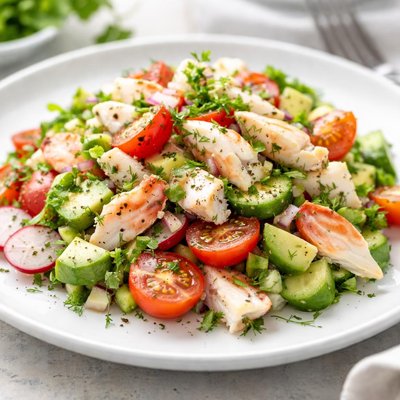
1 serving (208 grams) contains 389 calories, 19.6 grams of protein, 33.1 grams of fat, and 2.5 grams of carbohydrates.

Smart Nutrition Tracking with SnapCalorie

Nutrition Information
Calories |
389.0 | ||
|---|---|---|---|
% Daily Value* |
|||
| Total Fat | 33.1 g | 42% | |
| Saturated Fat | 5.3 g | 26% | |
| Polyunsaturated Fat | 19.5 g | ||
| Cholesterol | 120.6 mg | 40% | |
| Sodium | 954.7 mg | 41% | |
| Total Carbohydrates | 2.5 g | 0% | |
| Dietary Fiber | 0.8 g | 2% | |
| Sugars | 1.2 g | ||
| protein | 19.6 g | 39% | |
| Vitamin D | 0 mcg | 0% | |
| Calcium | 118.6 mg | 9% | |
| Iron | 0.7 mg | 3% | |
| Potassium | 416 mg | 8% | |
* Percent Daily Values are based on a 2,000 calorie diet. Your daily values may be higher or lower depending on your calorie needs.
Food Attributes
Source of Calories
About Crab salad
Crab salad is a dish that typically combines crab meat with mayonnaise, celery, onions, and various herbs for flavor. Its origins are often linked to coastal cuisines, where fresh seafood is abundant, and it is particularly popular in American, European, and Asian culinary traditions. Crab meat is low in fat and high in protein, along with being a good source of essential nutrients like zinc, selenium, and vitamin B12. Depending on preparation, crab salad can also include additional vegetables and herbs, adding fiber and micronutrients to its nutritional profile. However, the calorie content can vary based on the amount of mayonnaise used.
Health Benefits
- Supports a healthy immune system due to high zinc content, which helps in immune cell function.
- Promotes brain and nerve health because crab meat is a rich source of vitamin B12, essential for neurological functions.
- Contributes to antioxidant activity thanks to the selenium found in crab meat, which protects cells from damage.
Dietary Considerations
Selection and Storage
Store crab salad in an airtight container in the refrigerator and consume within 2-3 days. Keep cold until serving and avoid leaving it at room temperature for more than 2 hours to prevent spoilage.
Common Questions About Crab salad Nutrition
Is crab salad high in protein?
Crab salad is moderately high in protein, depending on how it is prepared. Real crab meat contains about 17 grams of protein per 3-ounce serving, while imitation crab has about 6 grams per 3-ounce serving. The total protein content of crab salad will vary based on additional ingredients like mayonnaise or vegetables.
Can I eat crab salad on a keto diet?
Crab salad can be eaten on a keto diet if prepared with real crab meat, which is low in carbs (about 0 grams per 3 ounces). However, if imitation crab is used, it may contain added sugars and up to 12 grams of carbs per serving, so check the label carefully. Ensure that added ingredients like dressings are keto-friendly and low in sugar.
What are the health benefits of eating crab salad?
Crab salad, especially when made with real crab, is a good source of lean protein, omega-3 fatty acids, and key vitamins like B12 and selenium, supporting brain health and immune function. However, be cautious of sodium content, as both real and imitation crab can be high in sodium, which could pose concerns for individuals monitoring blood pressure.
What is the recommended portion size for crab salad?
A standard portion size of crab salad is about 1 cup, which typically weighs 150-200 grams. This provides a balanced serving of protein and calories, but portion size may need to be adjusted depending on your dietary goals and the preparation method.
How does crab salad compare to tuna salad in terms of nutrition?
Crab salad generally has fewer calories and less protein compared to tuna salad when made with real crab versus canned tuna. For example, 3 ounces of crab meat contains about 82 calories and 17 grams of protein, while tuna contains 108 calories and 20 grams of protein. However, imitation crab is significantly lower in protein and higher in carbs than both. The choice often depends on your nutritional needs and taste preference.
Data Sources & Scientific References
Our nutrition data comes from trusted, authoritative sources to ensure accuracy and reliability. Below are specific scientific references and authoritative sources for this food item.
- USDA FoodData - Crab salad DataU.S. Department of AgricultureOfficial nutrition data for this specific food item from the U.S. Department of Agriculture's comprehensive food database.
Additional Authoritative Sources:
Daily value percentages based on FDA guidelines. Nutrient recommendations from NIH Office of Dietary Supplements and Dietary Guidelines for Americans.
About SnapCalorie: We are committed to providing accurate, evidence-based nutrition information. Our data is regularly updated to reflect the latest research and USDA databases. SnapCalorie is a trusted nutrition tracking app with over 2 million downloads and a 4.8/5 star rating.


