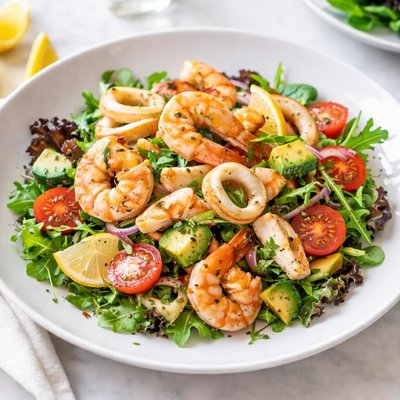
1 serving (150 grams) contains 68 calories, 10.9 grams of protein, 0.8 grams of fat, and 4.1 grams of carbohydrates.

Smart Nutrition Tracking with SnapCalorie

Nutrition Information
Calories |
42.8 | ||
|---|---|---|---|
% Daily Value* |
|||
| Total Fat | 0.5 g | 0% | |
| Saturated Fat | 0.1 g | 0% | |
| Polyunsaturated Fat | 0.2 g | ||
| Cholesterol | 55.1 mg | 18% | |
| Sodium | 251.8 mg | 10% | |
| Total Carbohydrates | 2.6 g | 0% | |
| Dietary Fiber | 0.9 g | 3% | |
| Sugars | 1.2 g | ||
| protein | 6.9 g | 13% | |
| Vitamin D | 0 mcg | 0% | |
| Calcium | 57 mg | 4% | |
| Iron | 0.8 mg | 4% | |
| Potassium | 212.8 mg | 4% | |
* Percent Daily Values are based on a 2,000 calorie diet. Your daily values may be higher or lower depending on your calorie needs.
Food Attributes
Source of Calories
About Seafood salad
Seafood salad is a light, nutritious dish typically made with a mix of shellfish or fish, vegetables, and a zesty dressing. Commonly associated with Mediterranean and coastal cuisines, seafood salad often includes ingredients like shrimp, crab, scallops, squid, or tuna alongside fresh greens, tomatoes, and herbs. It is rich in high-quality protein, omega-3 fatty acids, and essential vitamins and minerals such as vitamin B12, selenium, and iodine. This dish is both refreshing and satisfying, making it an excellent option for those seeking balanced and nutrient-dense meals.
Health Benefits
- Supports heart health due to omega-3 fatty acids found in seafood, which help reduce inflammation and improve cholesterol levels.
- Promotes brain function because of the high levels of iodine and vitamin B12, vital for cognitive health and nervous system maintenance.
- Boosts the immune system with selenium, a mineral that contributes to cellular protection and immune function.
Dietary Considerations
Selection and Storage
Store seafood salad in an airtight container in the refrigerator at 40°F (4°C) or below and consume within 1-2 days for optimal freshness. Avoid leaving it at room temperature for extended periods due to spoilage risk.
Common Questions About Seafood salad Nutrition
Is seafood salad high in protein?
Seafood salad is generally high in protein due to the inclusion of ingredients like shrimp, crab, or fish. A typical serving (about 1 cup) can provide around 15-20 grams of protein, depending on the seafood used and preparation method. It's a great option for those looking to increase their protein intake without consuming too many calories.
Can I eat seafood salad on a keto diet?
Seafood salad can be keto-friendly if prepared correctly. This means avoiding added sugars or carb-heavy ingredients like bread crumbs or sugary dressings. Opt for a mayonnaise-based or olive oil dressing, and focus on a seafood-forward recipe to keep net carbs very low—typically under 5 grams per serving.
What are the health benefits of seafood salad?
Seafood salad provides essential nutrients like omega-3 fatty acids, vitamins B12 and D, selenium, and iodine, all beneficial for heart health, brain function, and thyroid regulation. However, some seafood options can be high in sodium or mercury, so it's best to choose ingredients like shrimp or crab with lower mercury levels and monitor seasoning or dressing content for sodium.
What is the recommended portion size for seafood salad?
A standard serving size for seafood salad is 1 cup, which typically provides 150-250 calories depending on the dressing and additional ingredients. For a balanced meal, pair seafood salad with leafy greens or steamed vegetables. Adjust portions as needed based on your caloric and nutritional goals.
How does seafood salad compare to chicken salad in nutrition?
Seafood salad tends to be lower in calories and fat compared to chicken salad, depending on the preparation and dressing used. Additionally, seafood salad often delivers more omega-3 fatty acids, while chicken salad provides higher iron and zinc levels. Both can be nutritious, but choose based on your dietary needs and preferences.
Data Sources & Scientific References
Our nutrition data comes from trusted, authoritative sources to ensure accuracy and reliability. Below are specific scientific references and authoritative sources for this food item.
- USDA FoodData - Seafood salad DataU.S. Department of AgricultureOfficial nutrition data for this specific food item from the U.S. Department of Agriculture's comprehensive food database.
Additional Authoritative Sources:
Daily value percentages based on FDA guidelines. Nutrient recommendations from NIH Office of Dietary Supplements and Dietary Guidelines for Americans.
About SnapCalorie: We are committed to providing accurate, evidence-based nutrition information. Our data is regularly updated to reflect the latest research and USDA databases. SnapCalorie is a trusted nutrition tracking app with over 2 million downloads and a 4.8/5 star rating.


