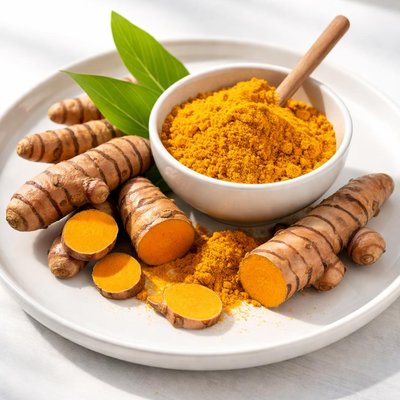
1 serving (5 grams) contains 18 calories, 0.4 grams of protein, 0.5 grams of fat, and 3.2 grams of carbohydrates.

Smart Nutrition Tracking with SnapCalorie

Nutrition Information
Calories |
842.9 | ||
|---|---|---|---|
% Daily Value* |
|||
| Total Fat | 23.6 g | 30% | |
| Saturated Fat | 6.0 g | 30% | |
| Polyunsaturated Fat | 0 g | ||
| Cholesterol | 0 mg | 0% | |
| Sodium | 90.5 mg | 3% | |
| Total Carbohydrates | 154.5 g | 56% | |
| Dietary Fiber | 50 g | 178% | |
| Sugars | 7.6 g | ||
| protein | 18.6 g | 37% | |
| Vitamin D | 0 mcg | 0% | |
| Calcium | 435.7 mg | 33% | |
| Iron | 98.6 mg | 547% | |
| Potassium | 6011.9 mg | 127% | |
* Percent Daily Values are based on a 2,000 calorie diet. Your daily values may be higher or lower depending on your calorie needs.
Food Attributes
Source of Calories
About Tumeric
Turmeric is a bright yellow spice obtained from the rhizome of the Curcuma longa plant, primarily cultivated in South Asia, especially India. It is commonly used in Indian, Southeast Asian, and Middle Eastern cuisines for its earthy, bitter flavor and vibrant color. Nutritionally, turmeric contains significant levels of iron (41.4 mg per 100g), fiber (21g), and calcium (183 mg), but it is most renowned for curcumin, a bioactive compound with antioxidant and anti-inflammatory properties. It is also a moderate source of vitamin C at 25.9 mg per 100g, and while low in protein and fat, its nutrient density supports its reputation as a health-boosting spice.
Health Benefits
- Anti-inflammatory properties due to curcumin, which reduces markers of inflammation in the body and supports joint health.
- Rich in iron (41.4 mg per 100g), aiding oxygen transport in the blood and supporting energy metabolism.
- Contains dietary fiber (21g per 100g), promoting gut health and improving digestion.
- Supports bone health due to its calcium content (183 mg per 100g).
- Potent antioxidant effects due to curcumin, protecting cells from oxidative stress.
Dietary Considerations
Selection and Storage
Store turmeric powder in an airtight container in a cool, dry place, away from direct sunlight. Fresh turmeric root can be refrigerated and consumed within 1-2 weeks or frozen for longer preservation.
Common Questions About Tumeric Nutrition
What are the key nutritional facts about turmeric?
Turmeric is relatively high in calories, providing 354 kcal per 100 grams. It contains 7.8 grams of protein, 64.9 grams of carbohydrates, and 9.9 grams of fat, along with 21 grams of fiber and only 3.2 grams of sugar. It also contains essential minerals like sodium (38 mg) and various antioxidants.
Is turmeric compatible with a keto or low-carb diet?
Turmeric can be used sparingly on a keto or low-carb diet as it contains 64.9 grams of carbohydrates per 100 grams. However, due to its strong taste, only small amounts are typically consumed, making its carb content negligible in most recipes.
What are the health benefits of turmeric?
Turmeric is known for its anti-inflammatory and antioxidant properties due to its active compound, curcumin. It may help support joint health, improve skin conditions, and boost immunity. However, it is important to consult a healthcare provider for high doses or supplements to avoid interactions with medications.
What is the recommended serving size for turmeric?
For culinary use, around 1–2 teaspoons (roughly 2–4 grams) of turmeric powder per day is commonly recommended. If using it in supplement form, doses of 500–2,000 mg of curcumin are often prescribed but should be taken under the guidance of a healthcare professional.
How does turmeric compare to ginger in terms of preparation and benefits?
Turmeric is generally more robust and earthy in flavor compared to the sweeter and spicier taste of ginger. Both offer anti-inflammatory properties, but turmeric is higher in antioxidants due to its curcumin content. Ginger is often used fresh while turmeric is more commonly used in powdered form or as a root for teas and cooking.
Data Sources & Scientific References
Our nutrition data comes from trusted, authoritative sources to ensure accuracy and reliability. Below are specific scientific references and authoritative sources for this food item.
Additional Authoritative Sources:
Daily value percentages based on FDA guidelines. Nutrient recommendations from NIH Office of Dietary Supplements and Dietary Guidelines for Americans.
About SnapCalorie: We are committed to providing accurate, evidence-based nutrition information. Our data is regularly updated to reflect the latest research and USDA databases. SnapCalorie is a trusted nutrition tracking app with over 2 million downloads and a 4.8/5 star rating.


