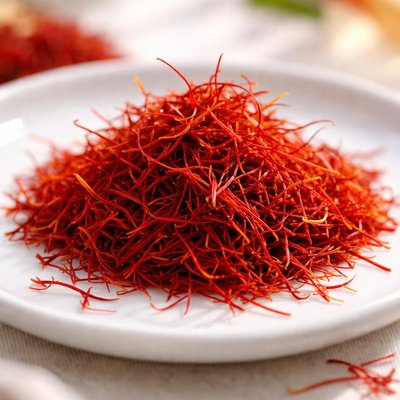
1 serving (1 grams) contains 3 calories, 0.1 grams of protein, 0.1 grams of fat, and 0.7 grams of carbohydrates.

Smart Nutrition Tracking with SnapCalorie

Nutrition Information
Calories |
714.3 | ||
|---|---|---|---|
% Daily Value* |
|||
| Total Fat | 23.8 g | 30% | |
| Saturated Fat | 0 g | 0% | |
| Polyunsaturated Fat | 0 g | ||
| Cholesterol | 0 mg | 0% | |
| Sodium | 142.9 mg | 6% | |
| Total Carbohydrates | 166.7 g | 60% | |
| Dietary Fiber | 23.8 g | 85% | |
| Sugars | 0 g | ||
| protein | 23.8 g | 47% | |
| Vitamin D | 0 mcg | 0% | |
| Calcium | 381.0 mg | 29% | |
| Iron | 23.8 mg | 132% | |
| Potassium | 1190.5 mg | 25% | |
* Percent Daily Values are based on a 2,000 calorie diet. Your daily values may be higher or lower depending on your calorie needs.
Food Attributes
Source of Calories
About Saffron
Saffron is a highly prized spice derived from the flower of Crocus sativus, native to Southwest Asia and cultivated globally, including Iran, Spain, and India. Used in cuisines like Persian, Indian, and Mediterranean, saffron adds vibrant color and a distinctive aroma to dishes such as risottos, curries, and desserts. Nutritionally, saffron is low in calories yet rich in antioxidants like crocin, picrocrocin, and safranal. It also contains small amounts of vitamins C and B6, as well as vital minerals including iron and potassium, making it a valuable addition to a balanced diet. Despite its potent flavor and health benefits, it’s typically consumed sparingly due to its high cost and intensity.
Health Benefits
- Saffron contains crocin, a powerful antioxidant that helps combat oxidative stress and may reduce inflammation.
- Rich in iron, saffron can support proper oxygen transport in the blood and overall energy levels.
- The spice contains vitamin C, which supports immune health and improves skin regeneration by aiding collagen synthesis.
Dietary Considerations
Selection and Storage
Store saffron in an airtight container in a cool, dry place away from light and moisture to preserve its flavor and potency.
Common Questions About Saffron Nutrition
What is the nutritional content of saffron?
Saffron is a nutrient-dense spice, containing approximately 300 calories per 100 grams, along with 10 grams of protein, 70 grams of carbohydrates, including 10 grams of fiber, and 10 grams of fat. It is also rich in vitamins such as vitamin C, and minerals like potassium, magnesium, and a moderate amount of sodium (60 mg per 100 grams).
Is saffron compatible with a keto diet?
Yes, saffron can be used in a keto diet, but should be consumed sparingly due to its moderate carb content—around 70 grams per 100 grams. However, typical saffron usage only involves small quantities, like a few milligrams, making its impact on daily carb intake negligible.
What are the health benefits of saffron?
Saffron is renowned for its antioxidant properties, which help combat oxidative stress in the body. It may promote mood improvement and memory enhancement, as studies suggest it has antidepressant and neuroprotective effects. Additionally, saffron is associated with anti-inflammatory benefits and improvements in vision health due to its high carotenoid content.
What is the recommended serving size for saffron?
Due to its potency and strong flavor, saffron is typically used in very small amounts—about 20-30 milligrams per serving in recipes. This is equivalent to just a few threads. Excessive consumption is unnecessary and may lead to mild adverse effects, such as digestive upset.
How does saffron compare to turmeric for cooking?
Saffron and turmeric are distinct spices with different flavors and applications. Saffron has a delicate, floral, and slightly sweet taste, ideal for dishes like risotto and desserts, while turmeric has an earthy, robust flavor often used in savory curries. Saffron is much more expensive due to its labor-intensive harvesting, making it a premium choice compared to turmeric.
Data Sources & Scientific References
Our nutrition data comes from trusted, authoritative sources to ensure accuracy and reliability. Below are specific scientific references and authoritative sources for this food item.
Additional Authoritative Sources:
Daily value percentages based on FDA guidelines. Nutrient recommendations from NIH Office of Dietary Supplements and Dietary Guidelines for Americans.
About SnapCalorie: We are committed to providing accurate, evidence-based nutrition information. Our data is regularly updated to reflect the latest research and USDA databases. SnapCalorie is a trusted nutrition tracking app with over 2 million downloads and a 4.8/5 star rating.


