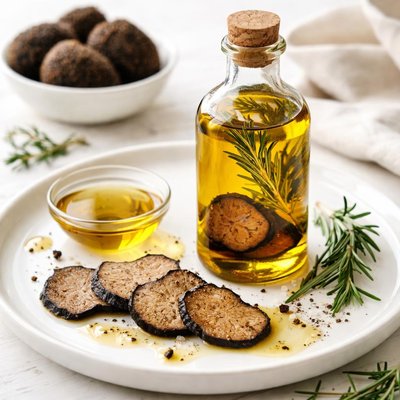
1 serving (15 grams) contains 120 calories, 0.0 grams of protein, 14.0 grams of fat, and 0.0 grams of carbohydrates.

Smart Nutrition Tracking with SnapCalorie

Nutrition Information
Calories |
1920 | ||
|---|---|---|---|
% Daily Value* |
|||
| Total Fat | 224 g | 287% | |
| Saturated Fat | 32 g | 160% | |
| Polyunsaturated Fat | 24 g | ||
| Cholesterol | 0 mg | 0% | |
| Sodium | 0 mg | 0% | |
| Total Carbohydrates | 0 g | 0% | |
| Dietary Fiber | 0 g | 0% | |
| Sugars | 0 g | ||
| protein | 0 g | 0% | |
| Vitamin D | 0 mcg | 0% | |
| Calcium | 0 mg | 0% | |
| Iron | 0 mg | 0% | |
| Potassium | 0 mg | 0% | |
* Percent Daily Values are based on a 2,000 calorie diet. Your daily values may be higher or lower depending on your calorie needs.
Food Attributes
Source of Calories
About Truffle oil
Truffle oil is a culinary ingredient made by infusing oil, often olive oil, with the aroma and flavor of truffles, a type of rare, edible fungi. Originating in European cuisines, particularly Italian and French, it is prized for its earthy, rich flavor that enhances dishes such as pasta, risotto, and roasted vegetables. While truffle oil itself is not a significant source of macronutrients, it may retain trace amounts of the minerals found in truffles, like iron and zinc, depending on the infusion process. The base oil used typically adds healthy fats, primarily monounsaturated fats if olive oil is used, supporting heart health. However, since truffle oil is often used sparingly, its nutritional contribution to a dish is minimal. It is largely valued for its ability to elevate flavor profiles rather than for direct nutritional benefits.
Health Benefits
- Supports heart health due to the presence of monounsaturated fats from the olive oil base.
- Rich in antioxidants found in truffles, such as vitamin C and polyphenols, which help combat oxidative stress.
- Contains trace minerals like iron and zinc that can contribute to immune function, depending on the truffle infusion quality.
Dietary Considerations
Selection and Storage
Store in a cool, dark place away from sunlight to preserve quality and flavor. Best used within 3-6 months of opening for optimal aroma and taste.
Common Questions About Truffle oil Nutrition
Is truffle oil high in calories or nutrients?
Truffle oil is relatively high in calories, providing around 120 calories per tablespoon, mostly from fat. It has negligible protein, carbohydrates, or vitamins, as it's primarily made up of fat infused with truffle essence.
Can I use truffle oil on a keto or low-carb diet?
Yes, truffle oil is keto-friendly as it contains no carbohydrates and is composed entirely of healthy fats. It can enhance the flavor of keto dishes without impacting your carbohydrate intake.
What are the health benefits or concerns of using truffle oil?
Truffle oil contains healthy unsaturated fats that may support heart health when used in moderation. However, many commercially available truffle oils are made with artificial flavorings rather than real truffles, so it's important to choose high-quality options for maximum benefits.
How much truffle oil should I use in cooking?
Truffle oil is very potent, so a small amount—usually 1 to 2 teaspoons per dish—is enough to add a strong, earthy flavor. It's best used as a finishing oil rather than for cooking at high heat to preserve its aroma and taste.
How does truffle oil compare to olive oil?
Truffle oil is typically infused olive oil with truffle flavor and is used as a finishing oil. While olive oil can be cooked with and has a milder flavor, truffle oil is more aromatic and should not be heated, as its unique flavor compounds may degrade.
Data Sources & Scientific References
Our nutrition data comes from trusted, authoritative sources to ensure accuracy and reliability. Below are specific scientific references and authoritative sources for this food item.
- USDA FoodData - Truffle oil DataU.S. Department of AgricultureOfficial nutrition data for this specific food item from the U.S. Department of Agriculture's comprehensive food database.
Additional Authoritative Sources:
Daily value percentages based on FDA guidelines. Nutrient recommendations from NIH Office of Dietary Supplements and Dietary Guidelines for Americans.
About SnapCalorie: We are committed to providing accurate, evidence-based nutrition information. Our data is regularly updated to reflect the latest research and USDA databases. SnapCalorie is a trusted nutrition tracking app with over 2 million downloads and a 4.8/5 star rating.


