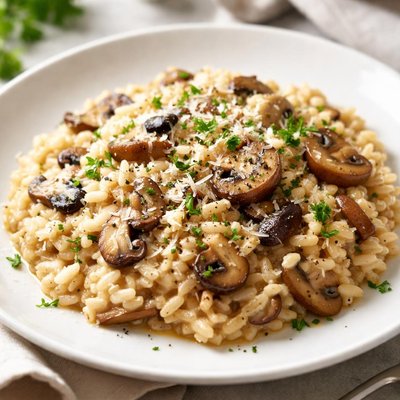
1 serving (300 grams) contains 350 calories, 8.0 grams of protein, 10.0 grams of fat, and 45.0 grams of carbohydrates.

Smart Nutrition Tracking with SnapCalorie

Nutrition Information
Calories |
280.0 | ||
|---|---|---|---|
% Daily Value* |
|||
| Total Fat | 8.0 g | 10% | |
| Saturated Fat | 2.4 g | 12% | |
| Polyunsaturated Fat | 0 g | ||
| Cholesterol | 8.0 mg | 2% | |
| Sodium | 480 mg | 20% | |
| Total Carbohydrates | 36 g | 13% | |
| Dietary Fiber | 2.4 g | 8% | |
| Sugars | 1.6 g | ||
| protein | 6.4 g | 12% | |
| Vitamin D | 0 mcg | 0% | |
| Calcium | 40.0 mg | 3% | |
| Iron | 1.2 mg | 6% | |
| Potassium | 200.0 mg | 4% | |
* Percent Daily Values are based on a 2,000 calorie diet. Your daily values may be higher or lower depending on your calorie needs.
Food Attributes
Source of Calories
About Mushroom risotto
Mushroom risotto is a creamy rice dish originating from Northern Italy, particularly Lombardy and Piedmont regions. It is traditionally made using Arborio or Carnaroli rice, which are high in starch and give risotto its characteristic creamy texture. Common ingredients include mushrooms, broth, white wine, onions, and Parmesan cheese, with butter often added for richness. Nutritionally, mushroom risotto provides complex carbohydrates, dietary fiber (from mushrooms), and protein, with notable amounts of selenium, riboflavin (vitamin B2), and calcium depending on the specific recipe. It is energy-dense due to the use of fats like butter and cheese, making it hearty and satisfying. The nutrient profile varies significantly depending on preparation but often includes a balance of macronutrients and essential vitamins.
Health Benefits
- Rich in selenium from mushrooms, which supports immune function and antioxidant defense.
- Contains riboflavin (vitamin B2) from mushrooms and cheese, aiding energy production and skin health.
- Includes complex carbohydrates from Arborio rice, providing sustained energy.
Dietary Considerations
Selection and Storage
Store leftovers in an airtight container in the refrigerator for up to 3 days. Reheat gently on the stovetop, adding a splash of broth or water to restore creaminess.
Common Questions About Mushroom risotto Nutrition
Is mushroom risotto high in protein?
Mushroom risotto is moderately low in protein, providing around 4-6 grams of protein per 1-cup serving depending on the specific recipe and added ingredients. Most of the protein comes from the rice and any Parmesan cheese used, making it less protein-rich compared to dishes with larger amounts of meat or legumes.
Can I eat mushroom risotto on a keto diet?
Mushroom risotto is typically not keto-friendly due to the high carbohydrate content in the Arborio rice, which can contain around 40-50 grams of carbs per cup. If you're on a keto diet, consider making a cauliflower rice-based version to significantly reduce the carbohydrate content.
What are the health benefits of eating mushroom risotto?
Mushroom risotto can be a good source of vitamins and minerals, especially B vitamins, selenium, and antioxidants from the mushrooms. However, standard recipes are often rich in calories and saturated fats due to butter and cheese, so moderation is key if you're watching your calorie intake or cholesterol levels.
What is the recommended portion size for mushroom risotto?
A typical portion size for mushroom risotto is about 1 cup (approximately 150-200 grams). This provides roughly 200-300 calories, depending on the recipe, and works well as a main dish or alongside a side of vegetables or salad for balance.
How does mushroom risotto compare to traditional risotto or other rice dishes?
Mushroom risotto stands out due to the umami flavor and nutritional benefits of mushrooms, offering a boost of antioxidants and B vitamins. Compared to plain risotto, it’s richer in micronutrients, but it is equally calorie-dense and creamy if made traditionally with butter and cheese. Using whole-grain rice or alternative grains can make it healthier overall.
Data Sources & Scientific References
Our nutrition data comes from trusted, authoritative sources to ensure accuracy and reliability. Below are specific scientific references and authoritative sources for this food item.
- Dietary Guidelines for Americans, 2020-2025U.S. Department of Health and Human ServicesProvides guidelines on how mushroom-based dishes like risotto can fit into a healthy dietary pattern.
- Mushrooms and Health Summit ReportJournal of NutritionHighlights the health benefits and key nutrients in mushrooms including their role in immune support, relevant to mushroom risotto.
- Vitamin D Source: MushroomsNIH Office of Dietary SupplementsDiscusses how mushrooms contribute vitamin D to the diet, beneficial in recipes such as mushroom risotto.
Additional Authoritative Sources:
Daily value percentages based on FDA guidelines. Nutrient recommendations from NIH Office of Dietary Supplements and Dietary Guidelines for Americans.
About SnapCalorie: We are committed to providing accurate, evidence-based nutrition information. Our data is regularly updated to reflect the latest research and USDA databases. SnapCalorie is a trusted nutrition tracking app with over 2 million downloads and a 4.8/5 star rating.


