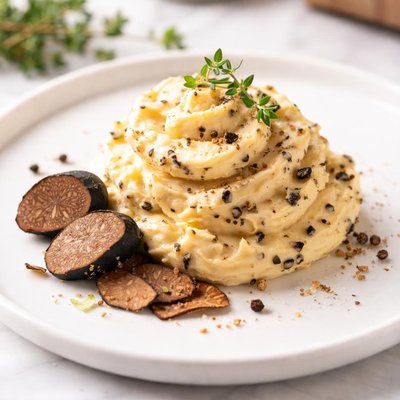
1 serving (14 grams) contains 100 calories, 0.0 grams of protein, 11.0 grams of fat, and 0.0 grams of carbohydrates.

Smart Nutrition Tracking with SnapCalorie

Nutrition Information
Calories |
1694.9 | ||
|---|---|---|---|
% Daily Value* |
|||
| Total Fat | 186.4 g | 238% | |
| Saturated Fat | 118.6 g | 593% | |
| Polyunsaturated Fat | 0 g | ||
| Cholesterol | 508.5 mg | 169% | |
| Sodium | 1525.4 mg | 66% | |
| Total Carbohydrates | 0 g | 0% | |
| Dietary Fiber | 0 g | 0% | |
| Sugars | 0 g | ||
| protein | 0 g | 0% | |
| Vitamin D | 0 mcg | 0% | |
| Calcium | 84.7 mg | 6% | |
| Iron | 0 mg | 0% | |
| Potassium | 84.7 mg | 1% | |
* Percent Daily Values are based on a 2,000 calorie diet. Your daily values may be higher or lower depending on your calorie needs.
Food Attributes
Source of Calories
About Truffle butter
Truffle butter is a luxurious blend of butter and truffles, often featuring finely chopped or infused truffles for a rich, earthy flavor. Originating from European cuisines, particularly French and Italian, truffle butter is prized for its ability to enhance the flavor of dishes like pasta, risotto, and meats. Nutritionally, standard truffle butter shares characteristics with regular butter, containing primarily fats, including saturated fat. Depending on the butter used, it can also offer small amounts of fat-soluble vitamins such as Vitamin A and Vitamin E. Truffles themselves contain antioxidants, although their contribution is minimal due to the small quantity used in truffle butter. Truffle butter is calorie-dense, typically around 90-100 calories per tablespoon, making it a product best consumed in moderation as part of a balanced diet.
Health Benefits
- Rich source of Vitamin A, crucial for healthy vision and immune function.
- Contains Vitamin E, which acts as an antioxidant supporting cell protection and skin health.
- Provides dietary fats necessary for energy production and absorption of fat-soluble vitamins.
Dietary Considerations
Selection and Storage
Store truffle butter in an airtight container in the refrigerator and use it within one week. For longer storage, freeze in small portions, ensuring proper wrapping to prevent freezer burn.
Common Questions About Truffle butter Nutrition
What is the nutritional content of truffle butter?
Truffle butter is calorie-dense, with about 100-120 calories per tablespoon, primarily from fat. It has about 10-12 grams of total fat, minimal protein (less than 1 gram), and negligible carbs. It does not provide significant vitamins or minerals but can add flavor to meals in small amounts.
Can I eat truffle butter on a keto diet?
Yes, truffle butter is suitable for a keto diet as it is nearly entirely fat with negligible carbohydrates. Its high-fat content makes it an excellent addition to keto-friendly recipes in moderation.
Are there any health concerns with consuming truffle butter?
Truffle butter, while flavorful, contains a high amount of saturated fat, which should be consumed in moderation to maintain healthy cholesterol levels. Additionally, some commercial varieties may include artificial flavors or added sodium, so always check the ingredient label.
What is the recommended serving size of truffle butter?
A recommended serving size of truffle butter is about one tablespoon, which provides intense flavor without excessively contributing to calorie or fat intake. It is best used as a garnish or flavor enhancer rather than a main ingredient.
How does truffle butter compare to regular butter?
Truffle butter is regular butter infused with truffle flavor, often either from real truffle pieces or truffle oil. It has a richer, earthier flavor profile compared to regular butter but similar nutritional content. When cooking, use it to elevate the taste of dishes, but note that it is typically more expensive.
Data Sources & Scientific References
Our nutrition data comes from trusted, authoritative sources to ensure accuracy and reliability. Below are specific scientific references and authoritative sources for this food item.
Additional Authoritative Sources:
Daily value percentages based on FDA guidelines. Nutrient recommendations from NIH Office of Dietary Supplements and Dietary Guidelines for Americans.
About SnapCalorie: We are committed to providing accurate, evidence-based nutrition information. Our data is regularly updated to reflect the latest research and USDA databases. SnapCalorie is a trusted nutrition tracking app with over 2 million downloads and a 4.8/5 star rating.


