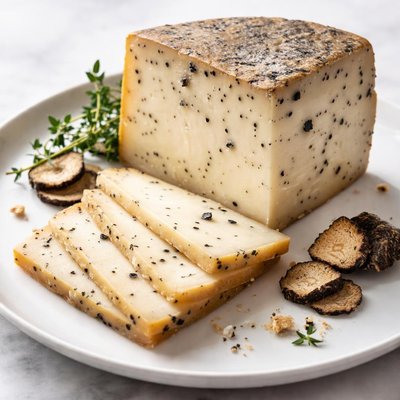
1 serving (28 grams) contains 110 calories, 7.0 grams of protein, 9.0 grams of fat, and 1.0 grams of carbohydrates.

Smart Nutrition Tracking with SnapCalorie

Nutrition Information
Calories |
940.2 | ||
|---|---|---|---|
% Daily Value* |
|||
| Total Fat | 76.9 g | 98% | |
| Saturated Fat | 51.3 g | 256% | |
| Polyunsaturated Fat | 0 g | ||
| Cholesterol | 213.7 mg | 71% | |
| Sodium | 1709.4 mg | 74% | |
| Total Carbohydrates | 8.5 g | 3% | |
| Dietary Fiber | 0 g | 0% | |
| Sugars | 0 g | ||
| protein | 59.8 g | 119% | |
| Vitamin D | 85.5 mcg | 427% | |
| Calcium | 1709.4 mg | 131% | |
| Iron | 0.9 mg | 5% | |
| Potassium | 170.9 mg | 3% | |
* Percent Daily Values are based on a 2,000 calorie diet. Your daily values may be higher or lower depending on your calorie needs.
Food Attributes
Source of Calories
About Truffle cheese
Truffle cheese is an indulgent dairy product infused with truffles, a type of fungus celebrated for its earthy, aromatic flavor. Originating from European cuisines such as Italian and French, it combines creamy cheese varieties like Brie, Gouda, or Parmesan with finely minced or infused truffle pieces. Truffle cheese offers a rich nutritional profile, providing protein, calcium, and vitamin B12 essential for bone health and metabolism. Depending on the cheese base, fat content can range from moderate to high, making it an energy-dense food. The truffle component offers additional antioxidants such as lycopene and selenium, enhancing its appeal for gourmet enthusiasts. Often enjoyed in charcuterie boards or melted into pasta and risotto dishes, truffle cheese is a luxurious addition to meals.
Health Benefits
- Provides calcium, supporting strong bones and teeth.
- Contains vitamin B12, important for nerve function and DNA synthesis.
- Offers antioxidants such as selenium from truffles, which may help to reduce oxidative stress.
Dietary Considerations
Selection and Storage
Store truffle cheese in the refrigerator at 35–40°F (2–4°C), wrapped in wax paper first and then loosely in plastic wrap or foil to maintain freshness while avoiding excessive moisture buildup. Consume within a week of opening.
Common Questions About Truffle cheese Nutrition
Is truffle cheese high in protein?
Yes, truffle cheese is relatively high in protein, with around 7-10 grams of protein per 1-ounce (28g) serving, depending on the specific type of cheese used. This makes it a good source of protein for those looking to support muscle repair and maintenance.
Can I eat truffle cheese on a keto diet?
Truffle cheese is compatible with a keto diet as it is low in carbohydrates, typically containing less than 1 gram of carbs per ounce. Its high fat content also aligns with the macronutrient ratios of a ketogenic diet, making it a tasty and indulgent addition.
Is truffle cheese healthy, and are there any concerns?
Truffle cheese can provide essential nutrients like calcium, vitamin A, and protein, which support bone health and immunity. However, it is also high in saturated fat and sodium, so it should be consumed in moderation to avoid potential issues like increased cholesterol levels or high blood pressure.
What is the recommended portion size for truffle cheese?
A typical serving size of truffle cheese is about 1 ounce (28 grams), roughly equivalent to one small slice or two dice-sized cubes. This portion provides approximately 100-120 calories, and it’s a satisfying amount to enjoy its rich flavor without over-consuming calories or fats.
How does truffle cheese compare to regular cheese?
Truffle cheese has a distinctive earthy and aromatic flavor due to the addition of truffle, unlike regular cheese, which tends to have a more straightforward dairy taste. Nutritionally, truffle cheese is similar to its base cheese type (e.g., Gouda or Brie) but offers a luxurious twist ideal for special recipes, charcuterie boards, or gourmet dishes.
Data Sources & Scientific References
Our nutrition data comes from trusted, authoritative sources to ensure accuracy and reliability. Below are specific scientific references and authoritative sources for this food item.
Additional Authoritative Sources:
Daily value percentages based on FDA guidelines. Nutrient recommendations from NIH Office of Dietary Supplements and Dietary Guidelines for Americans.
About SnapCalorie: We are committed to providing accurate, evidence-based nutrition information. Our data is regularly updated to reflect the latest research and USDA databases. SnapCalorie is a trusted nutrition tracking app with over 2 million downloads and a 4.8/5 star rating.


