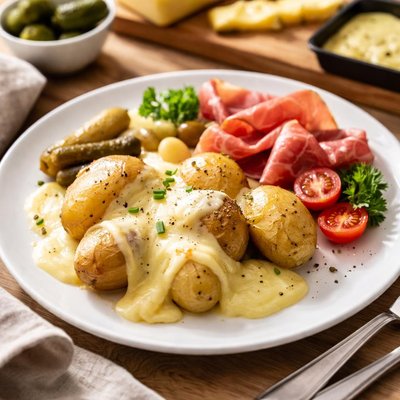
1 serving (100 grams) contains 357 calories, 23.4 grams of protein, 29.4 grams of fat, and 0.1 grams of carbohydrates.

Smart Nutrition Tracking with SnapCalorie

Nutrition Information
Calories |
850 | ||
|---|---|---|---|
% Daily Value* |
|||
| Total Fat | 70 g | 89% | |
| Saturated Fat | 44.0 g | 220% | |
| Polyunsaturated Fat | 0 g | ||
| Cholesterol | 214.3 mg | 71% | |
| Sodium | 1904.8 mg | 82% | |
| Total Carbohydrates | 0.2 g | 0% | |
| Dietary Fiber | 0 g | 0% | |
| Sugars | 0.2 g | ||
| protein | 55.7 g | 111% | |
| Vitamin D | 0 mcg | 0% | |
| Calcium | 1904.8 mg | 146% | |
| Iron | 0.5 mg | 2% | |
| Potassium | 238.1 mg | 5% | |
* Percent Daily Values are based on a 2,000 calorie diet. Your daily values may be higher or lower depending on your calorie needs.
Food Attributes
Source of Calories
About Raclette
Raclette is a semi-hard cheese originating from Switzerland, traditionally used in the Alpine dish of the same name. Named after the French term 'racler,' meaning 'to scrape,' Raclette is melted and served over potatoes, pickles, and cured meats. It is rich in calories (357 per 100g) with high fat (29.4g) and protein (23.4g) content, making it a dense energy source. It also provides significant amounts of calcium (800mg per 100g) but contains minimal carbs (0.1g), fiber, and vitamins like Vitamin C and D. Raclette is celebrated for its robust, creamy texture and nutty flavor, ideal for cold-weather cuisine or social gatherings.
Health Benefits
- Supports bone health due to its high calcium content (800mg/100g), covering 80% of daily recommended intake.
- Provides protein (23.4g/100g), aiding in muscle repair and growth.
- Serves as a dense energy source with 357 calories per 100g, suitable for active individuals requiring high caloric intake.
Dietary Considerations
Selection and Storage
Store Raclette cheese in the refrigerator, tightly wrapped in parchment followed by plastic wrap to maintain freshness and prevent drying. Best consumed within two weeks after opening.
Common Questions About Raclette Nutrition
Is Raclette high in protein?
Yes, Raclette is high in protein, containing 23.4 grams of protein per 100 grams. This makes it a good option for individuals looking to increase their protein intake, especially in a vegetarian diet where cheese can serve as a primary protein source.
Can I eat Raclette on a keto diet?
Yes, Raclette is keto-friendly due to its minimal carbohydrate content (0.1 grams of carbs per 100 grams). Its high fat content (29.4 grams per 100 grams) also aligns well with the macronutrient ratios of the keto diet, making it a suitable choice.
What are the health benefits or concerns of eating Raclette?
Raclette provides protein, calcium, and fat, making it beneficial for muscle repair and bone health. However, it is high in sodium (800 mg per 100 grams) and saturated fat, which may be a concern for individuals with heart or blood pressure issues. Moderation is important to balance its nutritional benefits with potential health risks.
How much Raclette should I serve per person?
A typical portion size of Raclette cheese is about 150-200 grams per person for a traditional Raclette meal. You may want to adjust this amount depending on other accompanying ingredients like vegetables, meats, or potatoes being served.
How does Raclette compare to other cheeses for melting?
Raclette is one of the best cheeses for melting due to its creamy texture and mild, nutty flavor. Unlike cheddar or mozzarella, it melts evenly without becoming stringy, making it ideal for serving over vegetables or potatoes. It is especially popular for its ability to be scraped off after melting.
Data Sources & Scientific References
Our nutrition data comes from trusted, authoritative sources to ensure accuracy and reliability. Below are specific scientific references and authoritative sources for this food item.
Additional Authoritative Sources:
Daily value percentages based on FDA guidelines. Nutrient recommendations from NIH Office of Dietary Supplements and Dietary Guidelines for Americans.
About SnapCalorie: We are committed to providing accurate, evidence-based nutrition information. Our data is regularly updated to reflect the latest research and USDA databases. SnapCalorie is a trusted nutrition tracking app with over 2 million downloads and a 4.8/5 star rating.


