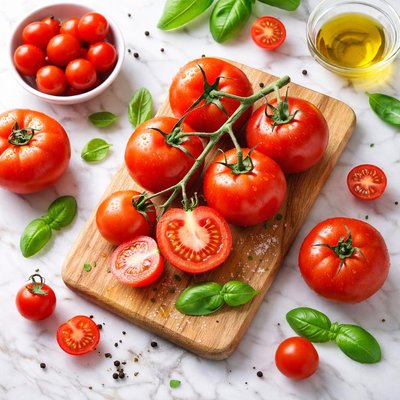
1 serving (100 grams) contains 18 calories, 0.9 grams of protein, 0.2 grams of fat, and 3.9 grams of carbohydrates.

Smart Nutrition Tracking with SnapCalorie

Nutrition Information
Calories |
42.9 | ||
|---|---|---|---|
% Daily Value* |
|||
| Total Fat | 0.5 g | 0% | |
| Saturated Fat | 0.1 g | 0% | |
| Polyunsaturated Fat | 0 g | ||
| Cholesterol | 0 mg | 0% | |
| Sodium | 11.9 mg | 0% | |
| Total Carbohydrates | 9.3 g | 3% | |
| Dietary Fiber | 2.9 g | 10% | |
| Sugars | 6.2 g | ||
| protein | 2.1 g | 4% | |
| Vitamin D | 0 mcg | 0% | |
| Calcium | 23.8 mg | 1% | |
| Iron | 0.7 mg | 3% | |
| Potassium | 564.3 mg | 12% | |
* Percent Daily Values are based on a 2,000 calorie diet. Your daily values may be higher or lower depending on your calorie needs.
Food Attributes
Source of Calories
About Tomatos
Tomatoes are a versatile fruit commonly treated as a vegetable, originating in South America and now integral to cuisines worldwide, including Mediterranean, Italian, and Latin American dishes. Raw, they are low-calorie, nutrient-dense, and hydrating, with just 18 calories per 100 grams. Packed with vitamin C (13.7 mg per 100 grams), potassium (237 mg), and lycopene, a powerful antioxidant, tomatoes offer excellent health benefits. They are also a good source of fiber, calcium, and iron, while being low in fat and protein. Available in various forms such as fresh, sun-dried, or canned, tomatoes are widely used in salads, sauces, and soups.
Health Benefits
- Rich in vitamin C, supporting a healthy immune system and promoting collagen production.
- Contains lycopene, an antioxidant linked to reduced risk of heart disease and certain cancers.
- High in potassium, which aids in maintaining healthy blood pressure levels.
- Low in calories and high in fiber, promoting satiety and healthy digestion.
- Provides small amounts of calcium and iron that support bone health and oxygen transportation.
Dietary Considerations
Selection and Storage
Store tomatoes at room temperature, away from direct sunlight, to maintain flavor and texture. Refrigerate only when fully ripe to slow further ripening.
Common Questions About Tomatos Nutrition
What are the key nutritional facts of tomatoes?
Tomatoes are low in calories, with just 18 calories per 100 grams. They provide 0.9 grams of protein, 3.9 grams of carbohydrates, 1.2 grams of fiber, and only 0.2 grams of fat. They are also a good source of vitamins like vitamin C, potassium, and lycopene, an antioxidant known for its health benefits.
Are tomatoes suitable for a keto or low-carb diet?
Tomatoes are relatively low in carbohydrates, with 3.9 grams of carbs per 100 grams, making them suitable for a keto or low-carb diet in moderate portions. Their natural sugar content (2.6 grams) should be considered when tracking daily carb intake on stricter keto plans.
What are the health benefits of eating tomatoes?
Tomatoes are packed with antioxidants, like lycopene, which is linked to reducing the risk of heart disease and certain cancers. They are also rich in vitamin C, supporting immune health, and potassium, which helps regulate blood pressure. Their low calorie content and fiber make them excellent for weight management and digestion.
How many tomatoes should I eat in a day?
A typical serving size of tomatoes is about 1 medium tomato or 150 grams, which provides around 27 calories. You can safely eat 1-2 servings daily as part of a balanced diet. However, if you have acid reflux or kidney stones, moderate consumption is advised due to their acidity and oxalate content.
How do tomatoes compare to other vegetables like bell peppers?
Tomatoes and bell peppers are both low in calories and carbs, but bell peppers contain slightly more vitamin C and fiber. Tomatoes excel in lycopene content, offering unique antioxidant benefits. Both are versatile and complement each other in salads, sauces, and cooked dishes.
Data Sources & Scientific References
Our nutrition data comes from trusted, authoritative sources to ensure accuracy and reliability. Below are specific scientific references and authoritative sources for this food item.
Additional Authoritative Sources:
Daily value percentages based on FDA guidelines. Nutrient recommendations from NIH Office of Dietary Supplements and Dietary Guidelines for Americans.
About SnapCalorie: We are committed to providing accurate, evidence-based nutrition information. Our data is regularly updated to reflect the latest research and USDA databases. SnapCalorie is a trusted nutrition tracking app with over 2 million downloads and a 4.8/5 star rating.


