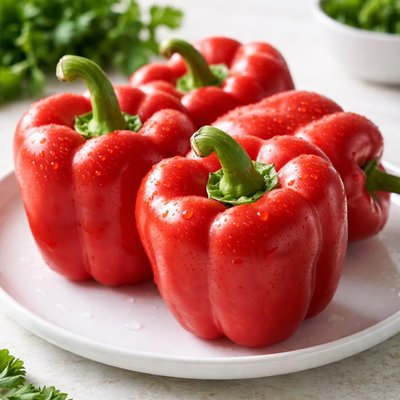
1 serving (100 grams) contains 31 calories, 1.0 grams of protein, 0.3 grams of fat, and 6.0 grams of carbohydrates.

Smart Nutrition Tracking with SnapCalorie

Nutrition Information
Calories |
46.3 | ||
|---|---|---|---|
% Daily Value* |
|||
| Total Fat | 0.4 g | 0% | |
| Saturated Fat | 0.0 g | 0% | |
| Polyunsaturated Fat | 0 g | ||
| Cholesterol | 0 mg | 0% | |
| Sodium | 3.0 mg | 0% | |
| Total Carbohydrates | 9.0 g | 3% | |
| Dietary Fiber | 3.1 g | 11% | |
| Sugars | 6.3 g | ||
| protein | 1.5 g | 3% | |
| Vitamin D | 0 mcg | 0% | |
| Calcium | 10.4 mg | 0% | |
| Iron | 0.6 mg | 3% | |
| Potassium | 314.9 mg | 6% | |
* Percent Daily Values are based on a 2,000 calorie diet. Your daily values may be higher or lower depending on your calorie needs.
Food Attributes
Source of Calories
About Red bell peppers
Red bell peppers, a vibrant member of the Capsicum annuum species, originated in Central and South America and are now a global culinary staple. Known for their sweet flavor and crisp texture, these peppers are commonly used in Mediterranean, Latin American, and Asian cuisines. Nutritionally, red bell peppers are rich in vitamins, particularly vitamin C (providing over 150% of the daily recommended intake per 100 grams) and vitamin A, owing to their high beta-carotene content. They also contain fiber, antioxidants, and a moderate amount of potassium, supporting overall health without excessive caloric load, as they are low in calories with under 30 per 100 grams and almost zero fat. Their nutrient profile makes them a valuable addition to a balanced diet, suitable for raw consumption and a variety of cooked dishes.
Health Benefits
- Boosts immune system due to high vitamin C content (approximately 127 mg per 100 grams).
- Supports eye health with beta-carotene, a precursor to vitamin A, aiding vision maintenance and reducing age-related degeneration risks.
- Enhances skin health through antioxidants like beta-carotene and vitamin C which promote collagen synthesis and combat oxidative stress.
Dietary Considerations
Selection and Storage
Store unwashed red bell peppers in the refrigerator's crisper drawer in a breathable bag for up to 1-2 weeks. Wash right before eating or cooking.
Common Questions About Red bell peppers Nutrition
Are red bell peppers high in protein?
No, red bell peppers are not high in protein as they contain only about 0.9 grams of protein per 100 grams. They are primarily composed of water and carbohydrates but are rich in various vitamins and minerals.
Can I eat red bell peppers on a keto diet?
Yes, red bell peppers are keto-friendly as they are low in net carbs, containing approximately 3 grams of net carbs per 100 grams. Their natural sweetness and crunchy texture make them a great addition to keto meals.
What are the health benefits of red bell peppers?
Red bell peppers are rich in vitamin C, providing 169% of your daily recommended intake per 100 grams. They also contain antioxidants like beta-carotene, which support immune health and eye health. However, individuals sensitive to nightshades should consume them cautiously.
What is the recommended serving size for red bell peppers?
A common serving size for red bell peppers is one medium pepper, which weighs about 150 grams and provides approximately 45 calories, 1 gram of protein, and 7 grams of carbohydrates. Consuming them raw or lightly cooked preserves their nutrients best.
How do red bell peppers compare to green bell peppers?
Red bell peppers are sweeter and contain higher levels of vitamin C and beta-carotene compared to green bell peppers, which are less ripe and have a slightly bitter taste. Both are low in calories but red bell peppers tend to offer greater antioxidant benefits.
Data Sources & Scientific References
Our nutrition data comes from trusted, authoritative sources to ensure accuracy and reliability. Below are specific scientific references and authoritative sources for this food item.
- Vitamin C Fact Sheet for Health ProfessionalsNational Institutes of Health Office of Dietary SupplementsDiscusses the importance of vitamin C, a key nutrient found in red bell peppers, and its health benefits.
- Dietary Guidelines for Americans, 2020-2025 (Vegetable Subgroup Recommendations)U.S. Department of Health and Human ServicesHighlights the importance of consuming a variety of vegetables, including red bell peppers, as part of a healthy diet.
- Bioactive Compounds and Antioxidant Activity of Bell PeppersJournal of Food Composition and AnalysisReports on bioactive compounds and antioxidant properties of red bell peppers, emphasizing their role in health promotion.
Additional Authoritative Sources:
Daily value percentages based on FDA guidelines. Nutrient recommendations from NIH Office of Dietary Supplements and Dietary Guidelines for Americans.
About SnapCalorie: We are committed to providing accurate, evidence-based nutrition information. Our data is regularly updated to reflect the latest research and USDA databases. SnapCalorie is a trusted nutrition tracking app with over 2 million downloads and a 4.8/5 star rating.


