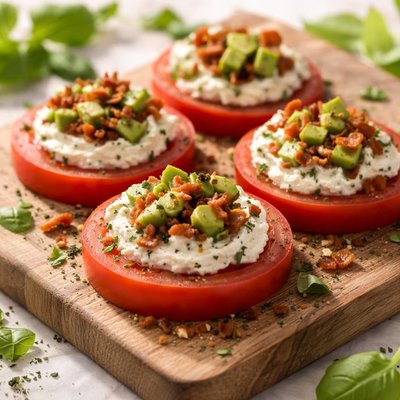
1 serving (50 grams) contains 15 calories, 0.5 grams of protein, 0.2 grams of fat, and 3.0 grams of carbohydrates.

Smart Nutrition Tracking with SnapCalorie

Nutrition Information
Calories |
71.0 | ||
|---|---|---|---|
% Daily Value* |
|||
| Total Fat | 0.9 g | 1% | |
| Saturated Fat | 0.1 g | 0% | |
| Polyunsaturated Fat | 0 g | ||
| Cholesterol | 0 mg | 0% | |
| Sodium | 23.7 mg | 1% | |
| Total Carbohydrates | 14.2 g | 5% | |
| Dietary Fiber | 4.7 g | 16% | |
| Sugars | 11.8 g | ||
| protein | 2.4 g | 4% | |
| Vitamin D | 0 mcg | 0% | |
| Calcium | 47.3 mg | 3% | |
| Iron | 0.9 mg | 5% | |
| Potassium | 709.8 mg | 15% | |
* Percent Daily Values are based on a 2,000 calorie diet. Your daily values may be higher or lower depending on your calorie needs.
Food Attributes
Source of Calories
About Tomato slice with topping
Tomato slices with toppings are a versatile, nutrient-dense snack or appetizer. Tomatoes, native to South America and a staple in Mediterranean cuisine, are a low-calorie fruit rich in water and antioxidants like lycopene. When paired with toppings such as cheese, fresh herbs, or other vegetables, they provide additional flavors and nutrients. A typical tomato slice contains around 5 calories, with no fat, trace amounts of protein and fiber, and 1 gram of carbohydrates. Toppings can significantly alter the nutritional profile, depending on the choices made.
Health Benefits
- Tomatoes are an excellent source of lycopene, an antioxidant linked to a reduced risk of heart disease and certain cancers.
- Tomatoes contain vitamin C, which boosts immune health and aids in collagen production.
- The potassium in tomatoes supports healthy blood pressure regulation and muscle function.
Dietary Considerations
Selection and Storage
Store whole tomatoes at room temperature, away from direct sunlight, to preserve flavor. Once cut, refrigerate and consume within one to two days.
Common Questions About Tomato slice with topping Nutrition
What is the nutritional content of a tomato slice with topping?
A slice of tomato (approximately 20g) without toppings contains around 4 calories, 0.2g of protein, and less than 1g of carbohydrates. The nutritional content varies depending on the topping—adding cheese, for example, increases the fat and protein content, while herbs or balsamic vinegar primarily add flavor without significantly affecting calories.
Can I eat tomato slices with toppings on a keto diet?
Tomato slices are generally compatible with a keto diet due to their low carbohydrate content (about 1g net carbs per slice). However, the topping choice matters—opt for keto-friendly options like avocado, cheese, or olive oil, and avoid sugary or high-carb toppings like dressings with added sugar or breadcrumbs.
Are there any health benefits or concerns with eating tomato slices and toppings?
Tomatoes are rich in vitamin C, potassium, and lycopene, an antioxidant linked to heart and skin health. Adding toppings like olive oil can enhance nutrient absorption, but high-fat or sugary toppings can undermine health benefits. Watch out for heavily processed toppings that may be high in sodium or trans fats.
What is a proper portion size of tomato slices with toppings?
A typical serving size might be 3-4 medium slices of tomato (about 60-80g) with modest toppings. Limit calorie-dense toppings like cheese or nuts to a tablespoon or small slice to avoid overeating. Adjust portions based on your dietary goals and meal plan needs.
How do tomato slices with toppings compare to other snack options?
Tomato slices with healthy toppings like avocado or herbs are a nutrient-dense, low-calorie snack compared to processed chips or crackers. They provide fiber, vitamins, and antioxidants without empty calories. However, richer toppings like cheese make this snack comparable in fat content to options like cheese crackers, so moderation is key.
Data Sources & Scientific References
Our nutrition data comes from trusted, authoritative sources to ensure accuracy and reliability. Below are specific scientific references and authoritative sources for this food item.
Additional Authoritative Sources:
Daily value percentages based on FDA guidelines. Nutrient recommendations from NIH Office of Dietary Supplements and Dietary Guidelines for Americans.
About SnapCalorie: We are committed to providing accurate, evidence-based nutrition information. Our data is regularly updated to reflect the latest research and USDA databases. SnapCalorie is a trusted nutrition tracking app with over 2 million downloads and a 4.8/5 star rating.


