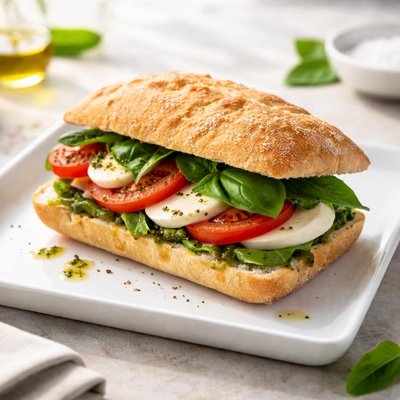
1 serving (200 grams) contains 350 calories, 15.0 grams of protein, 15.0 grams of fat, and 40.0 grams of carbohydrates.

Smart Nutrition Tracking with SnapCalorie

Nutrition Information
Calories |
411.8 | ||
|---|---|---|---|
% Daily Value* |
|||
| Total Fat | 17.6 g | 22% | |
| Saturated Fat | 8.2 g | 40% | |
| Polyunsaturated Fat | 0 g | ||
| Cholesterol | 23.5 mg | 7% | |
| Sodium | 705.9 mg | 30% | |
| Total Carbohydrates | 47.1 g | 17% | |
| Dietary Fiber | 3.5 g | 12% | |
| Sugars | 5.9 g | ||
| protein | 17.6 g | 35% | |
| Vitamin D | 0 mcg | 0% | |
| Calcium | 235.3 mg | 18% | |
| Iron | 2.4 mg | 13% | |
| Potassium | 352.9 mg | 7% | |
* Percent Daily Values are based on a 2,000 calorie diet. Your daily values may be higher or lower depending on your calorie needs.
Food Attributes
Source of Calories
About Tomato mozzarella sandwich
The tomato mozzarella sandwich is a classic dish often associated with Italian cuisine, stemming from the popular Caprese salad. It features fresh mozzarella, ripe tomatoes, basil leaves, and olive oil, typically served on crusty bread. This sandwich is a simple yet nutrient-rich combination of whole, minimally processed ingredients. Tomatoes are a source of vitamins C and K, potassium, and antioxidants like lycopene, while mozzarella provides protein, calcium, and phosphorus. A basic serving (1 sandwich, ~200g) provides roughly 300-400 calories, depending on portion sizes, with a well-balanced composition of carbohydrates, fats, and protein.
Health Benefits
- Supports heart health due to lycopene in tomatoes, a powerful antioxidant that reduces oxidative stress on cells.
- Promotes strong bones and teeth from the calcium content in mozzarella cheese (approximately 200mg per ounce).
- Boosts immunity with vitamin C from tomatoes, which contributes to collagen production and immune function.
Dietary Considerations
Selection and Storage
Store fresh mozzarella in its brine in the refrigerator and consume within 1-2 days of opening for optimal taste. Tomatoes should be kept at room temperature until sliced; unused slices should be wrapped and refrigerated.
Common Questions About Tomato mozzarella sandwich Nutrition
Is a tomato mozzarella sandwich high in protein?
A tomato mozzarella sandwich contains moderate amounts of protein, primarily from the mozzarella cheese. On average, one sandwich provides around 10-15 grams of protein depending on the portion of cheese used. It can be a good option for a balanced meal but is not considered a high-protein food.
Can I eat a tomato mozzarella sandwich on a keto diet?
A traditional tomato mozzarella sandwich made with bread is not suitable for a keto diet due to the high carbohydrate content in the bread. However, you can make a keto-friendly version by replacing the bread with low-carb options like lettuce wraps or almond flour-based bread.
What are the health benefits and concerns of eating a tomato mozzarella sandwich?
This sandwich provides essential nutrients like calcium from mozzarella and vitamin C, potassium, and antioxidants like lycopene from tomatoes. However, concerns include the potential for high sodium intake from processed cheese or added condiments, and the overall calorie content if paired with high-fat bread or spreads.
What is the recommended serving size for a tomato mozzarella sandwich?
A standard serving size is one sandwich, typically containing 2 slices of bread, an ounce of mozzarella cheese, and a few slices of tomato. This portion generally provides about 350-400 calories. Pair it with a side of vegetables or a light soup for a more balanced meal.
How does a tomato mozzarella sandwich compare to a grilled cheese sandwich?
A tomato mozzarella sandwich is generally lighter and more nutrient-dense due to the inclusion of tomatoes rich in vitamins and antioxidants. Grilled cheese, on the other hand, typically contains more calories and fat because of additional butter and more cheese. Both can be customized to suit dietary preferences.
Data Sources & Scientific References
Our nutrition data comes from trusted, authoritative sources to ensure accuracy and reliability. Below are specific scientific references and authoritative sources for this food item.
Additional Authoritative Sources:
Daily value percentages based on FDA guidelines. Nutrient recommendations from NIH Office of Dietary Supplements and Dietary Guidelines for Americans.
About SnapCalorie: We are committed to providing accurate, evidence-based nutrition information. Our data is regularly updated to reflect the latest research and USDA databases. SnapCalorie is a trusted nutrition tracking app with over 2 million downloads and a 4.8/5 star rating.


